
Summary
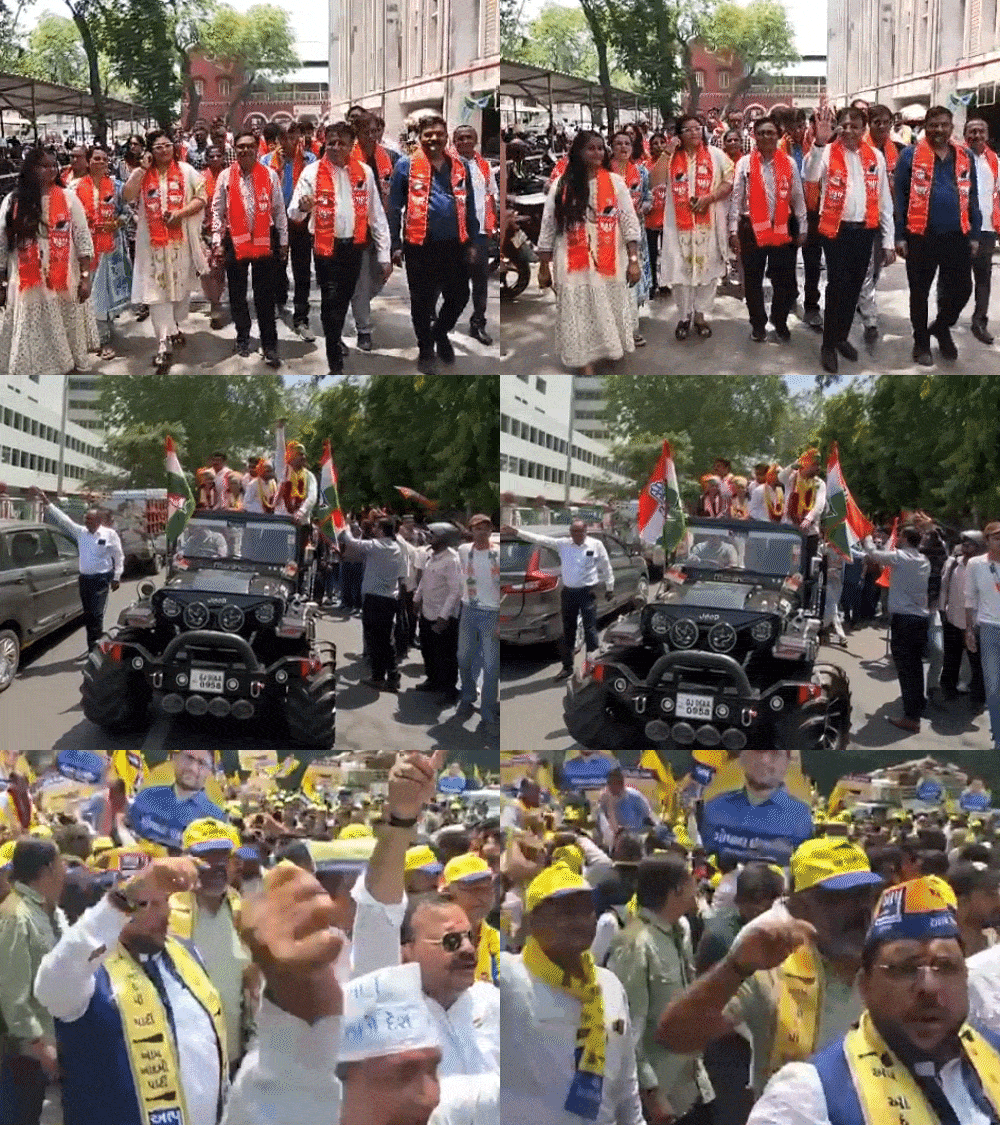
The local government elections in Gujarat are heating up as major political parties finalize their candidates. In cities like Bhavnagar, Vadodara, and Surat, the competition is becoming clear after the nomination process ended. The ruling Bharatiya Janata Party (BJP) has already secured a major advantage by winning 42 seats unopposed. Meanwhile, the Congress party chose a quiet strategy to avoid internal fights, and the Aam Aadmi Party (AAP) struggled to find enough strong candidates to fill their slots.
Main Impact
The biggest impact of the current election cycle is the early lead taken by the BJP. By winning 42 seats without a single vote being cast, the party has sent a strong message to its rivals. This happened because either no other candidates filed papers in those areas or the opposition candidates withdrew. This early success puts a lot of pressure on the Congress and AAP, as they now have to win a much higher percentage of the remaining seats to make an impact in the local corporations and councils.
Key Details
What Happened
As the deadline for filing nomination papers passed, the strategies of the three main parties became visible. The BJP waited until the very last moment to announce its official list of names. This was likely done to prevent any unhappy members from joining other parties. On the other hand, the Congress party decided not to release a public list at all. Instead, they gave "direct mandates" to their chosen candidates. This means they told individuals privately to go and file their papers. This move was intended to stop protests and internal arguments that often happen when a public list is released.
The Aam Aadmi Party, which had performed well in previous local elections in Surat, faced a different problem. They found it very difficult to find candidates who were both popular and willing to run for office. This suggests that the party might be losing some of the momentum it had in the past few years.
Important Numbers and Facts
The numbers show a clear advantage for the ruling party in several regions. In the Kadi Municipality, the BJP has already won 22 out of the 36 available seats because there was no competition. In the Navsari District Panchayat, 3 seats went to the BJP unopposed. Across the entire state, a total of 42 seats have been decided before the election day. These "unopposed" wins are a significant part of the BJP's strategy to dominate the local political scene before the public even goes to the polling booths.
Background and Context
Local body elections are very important in Gujarat because they decide who manages city services like water, roads, and schools. These elections are often seen as a test for the bigger state and national elections. For many years, the BJP has held a strong grip on the major cities. The Congress has been the main opposition, but they have struggled with internal divisions. The AAP entered the scene recently as a third option, trying to appeal to voters who wanted a change from the two traditional parties. Understanding this history helps explain why the parties are using such careful and sometimes secret strategies this time around.
Public or Industry Reaction
Political experts are closely watching the Congress party's decision to use private mandates. Some believe this was a smart move to keep the party united, while others think it shows a lack of transparency. Among the public, there is a mix of surprise and expectation. In areas where the BJP won unopposed, some voters feel their choice has been taken away, while supporters see it as a sign of the party's total strength. The struggle of the AAP has also been a major talking point, with many wondering if the party can still compete at a high level in Gujarat.
What This Means Going Forward
Now that the nomination phase is over, the real campaigning will begin. Candidates will go door-to-door to ask for votes. The BJP will likely focus on its record of development and its early wins to show confidence. The Congress will need to prove that its quiet strategy worked and that its candidates are strong enough to win. For the AAP, the goal will be to hold onto the seats they already have and try to prove they are still a relevant third force. The results in Bhavnagar, Vadodara, and Surat will be especially important, as these cities represent the heart of Gujarat's urban population.
Final Take
The early stages of this election show that the BJP is starting with a massive head start. By securing 42 seats early, they have already won a small part of the battle. The Congress is trying a new way to keep its team together, while the AAP is fighting to stay in the race. The next few weeks of campaigning will show if the opposition can overcome the BJP's early lead or if the ruling party will continue its long run of success in Gujarat's major cities.
Frequently Asked Questions
What does it mean to win a seat "unopposed"?
Winning unopposed means that only one candidate filed the necessary papers to run for a seat, or all other candidates withdrew. In this case, the single remaining candidate wins automatically without a public vote.
Why did the Congress party not release a public list of candidates?
The Congress party used private mandates to prevent internal fighting. By not making the list public early, they hoped to stop members who were not chosen from protesting or causing trouble for the party.
Which cities are the main focus of these elections?
The main focus is on the large Municipal Corporations, specifically Bhavnagar, Vadodara, and Surat. These cities are key political centers in Gujarat.



