
Summary
The local government elections in Gujarat have entered a high-pressure phase as the deadline for withdrawing names has passed. Campaigning officially started on April 16, 2026, with political parties moving quickly to reach voters. While many seats have already been decided without a contest, the atmosphere remains tense due to public arguments, allegations of pressure, and heated debates between rival parties. This election will decide the leadership for thousands of positions in cities and villages across the state.
Main Impact
The most significant development is the high number of seats won unopposed. Because many candidates withdrew their names at the last minute, 378 seats have already been decided before a single vote was cast. This gives the ruling party an early advantage. However, the methods used to clear the field have caused a lot of talk. Some people claim that candidates were pressured or scared into stepping down, which has led to concerns about the fairness of the local democratic process.
Key Details
What Happened
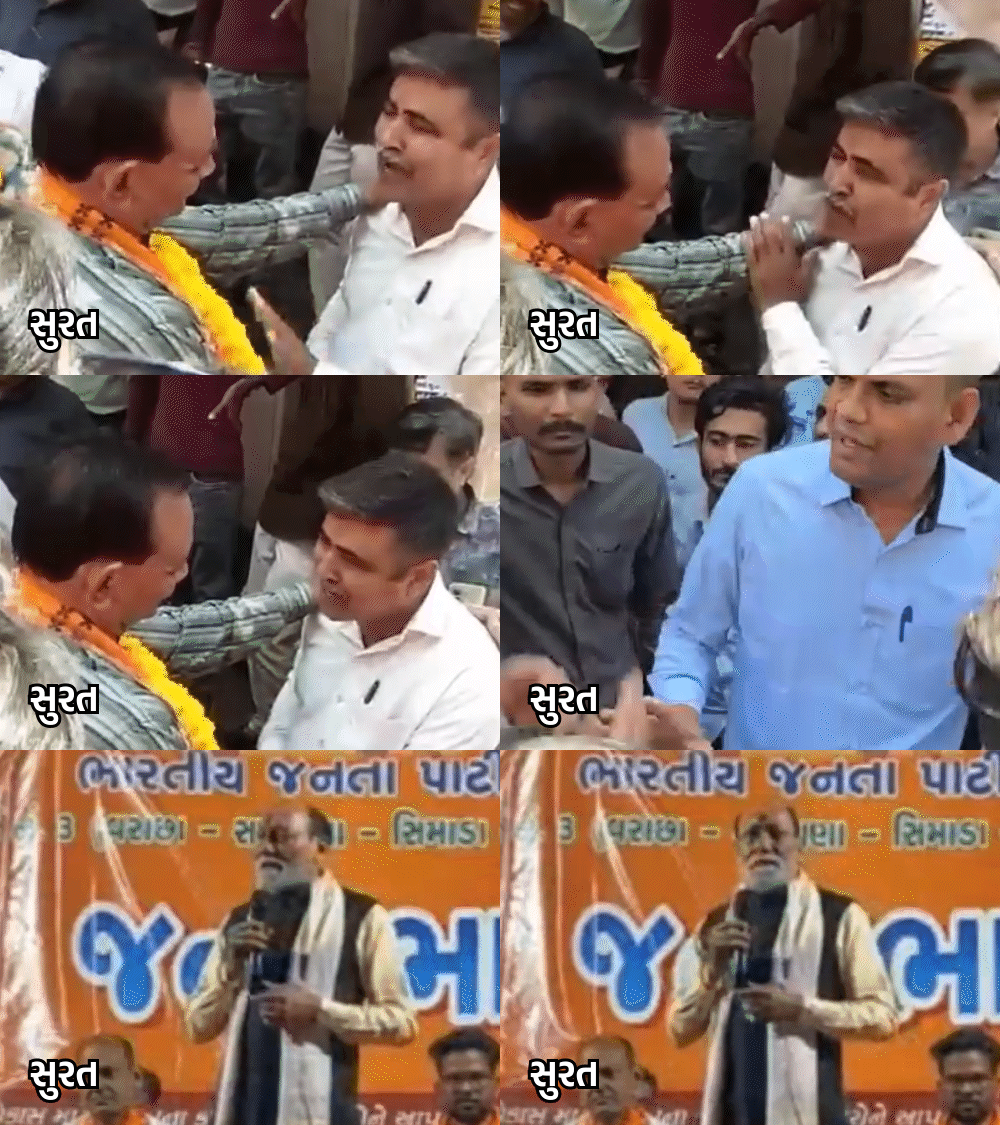
Chief Minister Bhupendra Patel kicked off the campaign in Mehsana with a strong speech. He told supporters to aim for a victory so large that the opposition would be afraid to even file papers in the future. As the campaign moves to the streets, candidates are facing tough questions from the public. In Surat, a BJP candidate was publicly questioned by an angry voter about illegal buildings and the demolition of homes. In another part of the city, officials from the municipal corporation visited an Aam Aadmi Party (AAP) office, which led to a loud protest by party workers who felt they were being targeted unfairly.
Important Numbers and Facts
The election covers about 10,000 seats in various local bodies, including city corporations and village panchayats. On the final day for withdrawing forms, 1,559 people took back their nominations. This resulted in 378 seats being settled without an election. Out of these, 35 seats were in major city corporations and 343 were in smaller municipalities and local councils. These numbers might go up as more data comes in from different districts. The state election commission is still updating the final list of candidates who will actually appear on the ballot.
Background and Context
Local body elections are very important because they decide who will manage daily services like water supply, road repairs, and trash collection. In Gujarat, these elections are often seen as a test for the bigger state and national elections. The three main parties involved are the BJP, the Congress, and the Aam Aadmi Party. Each party is trying to prove it has the most support at the ground level. This year, the focus has shifted toward local issues like housing rules and how the government handles illegal constructions, which has made many voters feel frustrated with the current leadership.
Public or Industry Reaction
The public reaction has been mixed and often quite loud. In Surat, MLA Kumar Kanani mocked the AAP by saying they are making impossible promises. He joked that since they know they cannot win, they might even promise to bring the Taj Mahal to the local neighborhood just to get attention. On the other hand, voters are showing they are not easily fooled. In Ahmedabad, residents blocked candidates from entering their area because they were unhappy with local progress. In Vadodara, a controversy started over religious banners that told certain parties not to enter specific neighborhoods. Local leaders have warned that such actions could lead to more trouble after the election is over.
What This Means Going Forward
Now that the final list of candidates is ready, the next few weeks will see intense door-to-door campaigning. The parties will focus on the seats that are still being contested. There is a risk that the anger seen in public meetings could lead to more clashes between party workers. The government will need to ensure that the voting process remains peaceful. For the voters, the focus will be on whether the candidates can provide real solutions to local problems rather than just making big promises or attacking their rivals.
Final Take
This election season in Gujarat is proving to be more than just a political race; it is a test of how leaders handle direct criticism from the people they serve. While winning seats unopposed might look like a victory on paper, the real challenge lies in winning the trust of voters who are demanding better services and more honesty. The events of the past few days show that the public is paying close attention and is not afraid to speak up when they feel ignored.
Frequently Asked Questions
What does it mean to win a seat unopposed?
A candidate wins unopposed when they are the only person left in the race for a specific seat. This happens if other candidates withdraw their names or if their application forms are rejected, leaving no competition.
Why are voters angry in some parts of Surat and Ahmedabad?
Voters are upset about local issues like the demolition of buildings and illegal construction. They feel that candidates only visit them during election time and do not solve their problems during the rest of the year.
How many seats have already been decided in this election?
So far, 378 seats have been decided without a vote because there was no competition left. This includes 35 seats in big city corporations and 343 seats in smaller towns and local areas.



