
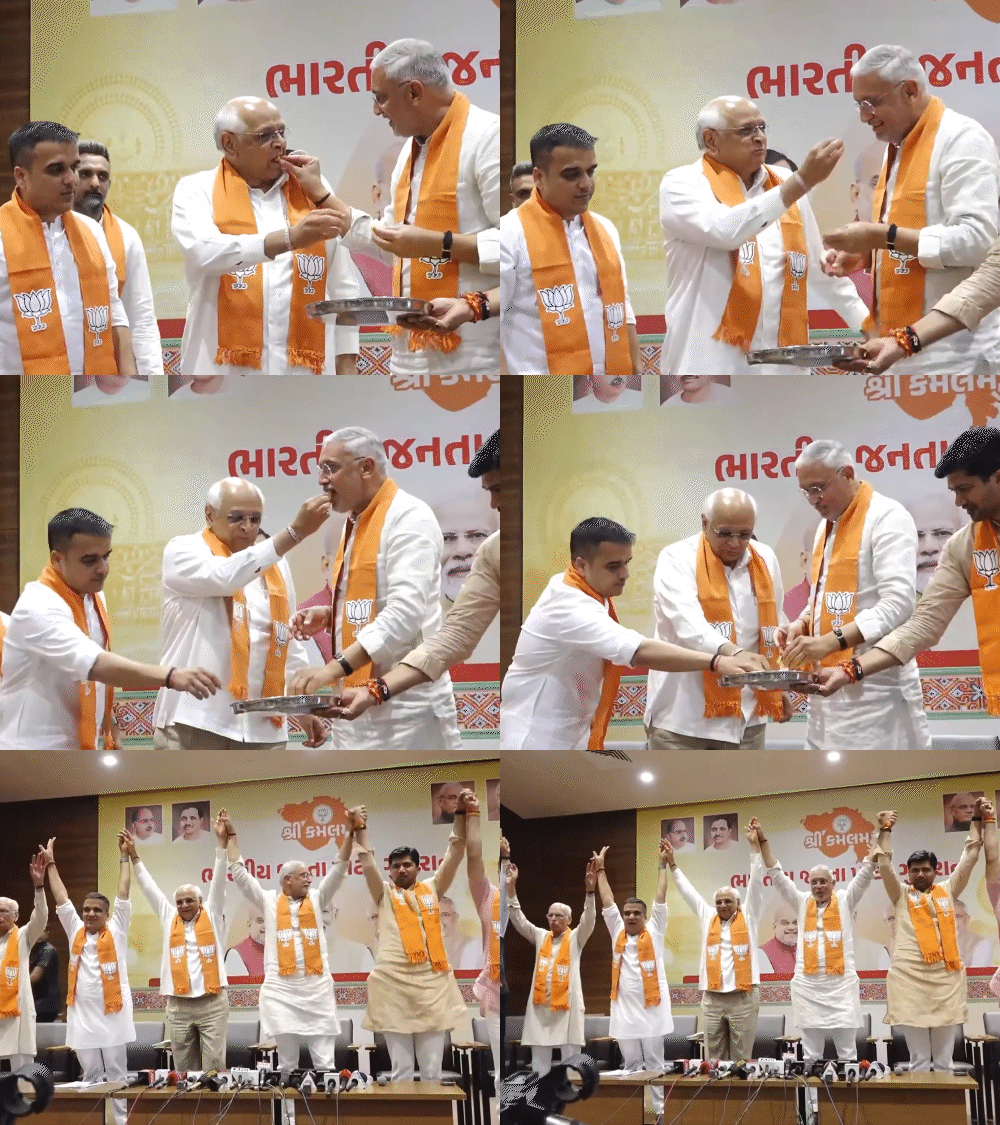
Summary
The Bharatiya Janata Party (BJP) has secured a massive victory in the recent local body elections in Gujarat. This win is seen as a major success for the party's state leadership, especially for the new state president, Jagdish Vishwakarma. These elections are often called the "semi-finals" before the 2027 state assembly elections. The results show that the BJP remains the dominant political force in the state, while the opposition parties, Congress and the Aam Aadmi Party (AAP), continue to struggle.
Main Impact
The most significant outcome of this election is the BJP's ability to win big even without direct campaigning from Prime Minister Narendra Modi and Home Minister Amit Shah. Because of elections in other states, the local team had to lead the charge. This victory has boosted the confidence of the state leaders and workers. It also suggests that the BJP is on track to create a new record in the 2027 assembly elections. For the opposition, the impact is negative, as their influence in both urban and rural areas seems to be shrinking further.
Key Details
What Happened
The local body elections covered various levels of government, including municipal corporations, municipalities, and district and taluka panchayats. The BJP managed to win a majority in almost all these areas. This was the first major test for Jagdish Vishwakarma since he took over as the state party president. He was under pressure to match the previous records set by C.R. Paatil, and the results show he has succeeded. The party used a strategy of local roadshows led by Chief Minister Bhupendra Patel and Home Minister Harsh Sanghavi to connect with voters.
Important Numbers and Facts
The BJP's performance was strong across the board, securing more than 50% of the total votes on average. In contrast, the Aam Aadmi Party (AAP) saw a sharp decline. In Surat, which was once a stronghold for AAP, the party dropped from 27 seats in the previous election to just 4 seats this time. Their overall vote share in municipal areas also fell from 14% to 10%. The Congress party also failed to make any significant gains, continuing its downward trend in the state. An interesting pattern also continued: just like in 2015 and 2021, the voting took place on a Sunday and the counting happened on a Tuesday, a coincidence that has historically favored the BJP.
Background and Context
In Gujarat, local body elections are usually a sign of what will happen in the next state assembly election. In the past, the party that performed well in local polls often went on to win the state government. For example, in 2015, the BJP faced challenges due to local protests, which led to a very close race in the 2017 assembly elections where they won 99 seats. However, after a strong performance in the 2021 local polls, the BJP went on to win a record-breaking 156 seats in the 2022 assembly elections. This historical trend makes the current victory very important for the party's future plans.
Public or Industry Reaction
While the BJP leaders and workers are celebrating, there is also a clear message from the public. Voters have shown their trust in the party once again, but they also have high expectations. Many people have raised concerns about basic issues like road quality, water supply, cleanliness, and traffic management. There is a common feeling that local officials need to be more active in solving everyday problems without delays. Political experts believe that if the newly elected members focus on these basic services, the party's hold on the state will become even stronger.
What This Means Going Forward
Looking ahead to 2027, the BJP appears to be in a very strong position. The party is likely to make some changes in its internal organization to keep the momentum going. There are also rumors that more leaders from the Congress and AAP might join the BJP in the coming months. For the opposition, the road ahead is very difficult. They need to find a way to reconnect with voters, especially in rural areas where they used to be strong. The current results suggest that unless the opposition makes major changes, the 2027 elections might see the BJP breaking its own previous records.
Final Take
The Gujarat local body election results have confirmed that the BJP's organizational strength is enough to win even without its top national leaders on the ground. The success of the state leadership proves that the party's message is well-received by both city and village voters. While the win is a moment of joy for the party, the real challenge will be meeting the growing demands of the citizens for better local governance and infrastructure. The path to 2027 now looks much clearer for the ruling party.
Frequently Asked Questions
Why are these local elections called the "semi-finals"?
They are called semi-finals because they are the last major elections before the 2027 state assembly polls. The results usually show which way the voters are leaning for the bigger election.
How did the Aam Aadmi Party (AAP) perform in this election?
The AAP performed poorly compared to the last election. Their seat count in Surat dropped significantly, and their overall vote share in cities decreased from 14% to 10%.
Who led the BJP campaign in Gujarat this time?
Since PM Modi and Amit Shah were busy with other state elections, the campaign was led by Chief Minister Bhupendra Patel, State President Jagdish Vishwakarma, and Home Minister Harsh Sanghavi.



