Your car already has a number plate. Now the surveillance company watching that plate says it's learning to recognize you — by the way you drive. Flock, best known for its network of license plate reader cameras, is reportedly testing an AI tool that tracks and identifies people based on their driving habits. That single shift — from identifying vehicles to identifying drivers — is what makes this different from everything the company is already known for.
What the testing report actually claims
The core of the report is direct: Flock is testing a new AI capability that moves beyond keeping an eye on license plates. Instead, the tool uses driving behavior as a way to identify individuals.
That could mean patterns like acceleration, braking style, lane behavior, turn timing, or route habits — the kind of distinctive, repeated choices every driver makes without thinking.
What it does not yet include: confirmed technical details, a launch timeline, or an official statement from Flock. At this stage, the claim is the headline — and the headline alone.
Why identifying a driver is not the same as identifying a car
A license plate is public, visible, and attached to a registered vehicle. Driving behavior is something else entirely.
Behavior is personal. It is habitual. It is, in a meaningful sense, part of how a person moves through the world. When a surveillance system learns to connect that behavior to a specific individual, it is no longer tracking metal — it is tracking people.
This matters because the same tool that recognizes an individual today can profile them tomorrow. Frequent night driving. Erratic braking. Repeated visits to a particular area. None of this requires a plate to be read clearly.
What Flock is known for, before this
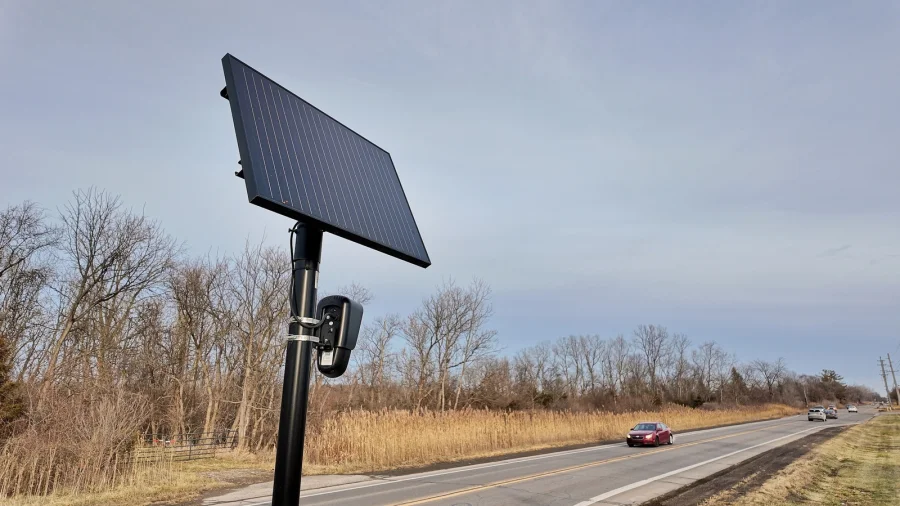
Flock Safety has built one of the most widely recognized surveillance networks in American policing. Its cameras are mounted on poles and buildings, constantly reading number plates and feeding them into a searchable database used by thousands of law enforcement agencies.
The company's pitch has always been simple: solve crime with smart cameras, record only what's needed, and help police move faster.
Critics have long warned that the same network — once limited to plates — could quietly expand into broader forms of monitoring. A tool that identifies people by driving behavior fits squarely into that predicted expansion.
Who is affected by behavior-based tracking
If this tool reaches deployment, the affected group is not a small one. It is every person who drives — or rides — through a Flock-covered street.
For ordinary commuters, the change is invisible. There is no ticket, no court date, no obvious sign that a system has begun building a behavioral profile. The monitoring simply happens, continuously, across thousands of miles of road.
For journalists, lawyers, domestic violence survivors, and anyone whose location history is sensitive, the stakes are higher. Behavioral identification makes it harder to evade tracking simply by swapping plates or using a borrowed car.
Where does the official response stand
As of now, there is no confirmed public response from Flock Safety addressing this specific tool.
No press release. No technical white paper. No company blog post explaining how the system works, what safeguards exist, or how errors would be handled.
Until Flock speaks — or until the testing is independently documented — the responsible framing is clear: the claim is plausible, the company is silent, and the details remain unverified.
What behavioral recognition actually changes
The deeper meaning here is about the evolution of surveillance. For years, the industry's boundary line was physical identifiers — plates, faces, vehicle descriptions. Behavior was considered too complex, too subjective, too unreliable to automate at scale.
AI is erasing that boundary. Driving style, once a fuzzy human judgment, becomes algorithmic data. The technology does not need to be perfect to be powerful; it only needs to be right often enough that investigators start relying on it.
The result is a slow, quiet normalization: first we accept cameras watching our cars, then we accept AI connecting our habits to our identity.
What is confirmed versus what remains unclear
Confirmed by the report: Flock is testing an AI tool that tracks and identifies people based on driving habits. The report explicitly frames it as going well beyond license plate tracking.
Reported, not yet independently verified: The specific mechanisms, data sources, and accuracy of the tool.
Unclear: Whether this is a pilot with one agency, an internal R&D project, or a planned product launch. There is also no confirmed detail on retention periods, human oversight, or how a person would challenge a false behavioral match.
Everything beyond the headline should be treated as open questions, not established facts.
Why Flock's reach gives this tool unusual weight
Flock's advantage is not just its cameras — it is the network those cameras form. A single plate reader is a checkpoint. Thousands of connected readers create a map of a city's movement.
The company's model depends on density: more cameras, more data, more value for police customers. Behavioral identification, layered onto that existing network, would deepen the moat. Agencies get not just plates but drivers — a far stickier product.
Add to that the company's established relationships with law enforcement and its track record of rapid deployment, and the practical barrier to adopting this tool may be lower than the public expects.
A balanced view: security benefits and civil liberty costs
Supporters of such technology would argue that identifying suspects by driving behavior could help police find criminals who deliberately use cloned plates or stolen cars. In hit-and-run cases, or in carjacking investigations, behavioral evidence could be genuinely useful.
Critics would answer that the same system captures everyone, not just suspects. Innocent drivers would have their habits recorded, analyzed, and stored in databases they never agreed to be part of. There is also the reality of false matches — and the difficulty of proving you were not the driver a system claims to have recognized.
The honest position sits in the middle: meaningful investigatory value, paired with meaningful privacy risk. The problem is that the public has not been invited into that trade-off.
The wider pattern: surveillance is moving from identity to behavior
Flock is not acting in isolation. Across the industry, AI tools are shifting from "what is this object" to "who is this person and how do they behave."
Facial recognition matched faces. Behavioral AI matches patterns — gait, voice, typing rhythm, and now, apparently, driving style. Each step makes surveillance more personal, more continuous, and harder to avoid.
What makes Flock significant is not that it built such a tool. It is that the company controls the physical infrastructure already watching America's roads.
What should drivers and citizens do now
For those concerned, the first step is awareness. Knowing that a camera network in your city may soon analyze driving behavior is the precondition for any meaningful discussion about it.
Residents can ask their local police departments what Flock products are deployed in their jurisdiction, whether behavioral identification tools are included, and what data-sharing agreements exist. Local transparency laws often require such answers.
For policymakers, the window to regulate is now — before the tool is quietly normalized as routine. Rules on retention, independent audits, notice, and the right to challenge automated matches would address the most serious risks.
What could happen next
If the testing succeeds, the likely path is pilot deployment with police partners, followed by a measured public rollout framed as a crime-fighting enhancement.
If it faces public pressure, Flock may delay, narrow the tool's scope, or emphasize safeguards in its marketing. Surveillance companies have a pattern of slowing down only when public scrutiny forces the issue.
One thing is reasonably safe to predict: this headline will not be the last of its kind. The technology is advancing. The only open question is whether oversight keeps pace with it.
Our Take
The most important sentence in this story is not about the tool's capabilities — it is about what happens before anyone gets to debate them. Flock can test this AI quietly, refine it with law enforcement input, and present it to the public as a finished product.
That is the pattern that has defined modern surveillance. By the time citizens are asked, the infrastructure is already in place. Driving habits are an intimate form of personal data. Whether they become police data should be a matter of public decision — not a quiet corporate test.
The headline should be read as an early warning, not a finished story.
Frequently Asked Questions
What is Flock's new AI tool exactly?
According to the report, Flock is testing an AI tool that tracks and identifies people based on their driving habits. The headline describes it as going significantly beyond license plate recognition.
How does driving behavior identify a person?
The tool reportedly analyzes patterns in how a person drives — such as acceleration, braking, turning, and route habits — and connects those behavioral patterns to an identified individual. This is similar to how behavioral biometrics work in other fields, though technical details of Flock's system have not been publicly confirmed.
Is this tool already being used by police?
No confirmed deployment exists. The report describes the tool as being in a testing phase. Questions about which agencies, if any, are involved remain unanswered.
What can I do if I'm worried about my driving being tracked?
Start by asking your local police department about its Flock camera contracts and whether behavioral analysis tools are included or planned. Support local measures that require transparency, data retention limits, and independent audits for surveillance technology.