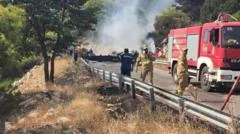
Mid-air collision during firefighting operation claims two lives
Two firefighting helicopters collided mid-air in Greece, turning a firefighting mission into a deadly emergency. The collision killed two crew members — a Danish national and a Greek national. The aircraft were part of efforts to battle wildfires, though the precise location of the crash was not stated in the available briefing.
British pilot and Greek crewmate among survivors
Amid the loss, there was also survival. A British pilot came out of the collision alive, along with another Greek crew member. Their medical condition has not been detailed. The fact that two people survived a mid-air helicopter collision underscores how narrow the margin between life and death can be in aerial firefighting.
What remains unclear about the Greece helicopter crash
The initial report leaves several important questions open. It does not specify where in Greece the collision happened, when exactly it occurred, or which helicopter models were involved. It also does not say whether both helicopters were working the same fire zone in formation. These details will be critical for any investigation into what went wrong.
Why this loss echoes beyond Greece
Firefighting aviation is a small, international community. Pilots and crew from different countries routinely fly together during Mediterranean wildfire seasons, often under extreme heat, smoke, and shifting winds. When a collision kills a Danish and a Greek crew member and spares a British pilot, it touches multiple nations at once — and reopens familiar questions about the risks these crews accept every summer.
The unforgiving reality of aerial firefighting
Flying low over rough terrain, dodging smoke and turbulence, firefighting helicopter crews operate in some of the most hazardous conditions in civil aviation. Mid-air collisions, though relatively rare, are a known risk when multiple aircraft operate near the same fire zone. This tragedy is a sobering reminder of what is at stake in every wildfire response.
Investigation expected as official details remain pending
No official statement from Greek authorities is included in the available briefing, and any claim about their findings would be speculation. What is clear is that a fatal accident involving two aircraft will almost certainly trigger a formal investigation, covering flight paths, communications, and weather conditions at the time of the collision.
Confirmed facts vs what remains unconfirmed
Confirmed: two firefighting helicopters collided in Greece; two crew members died — one Danish and one Greek national; a British pilot and a Greek crew member survived. Unconfirmed: the exact location, the date and time, the helicopter models, and the cause of the collision. Any explanation of why the aircraft collided remains speculation until investigators release official findings.
Our Take
This is a developing story with more questions than answers, and filling the gaps would be a disservice to the families involved. The confirmed facts alone tell a powerful story: people died doing a job that exists to save others from fire. Until Greek authorities provide official details, every additional claim should be treated with caution.
Frequently Asked Questions
What happened in the Greece firefighting helicopter collision?
Two firefighting helicopters collided in Greece, killing two crew members. One victim was Danish and one was Greek, according to the initial report. A British pilot and another Greek crew member survived.
Who died in the helicopter collision in Greece?
The two crew members who died were a Danish national and a Greek national. Their names have not been released in the available briefing.
Did the British pilot survive the Greece helicopter crash?
Yes. The British pilot was among the survivors of the collision, along with another Greek crew member. Their conditions have not yet been detailed.
What caused the two firefighting helicopters to collide in Greece?
The cause has not been established or confirmed. The exact location and timing of the collision also remain unclear pending further information from an official investigation.