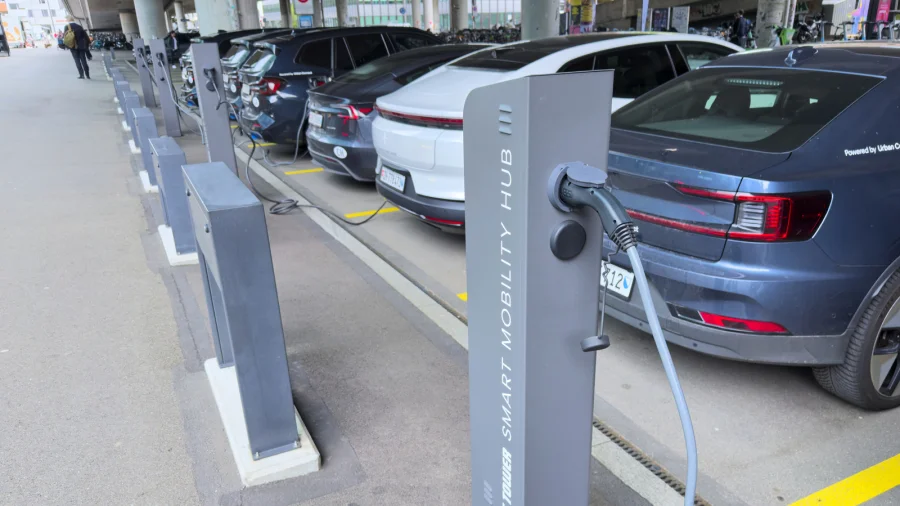
The fear has haunted every electric car buyer: the battery will degrade, lose range, and eventually need a costly replacement. But a growing body of real-world evidence is turning that assumption on its head. Modern EV batteries aren't just holding up—they are outperforming what experts initially predicted.
Why Early Predictions Were Too Pessimistic
Initial battery lifespan forecasts were based on accelerated lab tests and early prototype data. These tests often assumed worst-case scenarios: constant fast charging, extreme temperatures, and repeated deep discharges. Real-world driving, however, is far more forgiving. Most owners charge at home, rarely drain the battery fully, and drive in moderate conditions.
What the Data Actually Shows
Fleet data from Tesla, Nissan, and other major EV makers reveals a striking pattern. After 100,000 miles, many batteries retain 90% or more of their original capacity. Some early Nissan Leaf models, despite lacking active thermal management, have shown slower degradation than feared. Newer vehicles with liquid-cooled battery packs are performing even better.
The Human Impact: What This Means for Owners
For the average driver, this changes the calculus. A battery that lasts 200,000 miles or more means most owners will never face a replacement bill. The fear of a $10,000+ battery swap—often cited as a barrier to EV adoption—is fading. Range anxiety, too, is being redefined: a 10% loss after a decade is barely noticeable in daily use.
Automakers and Researchers Revise Their Views
Battery engineers now acknowledge that early models were conservative. "We designed for worst-case scenarios that rarely happen," one industry source noted. Automakers are updating warranty terms and lifespan projections. Some now offer 8-year/100,000-mile warranties that cover significant degradation, reflecting growing confidence in battery durability.
Why Batteries Are Lasting Longer Than Expected
Several factors explain the outperformance. Improved battery management systems (BMS) prevent overcharging and overheating. Chemistry advances, such as nickel-rich cathodes and better electrolytes, reduce internal wear. And crucially, most drivers charge to 80% rather than 100%, which significantly extends cycle life.
Confirmed Facts vs What Remains Unclear
Confirmed: Real-world data shows slower degradation than lab predictions. Many EVs retain over 90% capacity after 100,000 miles. Unclear: How batteries will perform after 15-20 years or 300,000+ miles. Long-term data is still limited. Also unclear is the impact of frequent DC fast charging on newer battery chemistries.
Risks and Balanced View
Not all batteries are equal. Early models without thermal management, like the first Nissan Leaf, have shown higher degradation in hot climates. Battery health also varies by usage pattern—taxi fleets that fast-charge multiple times daily may see faster wear. And while degradation is slower, it is not zero. Owners should still expect gradual range loss over many years.
The Wider Trend: A Shift in EV Economics
This finding reshapes the entire EV value proposition. If batteries last the life of the car, the total cost of ownership drops significantly. It also improves the environmental case: fewer batteries need replacement, reducing mining and manufacturing demand. The resale value of used EVs, long depressed by battery fears, could rise.
Practical Guidance for EV Owners and Buyers
For current owners: avoid frequent 100% charges and minimize DC fast charging in extreme heat. For prospective buyers: don't let battery degradation fear drive your decision. Look for vehicles with active thermal management and check warranty terms. A used EV with 50,000 miles is likely a safer bet than many assume.
Future Outlook
As battery chemistry improves—with solid-state and LFP (lithium iron phosphate) batteries on the horizon—lifespan is expected to increase further. The narrative is shifting from "when will my battery die?" to "how long will my battery outlast the car?" That is a fundamental change for the industry.
Our Take
This is a quiet revolution. The battery longevity story has been overshadowed by range and charging speed debates, but it may be the most important factor for mainstream adoption. When consumers realize the battery is not a ticking time bomb but a durable component, the psychological barrier to going electric weakens. The data is clear: early fears were overblown. The future of EVs looks more durable than anyone predicted.
Frequently Asked Questions
How long do EV batteries actually last?
Real-world data shows most modern EV batteries retain over 90% capacity after 100,000 miles, with many lasting 200,000 miles or more before significant degradation.
Do I need to worry about replacing my EV battery?
For most owners, no. Battery degradation is slow enough that the battery will likely outlast the vehicle. Warranty coverage typically protects against major loss for 8 years or 100,000 miles.
What reduces EV battery life the most?
Frequent DC fast charging, charging to 100% regularly, and exposure to extreme heat (above 40°C) accelerate degradation. Moderate charging habits and thermal management systems help preserve battery health.
Will future EV batteries last even longer?
Yes. New chemistries like LFP and solid-state batteries are expected to offer even greater cycle life and durability, potentially exceeding 500,000 miles in some cases.