Summary
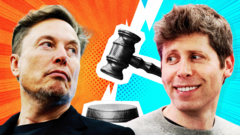
The long-standing disagreement between Elon Musk and Sam Altman has moved from social media posts to a legal battle in court. Musk, who helped start OpenAI, is suing the company and its leader, Sam Altman. He claims they have moved away from their original goal of building artificial intelligence to help all of humanity. Instead, Musk argues the company is now focused on making money for its biggest partner, Microsoft. This case marks a major turning point in how the public views the race to build powerful AI technology.
Main Impact
This legal fight could change the way artificial intelligence companies operate in the future. For years, OpenAI was seen as a group working for the public good. Now, the lawsuit brings up serious questions about whether a company can stay "open" while taking billions of dollars from private investors. If the court rules in favor of Musk, OpenAI might be forced to share its secret technology with the public. This would hurt its business deal with Microsoft and could slow down its growth. On the other hand, a win for Altman would confirm that AI companies can change their business models as they grow larger and more expensive to run.
Key Details
What Happened
Elon Musk filed a lawsuit against OpenAI and Sam Altman in a California court. Musk says that when he helped found the company in 2015, everyone agreed it would be a non-profit. He claims the goal was to create "open-source" software that anyone could see and use. However, Musk says that after he left the board in 2018, the company changed its path. He argues that OpenAI is now a "closed-source" subsidiary of Microsoft. He believes the company is keeping its best technology secret to maximize profits rather than sharing it to keep the world safe.
Important Numbers and Facts
The history of OpenAI involves very large amounts of money and significant dates. Musk says he gave about $44 million to OpenAI between 2016 and 2020 to get it started. Since then, Microsoft has committed to investing around $13 billion into the company. OpenAI is currently valued at more than $80 billion, making it one of the most valuable private tech companies in the world. The lawsuit specifically mentions GPT-4, the latest AI model, claiming it is much more advanced than previous versions and should be shared with the public according to the original agreement.
Background and Context
To understand this fight, you have to look back at why OpenAI was created. In 2015, Sam Altman and Elon Musk were friends who shared a common fear. They worried that big tech companies like Google would develop powerful AI in secret and use it only for profit. They wanted to build a "counter-weight" to these big companies. They promised that OpenAI would be transparent and would not try to make money. However, building AI is incredibly expensive. It requires thousands of powerful computer chips and massive amounts of electricity. To pay for these things, Altman decided to create a "for-profit" arm of the company. This allowed them to take money from investors like Microsoft. Musk left the company before this happened, and he has been criticizing the move ever since.
Public or Industry Reaction
The tech industry is split on who is right. Some experts agree with Musk, saying that OpenAI has become too secretive. They worry that if one company controls the most powerful AI, it could be dangerous for society. Others side with Sam Altman. They argue that Musk is simply jealous because he is no longer part of OpenAI's success. OpenAI leaders even released old emails from Musk. These emails suggest that Musk once agreed the company needed to raise billions of dollars and might even need to merge with Tesla to survive. These leaks were meant to show that Musk is being hypocritical by suing them now for doing exactly what he once suggested.
What This Means Going Forward
The next steps will happen in a courtroom, where judges will look at the "founding agreement" Musk mentions. If such a contract exists and is legally binding, OpenAI could face huge problems. They might have to change how they work with Microsoft or give away their technology for free. There is also a debate about "Artificial General Intelligence" or AGI. This is a type of AI that can do any task a human can do. OpenAI's contract with Microsoft says that if they ever reach AGI, Microsoft no longer gets to use that technology for profit. Musk claims they have already reached this level, while OpenAI says they are still far away. The court's decision on this technical definition will have a massive impact on the tech world.
Final Take
This legal battle is more than just a personal grudge between two famous billionaires. It is a fight over who gets to own the future of intelligence. As AI becomes more powerful, the tension between making a profit and serving the public will only grow. The outcome of this case will set the rules for how the next generation of tech giants must behave. It will decide if the most powerful tools ever created will be kept behind locked doors or shared with everyone.
Frequently Asked Questions
Why is Elon Musk suing Sam Altman?
Musk claims that Altman and OpenAI broke their original promise to remain a non-profit company that shares its technology with the public. He believes they are now focused on making money for Microsoft instead of helping humanity.
What does OpenAI say about the lawsuit?
OpenAI denies Musk's claims. They say there was never a formal "founding agreement" to stay a non-profit forever. They also released old emails to show that Musk once supported the idea of raising large amounts of money for the company.
What could happen if Musk wins the case?
If Musk wins, OpenAI might be forced to make its AI models "open source," meaning anyone could see how they work. It could also force the company to change its multi-billion dollar partnership with Microsoft.