Summary
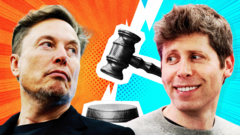
The long-running dispute between Elon Musk and Sam Altman has moved from public insults on social media to a high-stakes legal battle in court. Musk, a co-founder of OpenAI, is suing the company and its CEO, Sam Altman, claiming they abandoned their original mission to build artificial intelligence for the benefit of all people. This trial represents a major turning point for the tech industry, as it questions whether the world’s most powerful AI technology should be open to everyone or kept behind closed doors for profit.
Main Impact
This trial could change how the entire AI industry operates. At the heart of the case is a fight over control and transparency. If Musk wins, OpenAI might be forced to release its secret technology to the public, which would disrupt its multi-billion dollar partnership with Microsoft. The outcome will set a legal example for how non-profit organizations can transition into massive commercial businesses and who truly owns the "intelligence" created by these machines.
Key Details
What Happened
Elon Musk helped start OpenAI in 2015 as a non-profit research lab. The goal was to create artificial general intelligence (AGI) that would be safe and open to the public. Musk provided significant early funding to get the project off the ground. However, he left the board in 2018. Since then, OpenAI has created a for-profit branch and taken billions of dollars from Microsoft. Musk now claims that OpenAI has become a "closed-source" subsidiary of Microsoft, focused on making money rather than helping humanity.
Important Numbers and Facts
The financial stakes in this case are massive. Microsoft has invested roughly $13 billion into OpenAI. Musk claims he donated at least $44 million to the project during its early years, believing it would remain a charity. OpenAI, on the other hand, has released old emails suggesting that Musk once supported the idea of moving toward a for-profit model to raise the huge amounts of money needed for computing power. The company is now valued at over $80 billion, making it one of the most valuable private companies in the world.
Background and Context
To understand this fight, it is important to know why OpenAI was created. In 2015, Musk and Altman were worried that Google would dominate the AI field and create a monopoly. They wanted OpenAI to be a "counter-weight" that shared its findings with everyone. Today, the roles have shifted. Musk has started his own AI company called xAI, and he views OpenAI as the very monopoly he originally tried to prevent. The case is not just about money; it is about the philosophy of technology and whether the most important invention of our time should be owned by a single corporation.
Public or Industry Reaction
The tech community is deeply divided over this trial. Some developers and researchers agree with Musk, arguing that "open source" AI is safer because more people can check it for errors and biases. They feel OpenAI has become too secretive. On the other side, many industry experts believe Musk is acting out of spite because his own AI efforts have lagged behind. They argue that building advanced AI is too expensive to be done as a pure charity and that a profit motive is necessary to keep the technology moving forward.
What This Means Going Forward
The trial will likely last for months and involve the release of private messages and internal documents. This will give the public a rare look at how the biggest AI companies make decisions. If the court rules against OpenAI, it could lead to new regulations on how AI companies are structured. It might also lead to a "forced opening" of technology, where companies are required to share their code. For Sam Altman, the trial is a test of his leadership and the future of his company’s brand. For Elon Musk, it is a chance to prove that the industry has lost its way.
Final Take
This courtroom battle is more than a simple legal disagreement; it is a clash between two different visions for the future. One side believes that big business is the best way to bring AI to the world, while the other believes that such power is too dangerous to be kept private. As the trial moves forward, the world will watch to see if the future of intelligence will be owned by a few or shared by many. The result will define the tech industry for decades to come.
Frequently Asked Questions
Why is Elon Musk suing OpenAI?
Musk claims that OpenAI broke its original contract to remain a non-profit and share its technology with the public. He believes they are now working mainly to make money for Microsoft.
What does OpenAI say in its defense?
OpenAI argues that there was never a formal contract to stay non-profit forever. They also claim Musk wanted to merge OpenAI with Tesla and is only suing because he is no longer part of the company's success.
What could happen if Musk wins the case?
If Musk wins, OpenAI might be forced to change its business structure, return donations, or make its AI models "open source" so that anyone can use and see the code.