The days of the DSLR are numbered — or so the camera industry's recent product launches keep suggesting. But if you already own one, the more urgent question is personal: does a shifting industry actually force you to change? The honest answer, photographers and reviewers keep repeating, is no.
The shift that has already happened
The original story brief captures the mood precisely: the industry is moving on from DSLR technology. New flagship launches, lens development and marketing budgets across major brands are now concentrated in mirrorless systems. Nikon and Canon have been widely reported to be winding down new DSLR development, though both continue to support existing DSLR users.
That does not mean DSLRs stopped working overnight. It means the direction of innovation has changed, and photographers are being asked to decide when — not if — they move.
What a mirrorless camera actually changes for you
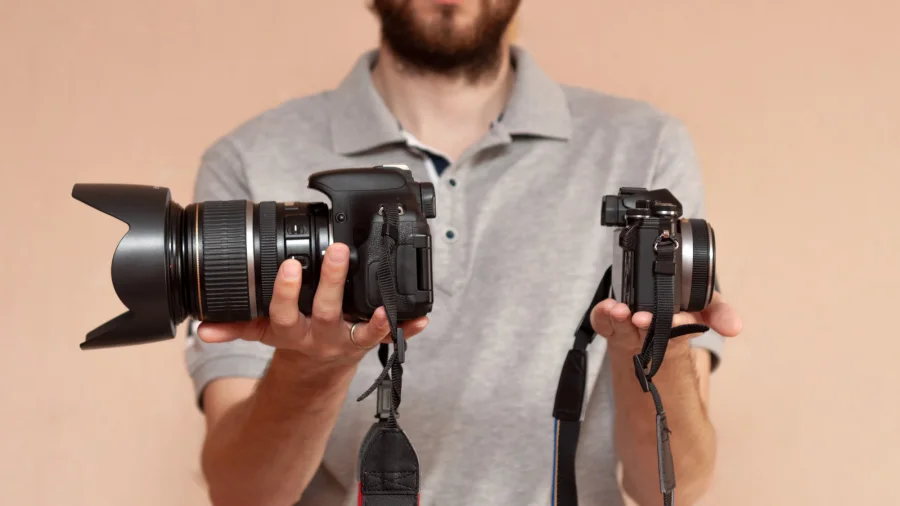
Hold a mirrorless body next to a DSLR and the first difference is physical. Removing the mirror mechanism and optical viewfinder prism makes the camera smaller, lighter and mechanically simpler. That size saving matters for travel, street photography and long weddings days.
The electronic viewfinder is the bigger behavioural shift. It shows you your exposure, white balance and depth of field before you press the shutter — something an optical viewfinder cannot do. Eye-detect autofocus on many mirrorless models also tracks a subject's eye in real time, which has made portraiture and action photography noticeably easier.
Why DSLRs still refuse to die quietly
DSLRs hold advantages that no firmware update can erase. An optical viewfinder uses a real mirror and prism, so there is no lag and no screen refresh. Battery life remains far longer — most DSLRs comfortably outlast a mirrorless body on a single charge because they power the viewfinder with light, not electricity.
There is also the lens question. A working DSLR sits at the centre of a lens ecosystem you may have spent years building. Mirrorless systems require either native lenses or adapters, and both add cost.
Who should switch — and who should hold on
If you shoot fast-moving subjects like wildlife, sports or young children, the autofocus speed and silent shooting of a modern mirrorless camera deliver a real advantage. If you are buying your first serious camera with no existing gear, mirrorless is the safer long-term bet.
But if your DSLR already covers what you shoot, and your photos do not feel limited by focusing speed or weight, there is no feature that makes your current camera worse today. The camera did not change — the market around it did.
What the manufacturers' moves are telling us
The industry's own behaviour is the clearest signal. R&D budgets, lens roadmaps and flagship announcements are mirrorless-first across the board. Companies have framed this as the natural evolution of the camera, pointing to faster autofocus, more compact bodies and deeper video integration.
Conversely, no major brand has announced a final cut-off date for DSLR servicing or support. That silence suggests a managed transition, not an abrupt shutdown.
Sensor size matters more than the mirror mechanism
Here is the part that gets lost in the mirrorless vs DSLR shouting match: the body type matters far less than the sensor inside it. A full-frame DSLR and a full-frame mirrorless camera from the same generation produce comparable image quality.
Dynamic range, low-light performance and colour depth are determined largely by the sensor and lens combination. If you are chasing better image quality alone, buying a new lens for your DSLR will often improve your photos more than switching body types.
What is confirmed vs what depends on your use case
Confirmed: the industry's new product development has shifted to mirrorless. Confirmed: mirrorless bodies are generally smaller, lighter and faster at autofocus. Confirmed: DSLRs generally offer longer battery life and an optical viewfinder.
Unclear: how long DSLR servicing and parts will remain widely available, and how quickly used DSLR prices will fall. Both depend on market demand that nobody can reliably predict.
The honest risks of switching early
Moving to mirrorless is not risk-free. Native lenses for new systems are expensive, adapters can introduce small autofocus compromises, and not every photographer loves an electronic viewfinder — especially in dim conditions where some models show visible noise.
There is also a financial argument in the other direction. If you sell your DSLR gear now, you are selling into a softening market. Holding on for a few more years may mean accepting a lower trade-in value, but it also means delaying every cost of switching.
The bigger picture: cameras are changing, not dying
This transition is part of a wider pattern in the industry. Smartphones collapsed the low-end camera market, pushing manufacturers toward enthusiasts and professionals. Those buyers now want hybrid tools — cameras that shoot brilliant stills and serious video in one compact body.
Mirrorless fits that brief better than a DSLR ever could. That, more than any single feature, explains why the industry is betting on it.
How to decide before you spend
Start with your actual needs, not the industry's momentum. List the frustrations in your current shooting: heavy gear, missed focus on moving subjects, noisy shutter in quiet settings. If that list is long, mirrorless is worth the investment. If it is short, the upgrade is a want, not a need.
Before buying, rent or borrow a mirrorless body for a weekend. Test the electronic viewfinder in low light, weigh the camera with the lenses you would actually use, and check whether your existing lenses have good adapter support. An hour in the field beats a week of spec sheets.
What the next few years look like for DSLR owners
Expect new DSLR releases to slow to a trickle while servicing, accessories and third-party lenses remain available for several more years. Used DSLR prices will likely drift downward, but working systems will not become useless.
The real deadline is your own. If you buy mirrorless in the next two years, you are early enough to enjoy the transition. If you wait five years, you will have more used options, more mature lens lines and lower prices. The middle path — staying with a good DSLR until it genuinely holds you back — is harder to argue against.
Our Take
The mirrorless vs DSLR debate is really a debate about timing. The technology argument is settled — mirrorless is where the future lives. But the buying argument never was, because it depends on your budget, your lenses and your patience. The industry moving on does not mean you must move now. It merely means the clock is ticking at your own speed.
Frequently Asked Questions
Is mirrorless better than DSLR?
For most new buyers, yes. Mirrorless cameras are smaller, lighter, faster at autofocus and better for video, and they remain the focus of industry development. But DSLRs still offer longer battery life and an optical viewfinder, which some photographers prefer.
Is it worth switching from DSLR to mirrorless?
Only if your current DSLR is limiting you — for example, if you miss action shots or find the body too heavy to carry. If your existing camera meets your needs, there is no urgent reason to switch, though used DSLR trade-in values may continue to fall.
Will DSLR lenses work on mirrorless cameras?
Most brands offer official adapters that let you use DSLR lenses on mirrorless bodies. Autofocus and image stabilisation usually work, though performance can vary by lens and adapter. This is the most cost-effective way to build a mirrorless kit.
Which camera should a beginner buy in 2025?
A beginner with no existing lenses should generally choose mirrorless, because that is where new lenses, features and support will continue to arrive. A good entry-level mirrorless body with one versatile lens is a safer long-term investment than a new DSLR.