
Summary
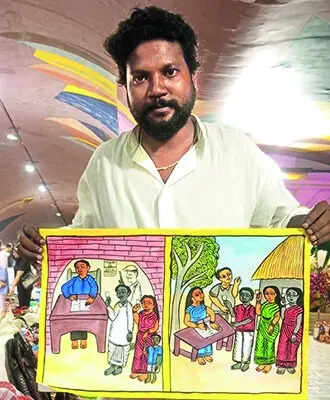
Traditional artists in Gujarat who spend their lives painting stories of gods and goddesses are now facing a very modern struggle. These painters, known for their ancient craft, find themselves caught in the middle of a political battle over land and development. As the Dholera Special Investment Region (SIR) grows, these artists are worried about their future and their homes. The upcoming elections have turned their quiet villages into a political "Kurukshetra," where different parties are fighting for their votes.
Main Impact
The biggest change for these artists is the transformation of their land into a massive industrial zone. For generations, they lived in a quiet area where they could focus on their religious art. Now, the government is building a giant "smart city" called the Dholera SIR. While this project promises new jobs and modern buildings, it has also caused a lot of confusion. Many artists feel that their traditional way of life is being pushed aside to make room for factories and highways. This has made the local election very important, as the people must decide which leaders will best protect their interests.
Key Details
What Happened
The Dholera region is being turned into a global hub for manufacturing and trade. To do this, the government used a system called land pooling. In this system, the government takes a large piece of land from farmers and artists, develops it with roads and electricity, and then gives a smaller portion back to the original owners. The idea is that the smaller piece of land will be worth much more because it is in a modern city. However, many local painters are finding it hard to adjust to this new system. They are used to having large open spaces for their work and their families.
Important Numbers and Facts
The Dholera Special Investment Region is a huge project covering more than 900 square kilometers. It is one of the biggest industrial projects in India. Thousands of families are affected by the construction. In the local villages, the "Mata ni Pachedi" art form has been practiced for over 300 years. This art involves painting religious stories on large pieces of cloth using natural dyes. As the election approaches, politicians are visiting these small workshops, promising that the industrial city will bring wealth to the artists without destroying their ancient culture.
Background and Context
The artists in this region belong to a community that has kept a unique tradition alive for centuries. Their work, "Mata ni Pachedi," is often called the "temple of the poor." Long ago, people who were not allowed into temples would paint these cloths and hang them up to create their own sacred spaces. Today, this art is famous around the world, but the people who make it still live very simple lives. The Dholera SIR project is part of a bigger plan to make India a leader in manufacturing. Because the project is so big, it has become a major topic in every election. Voters are divided between those who want the money from development and those who want to keep their traditional land.
Public or Industry Reaction
The reaction from the local community is mixed. Some younger people are excited about the possibility of getting jobs in the new factories or tech companies that are moving to the area. They see the SIR as a way to escape poverty. However, the older artists and community elders are more cautious. They worry that the high cost of living in a "smart city" will make it impossible for them to continue their traditional work. Local activists have also raised concerns about how the land was taken and whether the compensation is fair. During election rallies, these concerns are at the top of the list for many voters.
What This Means Going Forward
The future of these mythological painters depends on how well the government can balance industry with heritage. If the Dholera SIR succeeds, it could provide a global stage for this traditional art, allowing painters to sell their work to international visitors. But if the project ignores the needs of the local people, a 300-year-old tradition could disappear. The next few years will show if the "smart city" has room for ancient art. The winners of the current election will have the difficult task of making sure that the new industrial world does not erase the history of the people who live there.
Final Take
The struggle in Dholera shows the real-world cost of progress. While big industrial projects are necessary for a country to grow, they often put pressure on the people who hold onto ancient traditions. These painters are not just fighting for their land; they are fighting to keep their identity alive in a world that is changing very fast. The election is their chance to make sure their voices are heard before the paint on their old way of life dries forever.
Frequently Asked Questions
What is the Dholera SIR?
The Dholera Special Investment Region (SIR) is a large industrial and urban development project in Gujarat. It is designed to be a "smart city" with advanced infrastructure for manufacturing and technology.
What is Mata ni Pachedi?
It is a traditional form of art where stories of goddesses and mythology are hand-painted on cloth. It has been practiced by specific communities in Gujarat for over 300 years.
Why is the election important for these artists?
The election is important because the leaders chosen will decide how land is managed and what kind of support the local artists will receive as their region turns into an industrial hub.



