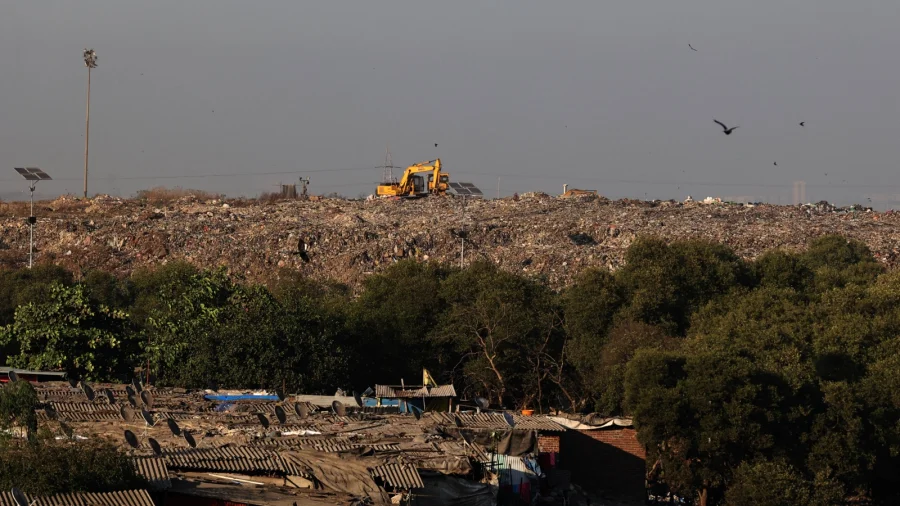
Dharavi Redevelopment Delays Put Housing Promises at Risk
For the families living in the cramped lanes of Dharavi, the wait for a permanent home was supposed to end with the Adani-led redevelopment project. Instead, fr...
Admin
The Tasalli
728 x 90Header Slot
TL;DR — Quick Summary
The Adani-led Dharavi redevelopment project faces two unresolved challenges: uncertainty over rehabilitation of resident families and delays in landfill cleanup. With lakhs of lives tied to the project's promises, officials have acknowledged the gaps but not provided a revised timeline.
Key Facts
**Main Update
** A question mark now hangs over the rehabilitation of families as part of the Adani Dharavi redevelopment project, with landfill cleanup reportedly facing delays.
**Impact
** Lakhs of residents in Dharavi, one of Asia's largest slum clusters, remain uncertain about housing timelines and eligibility.
**Official Response
** The original story, per available reporting, indicates the project's promises and ground realities are diverging, though no fresh official statement has resolved the uncertainty.
**Current Status
** The project is still active, but the absence of clarity on both rehabilitation and cleanup is fuelling public concern.
**What Next
** Clarity on revised timelines for cleanup and a transparent eligibility process for families is considered essential to restore trust.
For the families living in the cramped lanes of Dharavi, the wait for a permanent home was supposed to end with the Adani-led redevelopment project. Instead, fresh doubts over rehabilitation and reported delays in landfill cleanup have pushed that promise further into uncertainty. The question is no longer just about when homes will be built — it is about whether everyone promised a home will actually get one.
Two promises, two delays
The Dharavi redevelopment project was built on twin commitments: rehabilitate eligible families into permanent housing and clean up the massive landfill that has long blighted the area. According to the original story, both now face headwinds. Landfill cleanup, a critical first step for freeing up land, has reportedly slipped from its planned schedule. At the same time, the process of identifying, verifying, and rehabilitating families has raised more questions than answers.
The concern among residents is understandable. For decades, successive governments have promised Dharavi residents a better life. The Adani project, given its scale and the political capital invested in it, was seen as the most serious attempt yet. Any delay in the foundational cleanup work inevitably pushes back everything that follows.
Why the rehabilitation question mark matters beyond Dharavi
This is not just a local Mumbai issue. Dharavi is often cited globally as a model for slum redevelopment done right — or wrong. The project's outcome will shape how India handles urban rehabilitation in its densest pockets. If a project of this scale, backed by one of the country's largest conglomerates, struggles to deliver rehabilitation on time, it raises uncomfortable questions about the viability of similar projects elsewhere.
For the families themselves, the stakes are deeply personal. Many are small business owners, artisans, and daily-wage workers whose livelihoods are tied to Dharavi's informal economy. A delayed or unclear rehabilitation plan does not just threaten their homes; it threatens the economic networks they depend on.
How the project reached this point
The Dharavi Redevelopment Project has been in discussion for over two decades. The current phase began when the Adani Group won the contract to redevelop the 240-hectare area, a move that was both celebrated and contested. The project promises modern housing, commercial spaces, and improved infrastructure. But redevelopment on this scale was always going to be a logistical minefield — multiple stakeholders, unclear land records, and a dense population with mixed eligibility criteria.
The landfill cleanup was identified early as a critical dependency. Delays here do not just affect aesthetics; they stall the entire construction pipeline. The original story suggests that the gap between the project's public promises and its on-ground pace is widening.
What the delay means for Dharavi's residents
For residents, the most immediate impact is uncertainty. Families that were told to prepare for relocation now do not know when that will happen. Small businesses, which were expected to be temporarily relocated, are caught in a limbo — unable to invest in their current locations, yet not receiving clarity on alternate sites.
There is also a quieter, more corrosive effect: trust. Every delay, every unanswered question, chips away at the credibility of the rehabilitation promise. For a community that has historically been skeptical of government assurances, this is a significant hurdle for the project's eventual success.
What those overseeing the project have indicated
The original story points to official acknowledgment that the rehabilitation question remains open and landfill cleanup is behind schedule. However, no revised timeline has been publicly provided, according to available reporting. The absence of a clear official response leaves residents and observers to speculate — which only deepens the uncertainty.
Given the scale of the project, an authoritative public update would serve multiple purposes: clarify eligibility, reassure residents, and anchor the project's credibility in transparent communication.
Reading between the lines: What is driving the delay
Large-scale urban redevelopment projects face a common set of obstacles: funding cycles, land acquisition disputes, and coordination between multiple government departments. In Dharavi's case, the challenge of relocating a dense, economically active community without destroying its economic fabric is immense. The landfill cleanup, involving decades of accumulated waste, is both an engineering and environmental challenge.
While delays are not unusual in projects of this magnitude, the issue here is the information vacuum. When residents do not know why a delay is happening or when it will resolve, they fill the gap with their worst fears.
What is verified, and what remains unclear
What is clear from the original story is that two key pillars of the project — family rehabilitation and landfill cleanup — are facing serious questions. What remains unclear is the extent of the delay, the reasons behind it, and the revised timeline, if any. Specific details about the number of families affected or the exact new schedule for cleanup have not been provided in the available reporting. These should be treated as open questions, not confirmed facts.
Why the Adani Group's execution capability is central to this story
The Adani Group's involvement brings a specific set of strengths to this project. As one of India's largest infrastructure conglomerates, it has demonstrated capability in executing large-scale projects across ports, airports, and energy. Its access to capital, engineering expertise, and ability to navigate complex regulatory environments are genuine advantages. For Dharavi, this means the project has the institutional weight to succeed — assuming the political, social, and bureaucratic obstacles can be aligned. The moat here is not technology but executional muscle: few entities in India can marshal the resources needed to rebuild an area this dense and this economically vital.
The risks and the counter-concerns
The project is not without its critics. Some experts have questioned whether large-scale redevelopment will preserve Dharavi's unique economic ecosystem or destroy it. Others have raised concerns about eligibility criteria for rehabilitation — specifically, who qualifies for a free home and who gets left out. The delay in landfill cleanup also raises environmental concerns, given the site's history of toxic waste and its proximity to residential and water bodies.
Supporters, on the other hand, argue that this is the best chance Dharavi has had for genuine transformation, and that delays, while frustrating, are part of a complex process. Both perspectives deserve weight; neither should be dismissed.
A wider pattern: Are India's urban redevelopment promises outpacing delivery?
Dharavi is not an isolated case. Across India, urban redevelopment projects — from Mumbai's other slum rehabilitation efforts to smart city initiatives — have struggled with the gap between promise and execution. The pattern is consistent: ambitious plans, complex land records, political transitions, and the slow pace of bureaucracy. Dharavi's experience will be watched as a bellwether for whether India can break this cycle.
What should residents and stakeholders do now?
For residents of Dharavi, the practical advice is to stay informed and document everything. Maintain records of residence, identity documents, and any communications with project authorities. These will be essential for establishing eligibility when the rehabilitation process advances. Community organizations and local representatives should press for a public, written timeline from the authorities. For observers and analysts, the priority should be tracking the landfill cleanup, as it is the most concrete indicator of whether the project is actually progressing.
What happens next
The most likely near-term development is pressure on the project authorities to clarify the rehabilitation process and commit to a revised cleanup schedule. Whether that pressure comes from the courts, the political opposition, or public protest, a clear communication is now necessary. The alternative — continued silence — will only deepen the credibility gap and make the eventual execution harder.
Our Take
The Dharavi redevelopment was always going to be a test of India's ability to modernize its urban slums without erasing their communities. The current uncertainty over rehabilitation and cleanup is not just a project delay; it is a test of the state's credibility. The families of Dharavi have been promised dignity for decades. This project, for all its corporate backing, will be judged by whether it finally delivers on that promise — and every day of silence on the rehabilitation question makes that judgment harsher.
Frequently Asked Questions
What is the Adani Dharavi project about?
The Adani Group is leading the redevelopment of Dharavi, one of Asia's largest slum clusters in Mumbai. The project aims to rehabilitate eligible residents into permanent housing, clean up the landfill, and build modern commercial and residential infrastructure. However, recent reports indicate questions over family rehabilitation and delays in landfill cleanup.
What is the rehabilitation promise under the Dharavi project?
Eligible families residing in Dharavi before a specified cutoff date are promised permanent rehabilitated homes as part of the redevelopment. The current concern is that the eligibility verification and rehabilitation process has not been clearly or transparently communicated, leaving families uncertain.
Why is the landfill cleanup delay significant?
The landfill cleanup is a foundational step that frees up land for construction. Any delay pushes back the entire project timeline, including the building of rehabilitation homes. It also raises environmental and health concerns for surrounding communities.
What should Dharavi residents do amid this uncertainty?
Residents should keep all documents proving residence and identity safe and accessible. They should track official announcements and work with community representatives to demand a written, public timeline for rehabilitation and cleanup from the project authorities.