
Summary
Nainar Nagendran, the leader of the Bharatiya Janata Party (BJP) in Tamil Nadu, has come out in strong support of the upcoming delimitation process. This exercise involves redrawing the boundaries of voting districts across the country to reflect changes in the population. While many political leaders in Southern India worry this will reduce their influence, Nagendran argues that the move is necessary and fair. He also used the opportunity to criticize Chief Minister M.K. Stalin and the DMK party, claiming their opposition is based on personal and family interests rather than the good of the state.
Main Impact
The debate over delimitation is one of the most sensitive topics in Indian politics today. The main impact of Nagendran’s statement is the sharpening of the divide between the central government’s plans and the regional concerns of Tamil Nadu. If the number of seats in Parliament is changed based on the latest population numbers, states with slower population growth, like Tamil Nadu, could end up with less power in the national government. By defending this move, the state BJP is signaling that it stands firmly with the central government’s vision, even if it goes against the popular local sentiment that fears a loss of political representation.
Key Details
What Happened
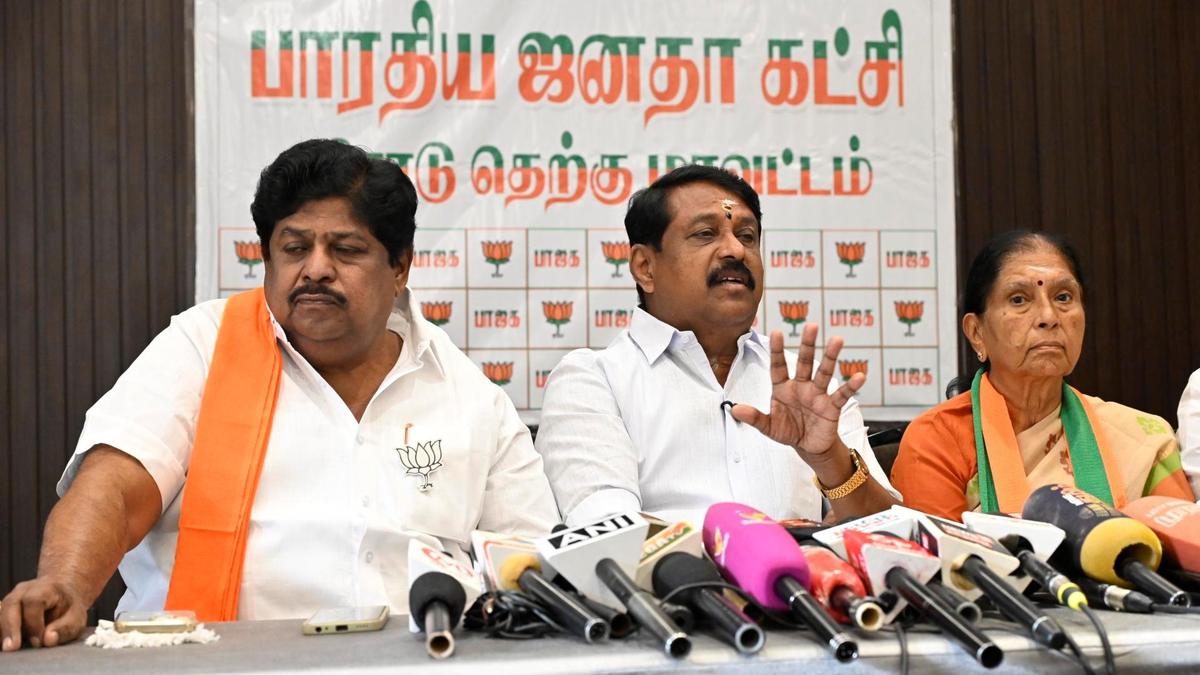
During a recent interaction, Nainar Nagendran addressed the growing concerns regarding the redrawing of electoral maps. He stated that the process is a standard administrative requirement that should not be viewed through a political lens. However, he quickly turned his focus toward the DMK leadership. Nagendran accused Chief Minister M.K. Stalin of opposing every major initiative brought forth by the central government. He suggested that the DMK’s resistance to delimitation is a tactic to distract from internal issues and to protect the political future of the leader's family members.
Important Numbers and Facts
The current boundaries for Lok Sabha seats are largely based on the population data from the 1971 census. This was done to ensure that states that successfully implemented population control measures were not punished by losing seats. However, a new census and the subsequent redrawing of districts are expected to take place around 2026. Experts suggest that if the seats are redistributed based on current population trends, Northern states could see a massive increase in their number of Members of Parliament (MPs), while Southern states might see their share stay the same or even shrink in comparison. This shift could change the balance of power in the Indian Parliament for decades to come.
Background and Context
To understand why this is such a big deal, one must look at how India manages its voting districts. Every few decades, the government is supposed to adjust the size and number of districts so that each MP represents roughly the same number of people. In the 1970s, the government decided to freeze this process to encourage states to control their population growth. Southern states like Tamil Nadu and Kerala were very successful in this mission. Northern states, however, saw their populations continue to grow rapidly. Now that the freeze is ending, the Southern states feel they are being "punished" for their success. They argue that having fewer seats in Parliament will mean they have less say in how national money is spent and how laws are made.
Public or Industry Reaction
The reaction to Nagendran’s comments has been split along party lines. Supporters of the BJP argue that a "one person, one vote" system is the only way to ensure true democracy. They believe that every citizen's vote should carry the same weight, regardless of which state they live in. On the other side, the DMK and other regional parties have called the delimitation plan an "attack on federalism." They argue that it ignores the unique contributions and social progress made by the South. Local activists have also expressed concern that a reduction in political power could lead to a reduction in the central government funds allocated to Tamil Nadu for schools, hospitals, and roads.
What This Means Going Forward
In the coming months, the tension over this issue is likely to grow. The central government will need to find a way to balance the constitutional requirement for equal representation with the fears of the Southern states. There are talks of potentially increasing the total number of seats in Parliament so that no state actually loses any current seats, even if some states gain more than others. For Tamil Nadu, the political battle will center on the 2026 timeline. The DMK is expected to make this a major campaign issue, while the BJP will continue to frame it as a necessary step for national unity and administrative efficiency.
Final Take
The conflict between Nainar Nagendran and M.K. Stalin is more than just a local political spat. It represents a fundamental question about how India should be governed. As the country moves toward the 2026 deadline, the pressure to find a fair solution will increase. While the BJP views the exercise as a way to modernize the voting system, regional leaders see it as a threat to their voice in the nation's future. The outcome of this debate will determine how much influence Tamil Nadu and its neighbors will hold in the halls of power for the next generation.
Frequently Asked Questions
What is delimitation?
Delimitation is the process of fixing or redrawing the boundaries of territorial constituencies in a country to reflect changes in the population over time.
Why is Tamil Nadu worried about this process?
Tamil Nadu has successfully controlled its population growth. If seats are assigned based on population, the state might have fewer representatives in Parliament compared to states with much larger populations.
What was the specific criticism against M.K. Stalin?
BJP leader Nainar Nagendran claimed that the Chief Minister opposes the plan only to serve his own political interests and the interests of his family, rather than looking at the national benefit.



