
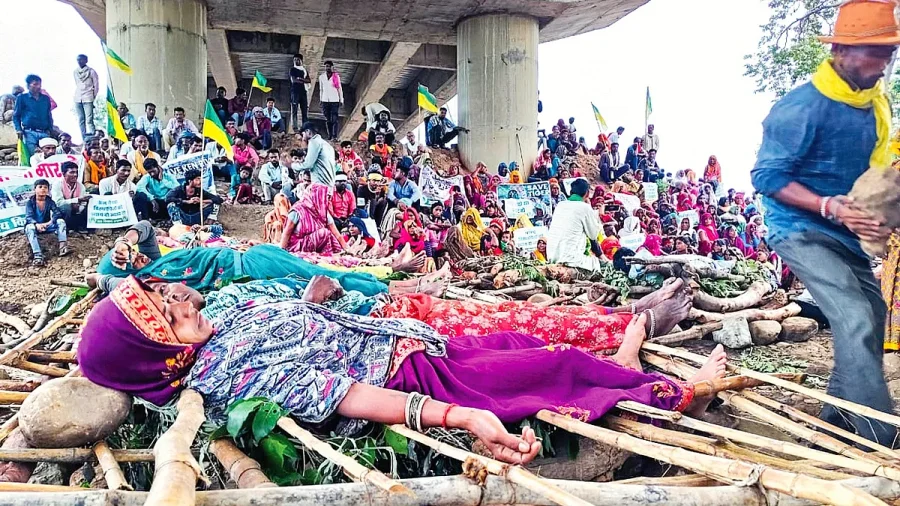
The scene along the banks of the Barana river in Madhya Pradesh could be mistaken for a mass funeral. Women lie motionless on wooden pyres. Men and women, faces smeared with ash, have their arms tied to wooden crosses. Young men stand waist‑deep in the water, nooses around their necks, holding placards that read: ‘Nyay do ya mrityu’ – give us justice or death. This is not a ritual. This is a last‑ditch protest by villagers who say the Daudhan dam will drown their homes and their futures.
A tribute to the river that will vanish with the dam
The Barana river, a tributary of the Ken, is the lifeline of these villages. But the Daudhan dam, part of the ambitious Ken‑Betwa Link Project, will submerge dozens of settlements. For the villagers, the symbolic death rites are a way to make the world see their agony. “We are destitute in our own country,” said 23‑year‑old Raj Kumar, one of the protesters, summing up the despair of hundreds.
Why these villagers are willing to die for their land
This is not hyperbole. The Ken‑Betwa Link Project, conceived under the Interlinking of Rivers (ILR) programme, is the first of 37 such projects planned across India – from Bihar and Karnataka to Kerala and Sikkim. The Daudhan dam alone costs Rs 45,000 crore. For the government, it promises irrigation, drinking water, and hydropower. For the villagers, it means the end of their ancestral lands, their identity, and their means of survival. Without proper rehabilitation or compensation, they see no future.
How the protest unfolded – a timeline of desperation
According to eyewitnesses, the protest began early this week. Women of all ages volunteered to lie on pyres made of wood, while men smeared ash on their faces as a sign of mourning. Others tied themselves to crosses, a direct reference to crucifixion, symbolising the pain of being uprooted. Young men waded into the river with nooses, shouting slogans. The placards carried only one demand: justice or death. The protest has drawn attention to the humanitarian side of a mega‑infrastructure project often discussed only in terms of water and money.
Who is affected and what it means for ordinary Indians
The families living along the Barana river are mostly farmers, landless labourers, and adivasi communities. The dam will not only drown their homes but also destroy the ecosystem they depend on. Villagers told reporters that no adequate compensation package has been offered. Many fear they will end up in resettlement colonies with no jobs, no schools, and no dignity. “We have no voice against the big project, so we show them our death,” one elderly woman said, lying on the pyre.
Authorities remain silent – what we know so far
As of now, no official statement has been released by the Madhya Pradesh government or the project authorities. The Ken‑Betwa Link Project is a joint venture between the Centre and the state, with the National Water Development Agency (NWDA) overseeing implementation. Typically, officials argue that such dams provide multi‑state benefits and that resettlement plans exist. But protesters insist that land records are incomplete, that cash offers are inadequate, and that promises of alternative land have not been kept.
Why this dam is a test case for India’s river‑linking dreams
The Interlinking of Rivers programme has been debated for decades. Supporters say it will end water scarcity and prevent floods. Critics point to astronomical costs, ecological damage, and mass displacement. The Daudhan dam is the first domino. The way the government handles this protest and the rehabilitation of these villagers will set a precedent for the 36 other projects to follow. If people have to enact their own deaths to be heard, the entire programme stands on shaky moral ground.
Confirmed facts vs what remains unclear
What we know for sure: Villagers performed symbolic death rituals on the banks of the Barana river to protest the Daudhan dam. The protest involves women on pyres, men on crosses, and young men with nooses. The dam is part of the Ken‑Betwa Link Project costing Rs 45,000 crore. The ILR programme includes 37 projects across many states. Raj Kumar, 23, is a named protester. What remains unclear: The exact number of villages affected, the official rehabilitation package, and any government response to the protest. Speculation that the protest may escalate or be dispersed by police is not confirmed.
Risks and a balanced view of the dam project
It is important to note that the Ken‑Betwa Link Project is not without merits. Proponents, including the central government, argue that it will provide irrigation to drought‑prone areas of Bundelkhand, supply drinking water to millions, and generate electricity. The project was approved after years of feasibility studies. However, critics – including environmental groups and civil society – have flagged the submergence of tiger habitats, displacement of thousands of families, and inadequate rehabilitation frameworks. The protest reflects a failure of communication and trust between the state and the affected communities.
Wider trend: How infrastructure projects are being resisted across India
From the Polavaram dam in Andhra Pradesh to the Tilaiya dam in Jharkhand, large dam projects have repeatedly faced protests over displacement and rehabilitation. The pattern is similar: grand promises of development, inadequate compensation, and villagers left fighting for their homes. The Daudhan protest is unique in its graphic symbolism, but the underlying human story is all too common. This trend raises urgent questions about India’s model of development and whether the voices of the most vulnerable are ever truly heard.
What readers should know about the protest
For those wishing to understand the issue, the core demand is simple: the villagers want land‑for‑land rehabilitation and a fair resettlement package before construction proceeds. They are not against development per se, but against being treated as collateral damage. Citizens can follow the story through local media and civil society groups working on displacement rights. For now, the protest on the Barana riverbanks is a stark reminder that behind every mega‑project, there are people willing to die for their homes.
Future outlook: What could happen next
If the government does not respond, the protest may intensify or spread to other villages. Alternatively, authorities may offer a revised compensation package to defuse the situation. The Supreme Court has, in the past, intervened on displacement issues, but no petition is known to have been filed yet. The Ken‑Betwa project timeline – completion is years away – gives room for negotiation, but only if both sides sit down. Without dialogue, scenes like these may become more frequent.
Our Take
The image of a woman lying on a funeral pyre next to the river she will lose is heartbreaking, and it should be politically uncomfortable. This story is not about a dam alone – it is about who gets to decide the future of India’s villages. The protesters have chosen a language of ritual and sacrifice because legal and political channels have failed them. The tragedy is that they had to do this at all. The Ken‑Betwa Link Project may be celebrated as engineering marvel, but its first human toll is this silent scream for justice on the banks of the Barana.
Frequently Asked Questions
What is the Daudhan dam protest about?
Villagers along the Barana river in Madhya Pradesh are protesting the construction of the Daudhan dam, which will submerge their homes. They staged symbolic death rituals – lying on pyres, standing with nooses – to demand justice and better rehabilitation.
What is the Ken‑Betwa Link Project?
It is India’s first Interlinking of Rivers project, costing Rs 45,000 crore. It aims to transfer water from the Ken river to the Betwa river to irrigate drought‑prone Bundelkhand. The Daudhan dam is a key part of this project.
Why are villagers saying they are ‘destitute in their own country’?
They feel abandoned by the government. Despite losing their ancestral lands, they claim they have not received fair compensation or alternative land, making them landless and homeless within India.
Has the government responded to the protest?
As of the latest reports, no official statement has been issued by the Madhya Pradesh government or the project authorities. The protest is ongoing.

