*By Newsroom Desk | Health & Education Beat*
In classrooms across Kerala, make-up has quietly become a fixation for a growing number of schoolchildren. What be...
Main Update
A large number of schoolchildren in Kerala are showing an early, morbid fascination with cosmetics, according to a report examining the trend.
Impact
The report focuses on the mental and physical consequences of this obsessive behaviour in children.
Official Response
Experts have named the pattern Cosmeticorexia, framing it as a behavioural concern rather than simple vanity.
Reporting
The phenomenon was investigated by journalist Navamy Sudhish.
Current Status
The trend is flagged as a growing concern for childhood wellbeing, though the full scale across the state is not yet established.
*By Newsroom Desk | Health & Education Beat*
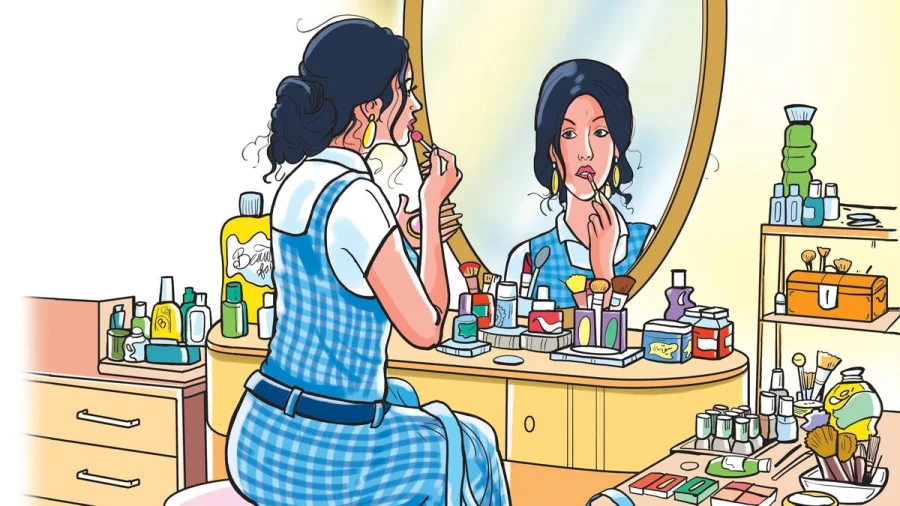
In classrooms across Kerala, make-up has quietly become a fixation for a growing number of schoolchildren. What begins as a playful experiment in front of a mirror can turn into an obsessive relationship with cosmetics — a pattern experts have come to call Cosmeticorexia. The trend raises uncomfortable questions about what is happening to childhood itself.
A classroom trend with a clinical name
A large number of schoolchildren in Kerala are developing an early, morbid fascination with cosmetics, according to the original report into the phenomenon. The behaviour is not being dismissed as a phase. Experts have given it a term — Cosmeticorexia — to describe the obsessive pattern that goes well beyond an ordinary interest in beauty products.
Why this make-up obsession demands attention
The significance of Cosmeticorexia lies in its consequences. The report by Navamy Sudhish specifically examines the mental and physical toll of the obsessive behaviour. At the most basic level, a mind consumed with appearance has less space for study, play and the slow, natural process of building self-worth.
How a childhood fixation became a public concern
The phenomenon in Kerala's schools has moved from scattered anecdotes to a recognisable concern through detailed examination of how children relate to cosmetics. The reporting traces how a fascination among