
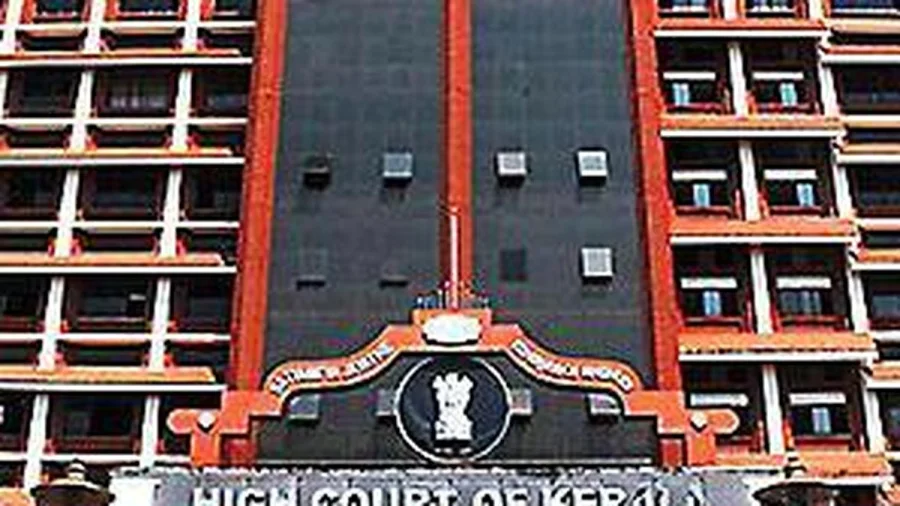
Courts do not use the word "dismayed" lightly. When the Kerala High Court applied it to the Cochin Devaswom Board (CDB) over a ₹28.44 lakh expenditure on an official's quarters and vehicle, it signalled something deeper: a loss of judicial patience with how temple money is being handled. The immediate fall-out is a court-imposed deadline on the board's audit.
The ₹28.44 Lakh Expenditure That Drew Judicial Rebuke
The High Court's disapproval centres on the CDB's spending on accommodation and a vehicle for an official. The amount — ₹28.44 lakh — was raised during court proceedings, prompting the bench to express its dismay in unambiguous terms.
The core development: the court has ordered the Kerala State Audit department to complete the CDB's 2023-24 audit within three months. This places the board's finances under time-bound, official scrutiny.
Why Temple Board Spending Concerns Every Devotee
The Cochin Devaswom Board manages a number of Hindu temples in central Kerala. Its income comes from devotees' offerings, temple properties and other sources — meaning every rupee spent on an official's quarters or vehicle is money that would otherwise go towards temple administration, upkeep or welfare.
The court's dismay raises a broader public question: are spending rules being followed when such expenses are approved, and who is accountable for those approvals?
Cochin Devaswom Board: The Institution Behind the Case
The CDB is a statutory body that administers Hindu temples in the regions formerly under the Cochin kingdom, with its headquarters in Ernakulam. It functions alongside other Devaswom boards in Kerala, all of which are expected to maintain strict financial discipline over temple funds.
At the centre of the present dispute are the board's accounts for the financial year 2023-24, now subject to the audit ordered by the court.
The Three-Month Audit Order and What It Signals
By directing the Kerala State Audit department to finish the 2023-24 audit within three months, the court has effectively placed accountability on a strict clock. Such deadlines are typically used to ensure financial lapses do not disappear into bureaucratic delay.
The audit is meant to establish whether the ₹28.44 lakh expenditure complied with norms and was properly sanctioned. Its findings, however, are not yet public.
What Remains Unclear
Several details are still unverified at this stage: the identity of the official involved, how the ₹28.44 lakh was divided between the quarters and the vehicle, and whether the spending breached sanctioning rules. The court's full observations are expected to become clearer once official records or subsequent proceedings are reported.
The Balanced View: Routine Expense or Reckless Spending?
Housing and transport allowances for officials are not unusual in public bodies, and the Cochin Devaswom Board may well argue that its spending followed established procedures. The issue is not whether such expenditure happens — it is whether it was proportionate, transparent and properly sanctioned. The audit, not the initial judicial reaction, will settle that.
What Happens Next
The Kerala State Audit department's findings on the 2023-24 accounts will shape the next stage of the proceedings. If irregularities emerge, the court may call for further explanations or corrective steps. For the CDB, the coming three months are likely to be dominated by documentation and compliance.
Our Take
This case is less about one vehicle or one set of quarters, and more about a suspicion many devotees have long carried — that temple funds are sometimes treated as routine administrative money. The court's dismay is a reminder that religious institutions managing public offerings carry a higher duty of financial discipline. The audit report will now reveal whether this was an isolated lapse or a symptom of a larger problem.
Frequently Asked Questions
Why did the Kerala High Court express dismay over the Cochin Devaswom Board?
The court was troubled by the board spending ₹28.44 lakh on an official's quarters and vehicle. It expressed dismay over the expenditure and ordered the Kerala State Audit department to complete the CDB's 2023-24 audit within three months.
How much did the Cochin Devaswom Board spend on the official's quarters and vehicle?
According to the reported court proceedings, the total expenditure was ₹28.44 lakh. The exact break-up



