
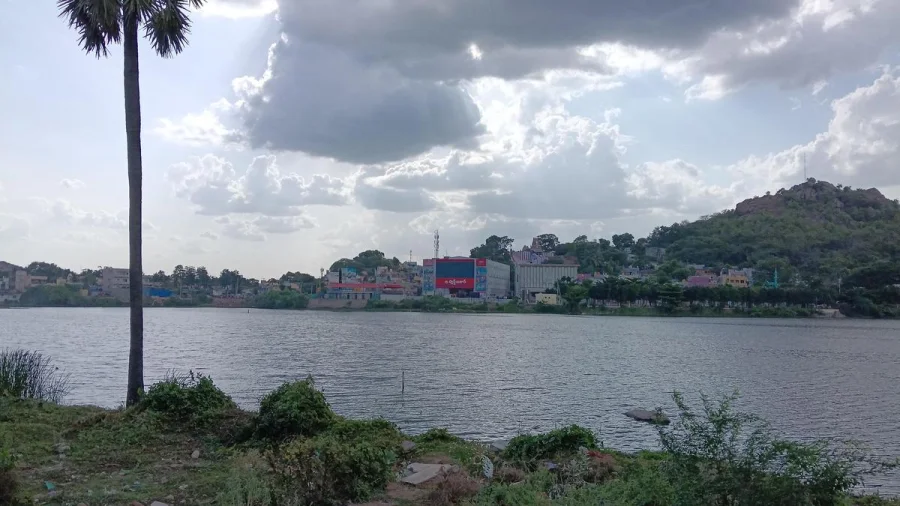
On paper, the tanks of Chittoor still dot Andhra Pradesh's map. On the ground, many hold less water than they once did — and some barely hold any at all. Silt has piled into their beds, inflows have weakened, and catchment areas have changed. Together, these forces have quietly choked the district's irrigation tanks, pushing farmers closer to the edge with each passing season.
How silt and shifting catchments drained Chittoor's tanks
According to a report by K. Umashankar, the core problem is threefold: siltation filling tank beds, reduced inflows from rainfall and upstream sources, and alterations in the catchment areas that traditionally fed these water bodies. Each factor compounds the others. A silted bed holds less water. A changed catchment sends less water into the tank in the first place. Reduced inflows then leave less water to flush the system — creating a cycle that deepens the crisis.
Why a choked tank is a farmer's quiet crisis
For farmers in Chittoor, tanks are not scenic backdrops — they are the difference between a standing crop and a failed one. When a tank loses storage capacity, irrigation turns unreliable. Fields that depended on tank water are left dry, and farmers are forced into costlier alternatives like borewells, or simply left waiting for rain that may not come. The damage is slow, cumulative and rarely visible until the cracks appear in the soil.
A slow decline: what changed in the catchment areas
The report points to catchment changes as a key driver of the tanks' decline. Catchment areas that once directed rainwater into the tanks have been altered over time — through shifting land use, construction, and changing drainage patterns. The result is that even when rainfall is adequate, the water no longer reaches the tanks the way it once did. The tanks, in effect, are being starved from both ends: less water coming in, less capacity to hold what arrives.
Who feels the pinch: small farmers and rain-fed fields
The hardest hit are small and marginal farmers who depend on tank irrigation for their primary crops. Without reliable tank storage, their planting decisions become gambles. A good monsoon raises hopes, but if the tank cannot hold the water, those hopes drain away. The emotional toll is real too — land that families have cultivated for generations loses its dependability, and with it, the security that comes from a predictable water source.
What the district administration is doing now
Officials in the district administration have recognised the gravity of the situation and are making efforts to rejuvenate the water bodies, according to the report. Desiltation work and efforts to restore the tanks' capacity are central to these attempts. But rejuvenation of this scale takes time, money and coordinated planning — and the report makes clear that the gap between what is needed and what has been done so far remains wide.
Rejuvenation is more than just desilting
Digging out silt restores storage capacity, but it does not fix the water problem by itself. A rejuvenated tank still needs water to reach it. That means restoring and protecting catchment areas, managing upstream flows and ensuring that whatever work is done survives the next monsoon rather than being undone by it. Experts would argue that tank revival in Chittoor must be treated as a watershed-level exercise, not a one-time cleaning drive. The coming months will test whether the administration's approach is built to last.
What is confirmed and what remains unclear
Confirmed by the report: Tanks in Chittoor are choking due to siltation, reduced inflows and catchment changes. Irrigation sources have been crippled. Farmers have been put in difficulty. The district administration is making rejuvenation efforts.
Still unclear: The exact number of tanks affected, the scale of storage loss, and the specific timeline for the ongoing rejuvenation work. These details have not been disclosed in the available reporting, and any figure circulating without official confirmation should be treated as speculation.
The risks in a revival drive
There are reasons to be cautious. Tank rejuvenation programmes can stall over funding, land disputes or simply the slow pace of bureaucracy. There is also the risk that desiltation is done without restoring the catchment areas — in which case, the tanks may fill with silt again within a few seasons. Farmers who have already lost faith in the system may not return to tank-dependent farming quickly, even after revival. The administration's challenge is not just physical, but psychological: convincing farmers that the tanks are worth trusting again.
Andhra's tanks are part of a larger water story
Chittoor is not alone. Across Andhra Pradesh and much of southern India, traditional tank systems have been deteriorating for decades — victims of changing rainfall patterns, urban expansion and decades of under-maintenance. The push to revive Chittoor's tanks is therefore part of a broader reckoning with how India manages its surface water. If the district succeeds, it could become a template. If it falters, it will be another example of a lifeline lost more to neglect than to nature.
What farmers and residents can do while revival lags
For farmers in Chittoor, the practical advice is to stay informed about the administration's rejuvenation plans and participate in village-level water management discussions. Farmers can also press for transparency on which tanks are being desilted and when. For residents, water conservation in daily use reduces pressure on groundwater — which matters because when tanks fail, borewells take the strain. Community participation in cleaning feeder channels and protecting catchment land can make a meaningful difference even before official work reaches every tank.
What could happen next
The trajectory of Chittoor's tanks will depend on three factors: whether the administration's rejuvenation efforts are sustained beyond the current push, whether catchment restoration is treated as seriously as desilting, and whether the monsoon cooperates. If the efforts hold, the district could see partial storage recovery within a few seasons. If not, the tanks will continue their slow slide, and farmers will have no choice but to adapt to a drier reality. The next monsoon will be the first real test.
Our Take
The story of Chittoor's shrinking tanks is not just a water story — it is a story about how infrastructure falls apart quietly and how revival is far harder than decay. The district administration deserves credit for stepping up, but the measure of success will not be the number of tanks desilted; it will be whether fields get watered two years from now. Rejuvenating shrinking tanks in Andhra means fixing the entire system around the tank — the catchment, the inflows, the community's role and the maintenance cycle. Anything less is a temporary fix for a permanent problem.
Frequently Asked Questions
Why are irrigation tanks in Andhra Pradesh shrinking?
Irrigation tanks in Andhra Pradesh's Chittoor district are shrinking primarily due to siltation — the buildup of silt on tank beds — combined with reduced water inflows and changes in catchment areas that once fed the tanks. These factors together have reduced the tanks' storage capacity and crippled their ability to support irrigation.
How does tank siltation affect farmers in Chittoor?
Siltation reduces the amount of water a tank can hold, making irrigation unreliable. Farmers who depend on tank water for their crops face failed or reduced cultivation, are forced to rely on expensive alternatives like borewells, or must wait for rainfall that may not be sufficient. The report describes farmers as being "in a fix" because of this loss of irrigation sources.
What is the Andhra Pradesh administration doing to rejuvenate the tanks?
According to the report, the Chittoor district administration is making efforts to rejuvenate the water bodies. The work focuses on addressing the choking of tanks — primarily through desiltation — though the full scale and timeline of the revival effort remain unclear from the available reporting.
Can rejuvenated tanks solve the water crisis for farmers?
Rejuvenation can significantly help if it addresses the root causes — not just desilting but also restoring catchment areas and ensuring inflows reach the tanks. If only silt is removed while catchments remain degraded, the tanks may fill up again quickly. Long-term success depends on treating tank revival as a complete watershed management exercise, not a one-time cleanup.

