
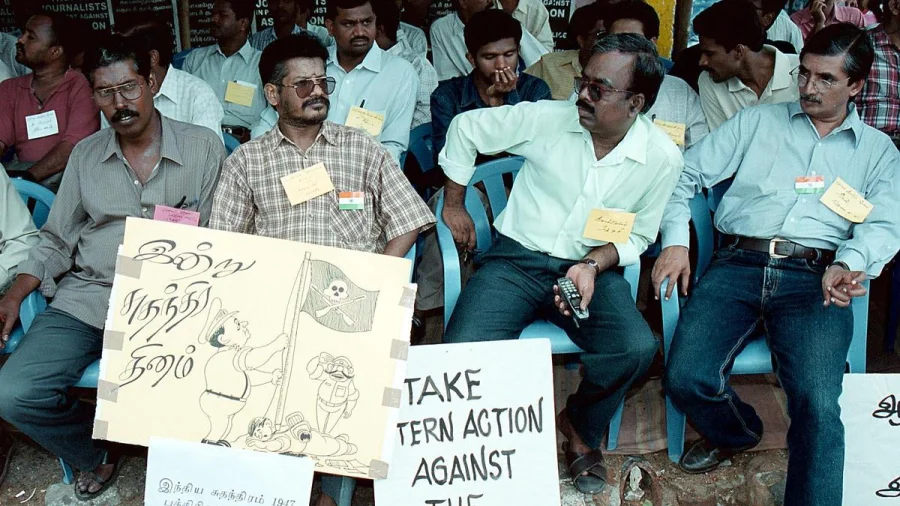
Patriotic songs were still echoing across Chennai on August 15, 2001, when a different kind of Independence Day unfolded near the State Guest House. Journalists sat down for a day-long fast — not against colonial rule, but against the police force meant to protect them. Their message: attacking those who inform the public is attacking democracy itself.
A fast born from a pattern of police attacks
The protest, as recorded in the original account of the event, was a direct response to frequent attacks on mediapersons by the police. This was not a reaction to a single incident but a collective breaking point. For the city's working journalists, the fast was a signal that intimidation had become routine — and would no longer be accepted quietly.
Why Independence Day became the day of protest
The date was not accidental. Independence Day carries a promise — of free speech, a free press, and free citizens. By fasting on that day, the journalists drew a stark parallel: a nation cannot call itself independent if the people who report on it cannot do their jobs without fear.
The scene near the State Guest House
The location placed the protest at the doorstep of official power. The State Guest House is where the state receives its visitors; the fast held near it put the journalists' grievance directly in the path of the administration. The original account does not explain the choice of venue, but the gesture was unmistakable.
What remains unclear about the 2001 fast
Honest reporting requires acknowledging the gaps in this story. No high-confidence records were available to verify the names of organisers, the number of participants, the specific attacks that triggered the protest, or how the authorities responded. This article is based solely on the headline and the original story. A fuller reconstruction would require archived newspaper editions from mid-August 2001.
The deeper question the protest raised
Twenty-five years later, the question behind that fast has not aged: who holds the police accountable when they turn on the press? The Chennai journalists' fast was about physical safety, but it was also about the freedom of every reader, viewer, and citizen who depends on honest news.
Why this protest still matters today
Press freedom in India has evolved in complex ways since 2001, but the tension between mediapersons and the police has never fully disappeared. The Independence Day fast belongs in that longer story — a moment when journalists used their own bodies to make a point their words alone could not carry.
What readers and researchers should know
For those studying media history or press freedom, the 2001 Chennai fast is a valuable marker. Researchers should look for The Hindu, The Indian Express, and other newspaper archives from August 15–16, 2001 for contemporary coverage. Readers today can treat this as a reminder that press freedom survives only when it is actively defended.
Our Take
The fast on Independence Day 2001 was a moment of moral clarity. It said that a republic that cannot protect the people who keep its citizens informed has compromised its own ideals. Twenty-five years on, the story is worth remembering not just because it happened, but because the conditions that made it necessary still echo.
Frequently Asked Questions
Why did Chennai journalists hold a fast on Independence Day 2001?
Chennai journalists held a day-long fast on Independence Day 2001 to protest frequent attacks on mediapersons by the police. The protest was their collective response to growing concerns over the safety of working journalists.
Where did the Chennai journalists' fast take place?
The day-long fast took place near the State Guest House in Chennai, placing the protest in the heart of the city's official administrative zone.
What was the main grievance behind the 2001 press fast?
The core grievance was the repeated attacks on mediapersons by the police. The original account does not specify individual incidents, organisers, or formal demands beyond the act of protest itself.
Did the Chennai journalists' 2001 protest achieve its goals?
The available source does not record the outcome of the fast. Any assessment of its impact would require archived news reports from August 2001 and the weeks that followed.



