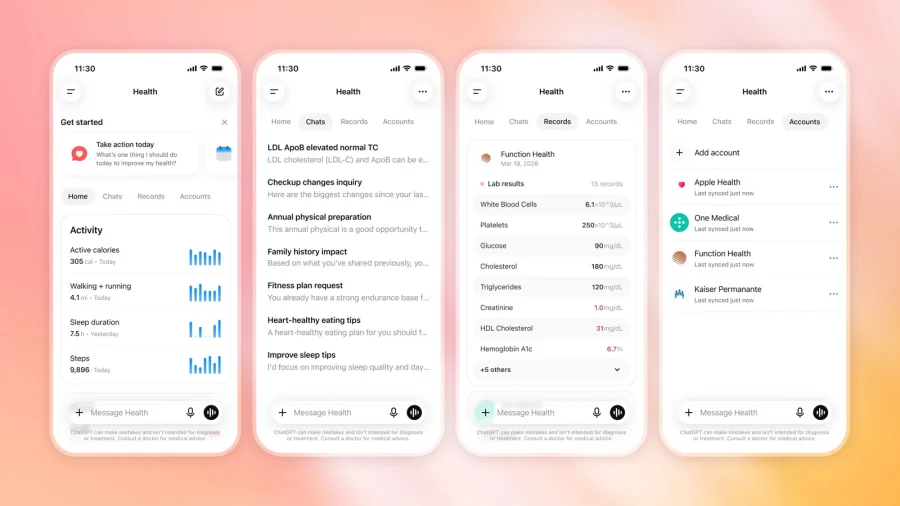
OpenAI is making its boldest push yet into healthcare: ChatGPT Health is rolling out to users in the United States who are 18 years or older, allowing the AI to access and analyze personal medical records. For millions, this could mean instant summaries of lab reports, medication guidance, or even symptom explanations — all through a chatbot interface. But the move also reignites a fundamental question: should an AI company hold your most private health data?
What ChatGPT Health Actually Does
The new feature lets users upload or share health records — including doctor’s notes, test results, and prescription histories — directly with ChatGPT. The AI then processes this information to provide summaries, answer questions, or offer context about medical conditions. OpenAI frames this as a tool for empowerment: giving patients clearer understanding of their own health data without needing a medical degree.
Why Sharing Medical Data with AI Is Different
Health records are among the most sensitive personal information a person possesses. Unlike browsing history or shopping preferences, medical data can reveal genetic predispositions, mental health conditions, reproductive choices, and chronic illnesses. Once shared with an AI system, questions arise about storage, encryption, third-party access, and whether the data could be used to train future models. OpenAI has not yet published a specific health data privacy policy for this rollout.
The Privacy Calculus: Convenience vs. Risk
For users, the trade-off is clear: instant medical insight in exchange for handing over deeply personal information. OpenAI’s existing privacy policies allow for data use in model improvement unless users opt out, but health records introduce a new layer of sensitivity. Experts warn that even anonymized data can sometimes be re-identified, and that AI systems are not immune to breaches. The company has not confirmed whether health data will be treated differently from other user inputs.
Who Is Affected by the Rollout
The feature is currently limited to US users aged 18 and older. This demographic includes young adults managing their first independent health decisions, working professionals tracking chronic conditions, and older users navigating complex medication regimens. Each group faces different stakes: a misinterpreted lab value could lead to unnecessary anxiety, while accurate summaries could improve health literacy.
OpenAI’s Stance and Regulatory Landscape
OpenAI has positioned ChatGPT Health as a complementary tool, not a replacement for professional medical advice. The company emphasizes that users should consult doctors for diagnosis and treatment decisions. However, regulators — including the US Federal Trade Commission and health privacy authorities — are likely to examine whether the feature complies with HIPAA and other medical data protection laws. OpenAI has not stated whether ChatGPT Health is HIPAA-compliant.
What This Means for Medical AI Adoption
This rollout marks a significant step in normalizing AI’s role in personal healthcare management. If successful, it could accelerate similar features from competitors like Google’s Med-PaLM or Microsoft’s healthcare AI tools. But if privacy incidents or accuracy failures emerge, it could set back public trust in AI-assisted healthcare for years. The stakes are unusually high because health data errors can have real-world consequences — missed diagnoses, incorrect medication advice, or privacy violations.
Confirmed Facts vs What Remains Unclear
What is confirmed: ChatGPT Health is rolling out to US users 18+. OpenAI has not detailed specific data handling protocols for health records. What remains unclear: whether health data will be used for model training, how long it will be stored, what encryption standards apply, and whether users can fully delete their health data after sharing. OpenAI has not released a dedicated health privacy policy.
Risks and Balanced View
Supporters argue that AI-powered health record analysis can democratize medical knowledge, reduce health literacy gaps, and help patients prepare for doctor visits. Critics counter that the risks of data misuse, algorithmic bias, and over-reliance on AI for medical decisions outweigh the benefits. There is also concern that users may treat ChatGPT’s outputs as definitive medical advice, despite disclaimers. The feature’s success depends on OpenAI’s ability to earn trust through transparency and robust safeguards.
Wider Trend: Big Tech’s Push into Healthcare Data
OpenAI is not alone. Apple, Google, Amazon, and Microsoft have all invested in health data platforms, from Apple Health Records to Google’s Care Studio. The trend reflects a belief that AI can unlock insights from fragmented medical data. But each company has faced scrutiny over data privacy, and OpenAI’s entry raises the question of whether a company primarily known for chatbots can handle the regulatory and ethical complexity of healthcare.
Practical Guidance for Users Considering ChatGPT Health
If you are a US user 18 or older considering the feature, start by reviewing OpenAI’s current privacy policy and checking for any health-specific updates. Avoid sharing identifiable information beyond what is necessary. Use the tool for informational summaries, not medical decisions. Always verify AI-generated health insights with a licensed professional. Consider whether the convenience justifies the privacy trade-off for your specific situation.
Future Outlook
OpenAI’s health records feature could expand to other countries, integrate with electronic health record systems, or face legal challenges that reshape its scope. Regulatory clarity — especially around HIPAA compliance and data minimization — will likely determine whether this becomes a mainstream tool or a cautionary tale. The coming months will reveal whether users trust ChatGPT with their most sensitive data.
Our Take
OpenAI’s health records push is a logical extension of its mission to make AI universally useful, but it also tests the limits of user trust. The company has not yet demonstrated that it can handle health data with the rigor and transparency that medical information demands. Until clear, enforceable privacy protections are in place — and independently verified — users should approach ChatGPT Health with caution. The promise of convenience should not override the fundamental right to medical privacy.
Frequently Asked Questions
Is ChatGPT Health HIPAA compliant?
OpenAI has not confirmed whether ChatGPT Health meets HIPAA standards. Users should assume standard privacy protections apply unless stated otherwise.
Can I delete my health data from ChatGPT after sharing it?
OpenAI allows users to delete chat history, but it is unclear whether health data is permanently removed from backup systems or model training data.
Will ChatGPT Health replace my doctor?
No. OpenAI explicitly states that ChatGPT Health is a complementary tool and not a substitute for professional medical advice, diagnosis, or treatment.
What types of health records can I upload to ChatGPT Health?
The feature accepts various medical documents including lab reports, doctor’s notes, and prescription records. Specific file format support has not been detailed.