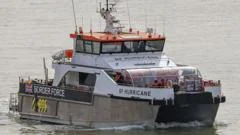
A stretch of the world's busiest shipping lane turned into an emergency zone when fire broke out on a small boat heading for the UK. More than 150 migrants were rescued after the vessel's engine caught fire mid-crossing, according to French authorities. For everyone on board, a journey already loaded with risk suddenly became a race against flames and open water.
Engine fire during a Channel crossing attempt
The boat was attempting to cross the Channel to the UK when its engine caught fire, French authorities said. The resulting rescue operation brought more than 150 migrants to safety — a figure that points to the sheer scale of the crossing attempt.
Exactly how the rescue unfolded, and how long those on board waited for help, has not been detailed. What is clear is that a mechanical failure on a crowded vessel turned a routine — if dangerous — crossing into a life-threatening emergency.
Why a fire at sea in the Channel is especially dangerous
A fire on a small boat in the Channel is among the most hazardous scenarios for migrants and rescuers alike. The water is cold, the nearest shore is far, and a fast-moving blaze can force people to jump into the sea with almost no warning. Fire can also spread quickly to fuel stores, leaving rescue crews little time to act.
These are general risks of any Channel crossing emergency. Whether they played out in this specific incident remains part of the ongoing assessment by authorities.
What is confirmed — and what is still missing
Confirmed so far: more than 150 migrants were rescued; the boat's engine caught fire; the vessel was attempting to reach the UK; and the account comes from French authorities.
Not yet known: the exact location in the Channel, the time of the incident, the number of rescue vessels involved, and whether anyone was injured. Until officials release those details, they should be treated as open questions — not answered ones.
The human weight behind every Channel rescue
Behind the numbers are people who boarded a small vessel with the hope of reaching the UK. For them, this journey ended not with arrival but with an emergency at sea. A rescue is a reprieve — but it is also a reminder of how close such crossings can come to disaster.
Each person pulled from that boat now faces a different kind of uncertainty: what happens next, where they are taken, and what the outcome of their journey will be.
French authorities confirm the emergency response
French authorities said the boat was attempting to cross to the UK when its engine caught fire. Their confirmation establishes the basic sequence of events: a crossing attempt, a mechanical fire, and a rescue of more than 150 people.
No further official statement has been released at the time of writing. The response effort itself — how many vessels and personnel were mobilised — has not yet been publicly detailed.
Why details are still emerging
Rescue and reporting operations of this kind typically unfold over hours. Authorities often release a fuller account only after the situation has stabilised and those rescued have been brought ashore and assessed.
Until then, any claims about injuries, the cause of the fire beyond the engine failure, or the nationality of those on board should be treated as unverified speculation — not confirmed reporting.
Confirmed facts vs what remains unclear
Verified: A boat attempting to cross the Channel to the UK caught fire. The engine was the source. More than 150 migrants were rescued. French authorities confirmed the incident.
Unclear: The precise location of the fire, whether anyone was injured, how the engine fire started, and what arrangements have been made for those rescued. All of these remain subject to official confirmation.
A familiar danger in a continuing crisis
Channel crossings have become a recurring and politically charged issue for both France and the UK. But this incident cuts through the debate with a simpler, harder reality: before politics, there is the sea — and the danger it holds for anyone crossing it in a small boat.
This rescue is the latest reminder that each attempted crossing carries the potential for tragedy, and that emergency services on both sides of the Channel remain on the front line of that risk.
What readers should keep in mind now
Rely on official updates from French and UK authorities rather than unverified posts circulating online. For anyone concerned about family members who may have been on board, official channels and credible news reporting remain the safest sources of information.
At this stage, patience is necessary. The full picture of what happened — and the condition of those rescued — will only emerge as authorities complete their response.
What happens next
Further statements from French authorities are expected as the rescue operation is assessed and those on board are accounted for. Questions about injuries, the final number of people rescued, and post-rescue procedures are likely to be addressed once officials confirm them.
The rescued migrants will need medical checks, shelter, and processing — though specific arrangements have not been confirmed for this incident. The coming hours will determine whether this story ends as a successful rescue or something more tragic.
Our Take
This was a rescue that could easily have been a catastrophe. That more than 150 people were saved reflects quick emergency work in unforgiving conditions. But it also forces a harder question: why are so many people still taking such extreme risks, and what is being done to address the root causes?
For now, the priority is the people rescued and the full facts of what happened. The politics can wait. The sea — and the fire that broke out on it — will not.
Frequently Asked Questions
How many migrants were rescued after the boat fire in the Channel?
More than 150 migrants were rescued, according to French authorities, after the boat they