
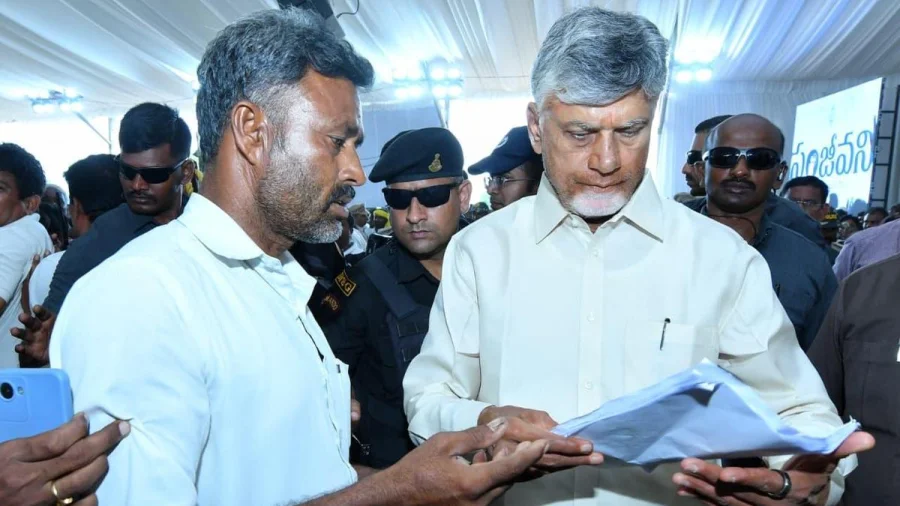
Good governance is not just a slogan for the Andhra Pradesh government — it’s the bedrock of public welfare, Chief Minister Chandrababu Naidu asserted while lauding efficient officials. His message was clear: administrative machinery must run like a well-oiled engine for citizens to reap the benefits of development.
Naidu’s governance vision: Efficiency as a tool for public welfare
Addressing a gathering of officials — likely at a review meeting or administrative conference — CM Naidu congratulated those who had excelled in their respective domains. He underlined that public welfare can be achieved only when the administrative machinery functions efficiently. The statement reinforces his long-standing emphasis on performance-driven governance.
Why this statement matters for Andhra Pradesh’s administration
The Chief Minister’s assertion comes at a time when the state government is pushing for transparency, timely delivery of schemes, and accountability at every level. For citizens, this means faster resolution of grievances, better implementation of welfare programmes, and a more responsive bureaucracy. Naidu’s words serve both as a pat on the back and a reminder of expectations.
Background: Naidu’s focus on governance reforms
Since returning to power, Chandrababu Naidu has consistently stressed the need for administrative efficiency. He has introduced measures such as performance audits, digital monitoring of schemes, and regular review meetings. This approach is rooted in his earlier tenure when Andhra Pradesh became a model for e-governance and ease of doing business.
Who benefits when administrative machinery works efficiently
Every citizen — from farmers waiting for subsidy transfers to students applying for scholarships — stands to gain. An efficient administration reduces delays, cuts corruption, and ensures that government programmes reach the intended beneficiaries. Naidu’s message directly connects good governance with improved quality of life.
Official response and government stance
The Chief Minister’s remarks were reported as part of his interaction with officials. No separate official statement or press release has been issued yet, but the sentiment aligns with the state government’s declared priorities. The administration is expected to operationalise this vision through specific targets and monitoring mechanisms.
What this means for the state’s governance model
Naidu’s emphasis is not new, but its timing suggests a renewed push. With elections or policy milestones ahead, the government is signaling that performance will be rewarded and inefficiency will not be tolerated. This could lead to more frequent performance reviews, incentives for top performers, and possibly penalties for laggards — all aimed at delivering public welfare.
Confirmed facts vs what is still unclear
Confirmed: CM Naidu congratulated high-performing officials and stated that public welfare depends on administrative efficiency. The government is committed to good governance. Unclear: The exact event, date, location, and whether specific targets were announced. These details are not available from the given source.
Administrative efficiency as a differentiator for Andhra Pradesh
Andhra Pradesh has historically been known for its bureaucratic effectiveness. Naidu’s push to institutionalise performance-based governance could strengthen the state’s position as a model for others. Efficient machinery means faster project clearances, better tax compliance, and improved service delivery — all critical for attracting investment and fostering growth.
Risks and challenges ahead
While the intent is laudable, translating good governance into reality faces hurdles: entrenched bureaucratic inertia, political pressure, and resource constraints. Critics argue that without measurable benchmarks and independent evaluation, the promise may remain aspirational. Balancing efficiency with equity — ensuring that rural and marginalised areas benefit equally — remains a challenge.
Wider pattern: States focusing on governance metrics
Naidu’s approach mirrors a national trend where chief ministers from various parties — from Andhra to Gujarat, Tamil Nadu to Madhya Pradesh — are adopting performance-driven governance. This includes ranking districts, linking officer transfers to outcomes, and using technology for transparency. The shift reflects a growing recognition that good governance is a vote-winner.
What this means for citizens
If you’re a resident of Andhra Pradesh, the immediate takeaway is that the government is watching its own machinery. You may experience faster service at government offices, shorter waiting times for certificates, and more responsive helplines. For job seekers or contractors dealing with the state, a focus on efficiency could reduce delays.
What could happen next
Expect the state to roll out specific governance initiatives in the coming weeks — possibly a dashboard for public monitoring, performance rankings of departments, or a rewards scheme for efficient officers. Naidu’s statement is likely a precursor to a more detailed plan. The opposition may scrutinise whether the promise translates into real change on the ground.
Our Take
Good governance is often a campaign promise but rarely a sustained practice. CM Naidu’s assertion is significant because it comes from a leader who has previously demonstrated capability in administrative reforms. However, the true test will be in execution — consistent monitoring, independent audits, and genuine responsiveness to public feedback. If the government walks the talk, Andhra Pradesh could set a benchmark. If not, it will be another speech lost in the archives. For now, it’s a welcome signal that efficiency is being taken seriously.
Frequently Asked Questions
What did CM Chandrababu Naidu say about good governance?
He asserted that his government is committed to delivering good governance and that public welfare can only be achieved when the administrative machinery works efficiently. He congratulated officials who performed well in their roles.
Why is administrative efficiency important for public welfare?
Efficient administration reduces delays, minimises corruption, ensures schemes reach beneficiaries, and improves overall trust in government. It directly affects the speed and quality of services like subsidies, healthcare, and education.
What steps has Naidu’s government taken to improve governance?
The CM has emphasised performance reviews, digital monitoring, and accountability. Previous measures include e-governance initiatives, real-time tracking of welfare schemes, and regular review meetings with district officials.
Will this affect common citizens in Andhra Pradesh?
Yes. If implemented effectively, citizens can expect faster processing of applications, better access to government schemes, and more responsive public services. However, the impact depends on consistent execution across departments.

