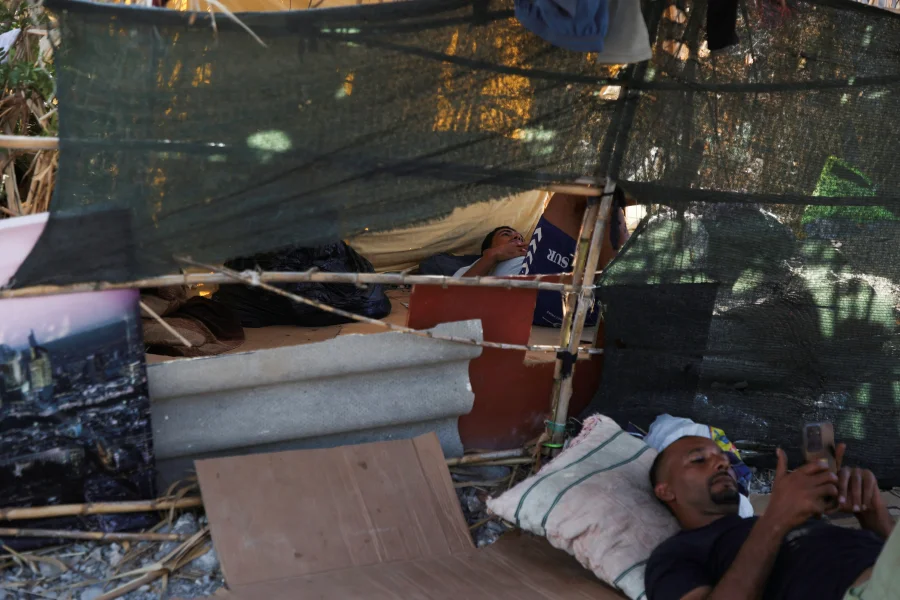
The number landed in the middle of a political storm: 5,800 migrants treated by Ceuta's health system in 15 days. Spain's Health Minister Mónica García used it on Sunday to push back against one word — collapse — and against another she considers more dangerous: xenophobia.
What the health minister actually said
García told reporters that Ceuta's hospital is "occupied at half" and that "there is no collapse." She went further: "Associating immigration with illness is unjust and xenophobic. Migrants do not bring diseases; they can fall ill, but they do not bring diseases." The distinction matters because it shapes how the public reads the pressure on Ceuta's services.
Why Ceuta's hospital pressure is a national story
Ceuta is one of Spain's two land borders with Africa — a small enclave city whose health system is sized for a local population, not a mass arrival. The figure of 5,800 treated patients comes after the reported entry of 70,000 people at the end of July, according to the original coverage. For a system built for a small city, that influx is a genuine operational test — and a political one.
The PP resignation demand behind the minister's rebuttal
Before García spoke, the People's Party had demanded her resignation over what it described as collapsed emergency services. Her statement was built as a direct rebuttal: half-occupied is not collapse, and the accusation, in her view, carries a xenophobic undertone. The exchange turns a public health update into a party-political confrontation.
On the ground in Castillejos: a quieter border
Across the border, the Moroccan town of Castillejos woke on Sunday with a reduced security deployment compared with Saturday, when authorities moved to block hundreds of migrants attempting to reach Ceuta. The lighter presence could signal a lull — or a pause before another attempt.
Confirmed facts versus what remains unclear
Confirmed: García's statement on 5,800 treated patients; her denial of collapse; the PP's resignation demand; the reduced Sunday deployment in Castillejos. Unclear: whether emergency services were genuinely overwhelmed at any point, how many migrants remain near the border, and how sustained the pressure will be.
The risks of both narratives
The minister's case rests on one snapshot: a half-occupied hospital. Critics argue capacity can change within hours and staff exhaustion is not captured by bed counts. Supporters counter that alarmist language stigmatises migrants and distorts public perception. Both risks are real; neither is resolved by a single official statement.
A recurring pattern at Spain's African borders
Ceuta and Melilla have been flashpoints for years. Large arrival surges are followed by political battles over who is responsible and how the situation is described. This episode follows that pattern — with the added edge of a health system being used as evidence in a political argument.
What readers should watch next
Three metrics matter: new arrival numbers, hospital occupancy trends, and border deployment levels. Political statements will continue, but the operational reality — how many people arrive and how the health system absorbs them — will determine whether "no collapse" holds.
What happens next
Attention now shifts to the PP's response to García's rebuttal and to any new movement at the border. If arrivals slow, the political temperature may drop with them. If they resume, the hospital figure will be updated — and the argument will restart.
Our Take
This is a story about language as much as beds. "Collapse" is a powerful word; so is "xenophobic." The minister used one to deny the other, but the underlying question remains operational: can a small city's health system absorb a sustained surge? A half-occupied hospital is not collapse — but it is not normal, either.
Frequently Asked Questions
How many migrants have been treated in Ceuta?
According to Health Minister Mónica García, Ceuta's health system has treated 5,800 migrants over the last 15 days.
Is Ceuta's hospital actually in collapse?
García says no — the hospital is "half occupied" and there is "no collapse." The PP had earlier claimed emergency services had collapsed and demanded her resignation.
Why did the minister call the migrant-disease link xenophobic?
Because, as she put it, migrants "do not bring diseases; they can fall ill." She argued that associating immigration with illness is unjust and unfairly frames migrants.
What is the current situation at the Morocco-Ceuta border?
The Moroccan town of Castillejos had a reduced security deployment on Sunday compared with Saturday, when hundreds of migrants were prevented from reaching Ceuta.