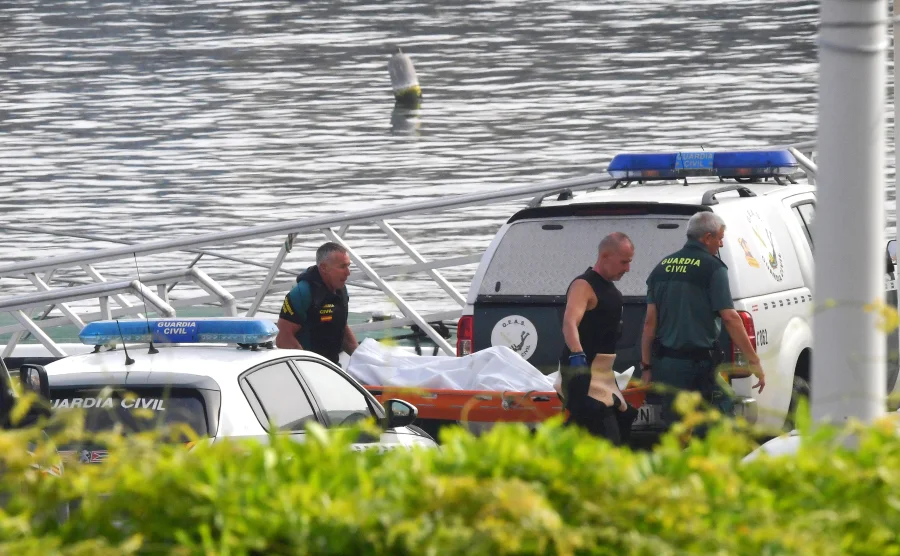
The water's surface is calm — but beneath it, a tragedy is still taking shape. Near Ceuta's El Tarajal border crossing, silhouettes of submerged bodies are visible through crystal-clear water, clustered together in small groups. Two appear to be holding hands.
What the report reveals about the scene
The account, published in Spanish media, describes the bodies lying close to the frontier in an area known for migration crossings. The clarity of the water has made the grim scene visible from the surface — a detail that makes the tragedy impossible to ignore.
The report ties the discovery to two recent developments: a mass crossing of people from Morocco into Ceuta this week, and numerous attempts to enter by swimming during the second half of July.
The warning: "There are more dead in the sea"
"Hay más muertos en el mar," the report warns — "There are more dead in the sea." The phrase suggests the visible bodies may not be the full count, and that more victims could lie beneath the surface, unrecovered and unnamed.
That warning sharpens the stakes for authorities, and for the families still waiting for word about loved ones who attempted the crossing.
Why this discovery matters right now
Ceuta, a Spanish enclave on Africa's northern coast, has long been a focal point for migration attempts into Europe. This week's reported mass crossing appears to have been among the most significant recent efforts — and the aftermath is now visible in the water.
The July swim entries added another layer of risk. Crossing by swimming around border structures is a dangerous route, carrying the constant threat of currents, cold, and exhaustion.
How the situation unfolded
According to the report, the submerged bodies surfaced into public attention after the mass crossing this week. But the second half of July also saw numerous swim-entry attempts, meaning some of the deaths could stretch back weeks.
Exactly when each person entered the water — and when they were lost — remains part of the still-unfolding timeline.
The human reality behind the silhouettes
The image of two bodies holding hands is the detail that lingers. It suggests people who died together, perhaps trying to keep one another safe in the water.
Behind each silhouette is a personal story — a family somewhere, a reason for leaving, a life that ended in the shallows metres from the shore they were trying to reach.
What authorities have said — and what is still missing
At this stage, the report's observations have not been matched by a comprehensive public statement from authorities. There is no confirmed figure for the number of victims, no identification, and no announced timeline for recovery.
It also remains unclear whether search-and-rescue operations were alerted during the crossings this week, and whether any were attempted.
Confirmed facts vs what remains unclear
What is reported: submerged bodies visible near El Tarajal, two appearing to hold hands, and a reported link to this week's mass crossing and July swim entries.
What is not known: the exact number of victims, how long the bodies have been in the water, the cause of death for each individual, and whether recovery operations have begun. All of this awaits official confirmation.
Ceuta's wider role in the migration story
Ceuta and its sister enclave Melilla have long been flashpoints in Europe's migration landscape. Their position on Africa's northern coast makes them visible and accessible targets for those seeking to reach the European Union.
Periods of tension between Spain and Morocco can sharply change the scale and nature of crossing attempts — and the dangers they carry.
Questions that demand answers
Several questions hang over the scene. When exactly did the deaths occur? Could any have been prevented with faster rescue responses? And what will happen to the bodies, given the sensitive border context and the location of the find?
These are not abstract questions. For affected families, they are the difference between closure and prolonged silence.
What readers should do now
Those following this story should rely on official updates from Spanish authorities and reputable media rather than unverified footage or speculation circulating online. The situation is developing, and early reports often change as verification progresses.
For people concerned about migrants who may be missing, humanitarian organisations operating in the region can provide information and support.
What happens next
The immediate priority is likely to be the recovery and identification of the bodies. This could require coordination between Spanish authorities and their Moroccan counterparts, depending on where the bodies are found.
For families of the missing, the coming days may bring the hardest news of all — or the beginning of answers.
Our Take
This is a developing story, and much remains unknown. But the image that has emerged — bodies lying in clear water, some hand