
Summary
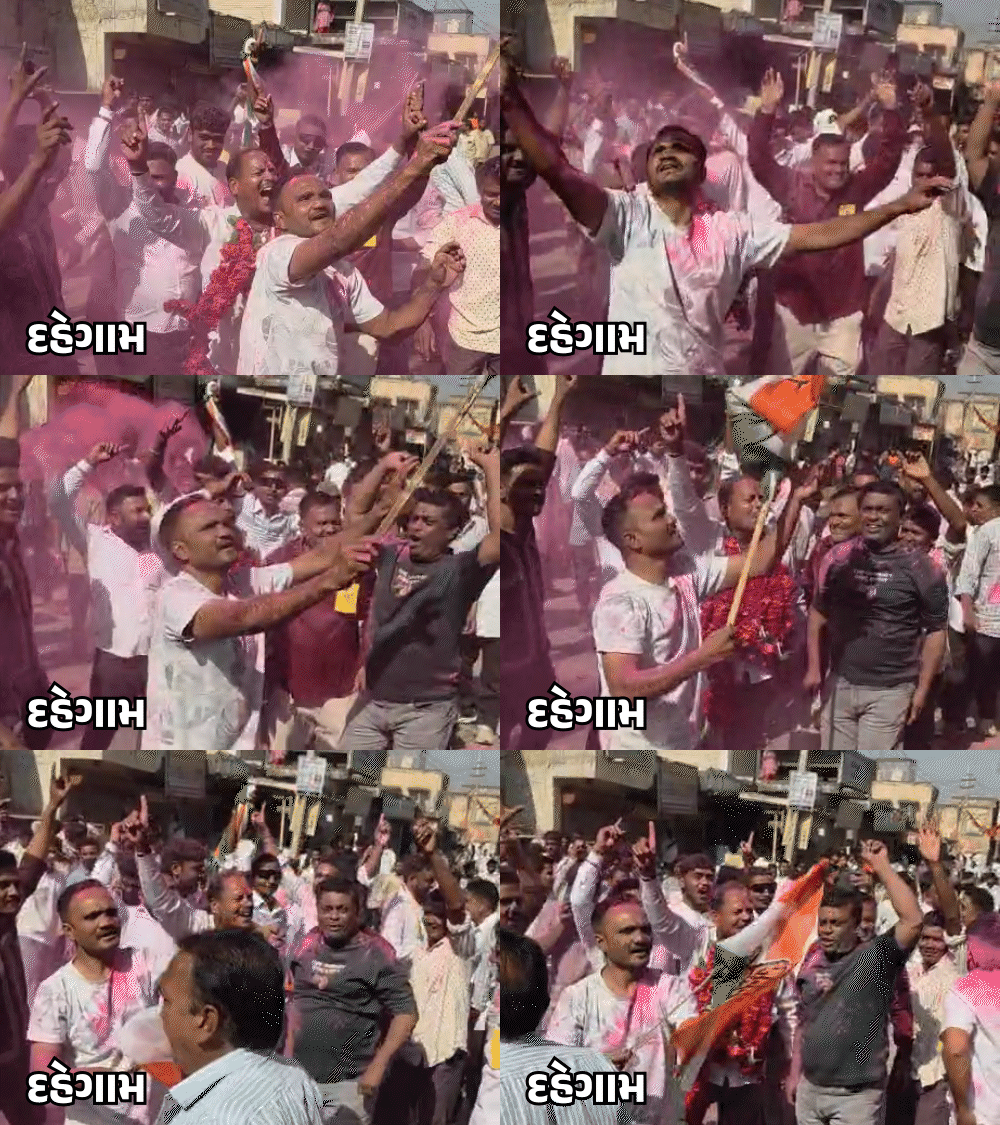
The counting of votes for local government elections in Central Gujarat has started. These elections are being called the "semi-finals" because they happen just before the 2027 State Assembly elections. The results will show which political party has the most support from the people at the local level. While the main fight is between the Bharatiya Janata Party (BJP) and the Congress, the Aam Aadmi Party (AAP) is also showing strong competition in certain areas like Narmada. This election covers a large part of the state, including major cities and rural villages.
Main Impact
The outcome of these elections will change the political map of Central Gujarat. Since these are local bodies, the winning parties will control how money is spent on daily needs like water, roads, and schools. For the BJP, a win would mean they still have a strong hold over the state. For the Congress, these results are a test of their strength in traditional areas, especially in the home grounds of their top leaders. The presence of the AAP as a third player adds a new layer of competition that could split the votes and change the final results in many districts.
Key Details
What Happened
Election officials began counting votes early in the morning across 11 districts in Central Gujarat. This process follows weeks of campaigning where leaders from all parties traveled to small towns and big cities to meet voters. The focus is on local governance, but the results are being watched by state-level leaders to understand the mood of the public. In Narmada, the fight is particularly intense as the AAP has put up a strong challenge against the two traditional parties, making it a three-way battle for power.
Important Numbers and Facts
The scale of this election is very large. It includes 4 major Municipal Corporations which manage the biggest cities in the region. Additionally, there are 11 District Panchayats and 85 Taluka Panchayats being decided. For smaller urban areas, 28 Municipalities are also part of this counting process. The districts involved in this phase are Ahmedabad, Gandhinagar, Anand, Kheda, Vadodara, Mahisagar, Dahod, Panchmahal, Chhota Udepur, Bharuch, and Narmada. Each of these areas has a different political history, making the overall result hard to predict.
Background and Context
Local government elections in Gujarat are held to choose representatives for cities and villages. These representatives make decisions that affect the everyday lives of citizens. In Gujarat, the BJP has been the dominant party for many years, but the Congress still holds power in several rural pockets. Recently, the AAP has tried to enter the state's politics to offer a third choice to voters. Central Gujarat is a mix of industrial zones and farming land, so the issues vary from factory jobs to crop prices. Winning here gives a party a huge advantage when the state elections happen in 2027.
Public or Industry Reaction
People across the state are following the news closely. Local business owners are interested in the results because local councils decide on taxes and building rules. Political experts are focusing on the "Amit Chavda factor." Since he is a major leader for the Congress in this region, his ability to win seats will show if the party is gaining or losing ground. Many voters say they want better roads and cleaner water, and they will support whichever party promises to fix these basic problems quickly. The high turnout in some districts suggests that people are eager for change or want to protect the current system.
What This Means Going Forward
Once the final results are announced, the winning parties will form local boards to run the councils. If the BJP wins a majority, it will give them more confidence heading into the 2027 elections. If the Congress or AAP performs well, it will force the ruling party to change its strategy. The most important thing to watch will be how the AAP performs in rural districts like Narmada. If they win seats there, it proves they can grow outside of big cities. This would mean that future elections in Gujarat will no longer be just a two-party race, making every vote even more valuable.
Final Take
These local elections are a clear signal of what the people of Central Gujarat want from their leaders. While the BJP remains a powerful force, the strong push from the Congress and the rising influence of the AAP show that the political environment is changing. The results from these 11 districts will provide a roadmap for all parties as they prepare for the bigger battles ahead. For now, the focus remains on the counting centers as every single vote helps decide the future of local governance in the state.
Frequently Asked Questions
Why are these elections called the semi-finals?
They are called semi-finals because they are the last major elections before the Gujarat State Assembly elections in 2027. They help parties understand their current popularity.
Which districts are included in the Central Gujarat counting?
The counting is happening in 11 districts, including Ahmedabad, Gandhinagar, Vadodara, Anand, Kheda, Mahisagar, Dahod, Panchmahal, Chhota Udepur, Bharuch, and Narmada.
What is the significance of the Narmada district results?
Narmada is significant because it is seeing a very close three-way fight between the BJP, Congress, and the AAP, which is unusual for traditional Gujarat politics.



