
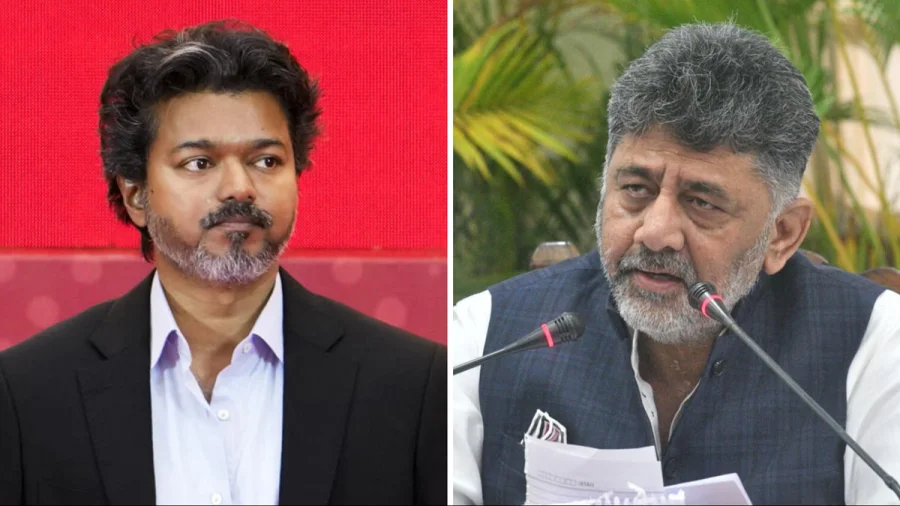
The Cauvery water dispute, one of India's most enduring inter-state river conflicts, has taken a new turn. Tamil Nadu Chief Minister Vijay has formally proposed a meeting with Karnataka Deputy Chief Minister D.K. Shivakumar to discuss water sharing, even as the Southwest monsoon has been deficient this year. The move signals a fresh attempt at dialogue between the two states, which have long clashed over the river's waters.
What Tamil Nadu is demanding from Karnataka
A representative of the Tamil Nadu government has stated that the state is entitled to receive at least three thousand million cubic feet (tmc ft.) more water from the Cauvery, even after accounting for the deficient rainfall during the current Southwest monsoon. This claim is based on existing water-sharing agreements and court orders, which Tamil Nadu argues have not been fully implemented by Karnataka.
Why the Cauvery dispute matters now more than ever
The Cauvery river is the lifeline for millions of farmers and residents in both Tamil Nadu and Karnataka. With the Southwest monsoon—which typically brings the bulk of rainfall to the region—falling short this year, water scarcity has intensified. For Tamil Nadu, the shortfall threatens the kharif crop season, drinking water supplies in urban areas like Chennai, and the livelihoods of farming communities in the Cauvery delta region.
How the dispute has evolved over decades
The Cauvery water dispute dates back to the British colonial era, with formal agreements signed in 1892 and 1924. After independence, the conflict escalated, leading to the formation of the Cauvery Water Disputes Tribunal in 1990. The tribunal's final award in 2007 allocated 419 tmc ft of water annually to Tamil Nadu, 270 tmc ft to Karnataka, and the rest to Kerala and Puducherry. However, Karnataka has repeatedly argued that its own water needs—especially for Bengaluru and its agricultural districts—make full compliance difficult.
Who is affected by the water sharing deadlock
Farmers in Tamil Nadu's Cauvery delta—districts like Thanjavur, Tiruchirappalli, and Nagapattinam—are directly impacted by reduced water releases from Karnataka. Many have faced crop failures and debt due to inconsistent water supply. In Karnataka, farmers in Mandya and Mysuru regions also depend on the Cauvery, creating a zero-sum dynamic. Urban residents in both states face drinking water shortages during dry years.
What the Tamil Nadu government is saying
A senior official from the Tamil Nadu government, speaking on condition of anonymity, told reporters that the state's claim for additional water is backed by scientific data on rainfall deficits and reservoir levels. "Even after accounting for the deficient rainfall, our entitlement stands at least 3 tmc ft more. We hope the meeting will lead to a fair resolution," the official said. The state has also approached the Cauvery Water Management Authority (CWMA) in the past, but outcomes have been mixed.
What the meeting could achieve
The proposed meeting between CM Vijay and Deputy CM Shivakumar—who also holds the water resources portfolio in Karnataka—could serve as a platform for technical discussions on water release schedules, monsoon forecasts, and interim relief measures. Analysts believe that direct political engagement may break the bureaucratic deadlock that has hampered implementation of tribunal awards.
Confirmed facts vs what remains unclear
What is confirmed: Tamil Nadu has formally proposed the meeting. The state claims entitlement to 3 tmc ft more water. The Southwest monsoon has been deficient this year. What remains unclear: Whether Karnataka will accept the meeting proposal. The exact timeline for any potential meeting. Whether the meeting will lead to a concrete water release agreement. These details are yet to be officially confirmed by Karnataka authorities.
Risks and balanced view of the dispute
While Tamil Nadu's demand is based on legal entitlements, Karnataka faces its own water stress. Bengaluru, India's tech hub, relies on Cauvery water for a significant portion of its supply. Farmers in Karnataka's Cauvery basin have also protested against releases to Tamil Nadu in past years. Critics argue that the dispute cannot be resolved without addressing broader issues like climate change, groundwater depletion, and inefficient irrigation practices in both states.
Wider trend: India's intensifying inter-state water conflicts
The Cauvery dispute is part of a larger pattern of water conflicts across India, including the Krishna, Godavari, and Yamuna river disputes. With climate change making monsoons more erratic, such conflicts are likely to increase. The Supreme Court has urged states to adopt cooperative federalism, but political rivalries often stall progress.
What readers should know about the Cauvery issue
For residents of Tamil Nadu and Karnataka, the dispute directly affects water availability in taps and fields. Those in affected areas should monitor official announcements from the CWMA and state water resources departments. Farmers may need to explore drought-resistant crops and water-saving techniques. Urban residents should conserve water, especially during the summer months.
What could happen next
If Karnataka agrees to the meeting, discussions could focus on a short-term water release schedule for the remainder of the monsoon season. If not, Tamil Nadu may escalate the matter to the Supreme Court or the CWMA. A prolonged deadlock could lead to protests in both states, as seen in previous years.
Our Take
The Cauvery dispute is a classic tragedy of the commons—two states sharing a finite resource, each with legitimate needs. CM Vijay's meeting proposal is a welcome diplomatic step, but it must be backed by data-driven compromise. The real solution lies in long-term measures: better water storage, efficient irrigation, and perhaps even desalination for coastal cities. Until then, every monsoon will bring anxiety to millions.
Frequently Asked Questions
Why is Tamil Nadu demanding more Cauvery water from Karnataka?
Tamil Nadu claims it is entitled to at least 3 tmc ft more water based on existing tribunal awards and agreements, even after accounting for deficient rainfall this monsoon season. The state argues Karnataka has not fully complied with these allocations.
What is the Cauvery Water Disputes Tribunal award?
The tribunal, formed in 1990, allocated 419 tmc ft of Cauvery water annually to Tamil Nadu, 270 tmc ft to Karnataka, and the rest to Kerala and Puducherry. The award was modified by the Supreme Court in 2018, reducing Tamil Nadu's share slightly.
How does the deficient monsoon affect the Cauvery dispute?
Deficient rainfall reduces the total water available in the Cauvery basin, making it harder for Karnataka to meet Tamil Nadu's demands without affecting its own needs. This intensifies the conflict during dry years.
What can farmers do to cope with Cauvery water shortages?
Farmers can adopt drip irrigation, use drought-resistant crop varieties, and practice rainwater harvesting. Government schemes like the Pradhan Mantri Krishi Sinchayee Yojana offer subsidies for micro-irrigation.



