
Summary
The Cauvery delta region in Tamil Nadu is preparing for a major political showdown as top parties compete for control. This area is often called the "rice bowl" of the state because of its massive farming industry and its importance to the local economy. In the last major election, the DMK party won a huge victory here, taking almost all the available seats. Now, the opposition AIADMK party is working hard to win back the support of voters by focusing on local issues and government performance. This contest is seen as a vital test for both parties before the next big election cycle.
Main Impact
The political battle in the Cauvery delta will likely decide which party holds the most power in rural Tamil Nadu. Because this region has 41 different constituencies across nine districts, it has a massive influence on the state assembly. A win here gives a party a strong lead and shows that they have the support of the farming community. The DMK is trying to prove that its current leadership is still popular, while the AIADMK is trying to show that the public wants a change. The results will also show if smaller parties still have the power to change the outcome by taking votes away from the bigger groups.
Key Details
What Happened
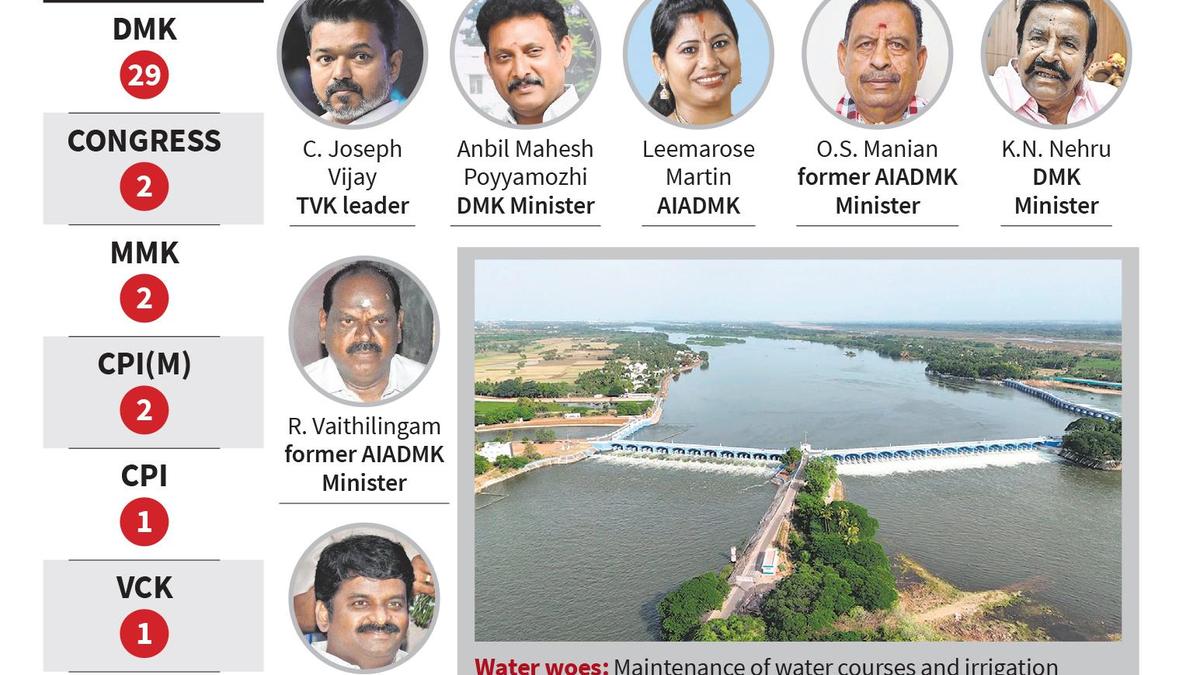
During the 2021 elections, the DMK performed exceptionally well in the delta region. They managed to win 37 out of the 41 seats, leaving very little room for their rivals. This success helped them secure a strong majority in the state. On the other side, the AIADMK faced a difficult time. They lost many seats not just to the DMK, but because their own traditional votes were split. Two other parties, the AMMK and the NTK, attracted many voters who might have otherwise voted for the AIADMK. This split allowed the DMK to win by larger margins in several areas.
Important Numbers and Facts
The delta region covers nine key districts, including places like Thanjavur, Tiruvarur, and Nagapattinam. Out of the 41 seats in these districts, the DMK and its partners currently hold 37. The AIADMK is now looking at the "anti-incumbency" factor, which is a term used when voters decide to vote against the party currently in power. They believe that after a few years of DMK rule, voters might be ready for something different. The AIADMK is also hoping that the smaller parties will not take as many of their votes this time around.
Background and Context
The Cauvery delta is the heart of Tamil Nadu's agriculture. For hundreds of years, farmers here have relied on the Cauvery River to grow rice. Because so many people in this region depend on farming, their political choices are usually based on how well a government handles water issues, crop prices, and farm loans. Any party that wants to win in the delta must show that they can protect the interests of the farmers. In the past, the region has shifted between the DMK and the AIADMK, but the DMK has recently held a much stronger grip on these districts.
Public or Industry Reaction
Political experts are watching the delta closely to see how the public feels about the current government's work. Many farmers are waiting to see how the government handles water sharing and support during the harvest seasons. While some people are happy with the welfare programs introduced by the DMK, others are concerned about rising costs and local infrastructure. The AIADMK is trying to use these concerns to build support. Meanwhile, smaller parties like the NTK continue to gain followers among younger voters, which adds more uncertainty to the final results.
What This Means Going Forward
The upcoming contests will show if the DMK can maintain its dominance or if the AIADMK can make a comeback. If the DMK wins again, it will prove that their hold on the rural vote is solid. However, if the AIADMK manages to win back a significant number of seats, it will signal a shift in the state's political mood. The role of smaller parties will also be a major factor. If they continue to pull votes away from the main opposition, it could make it much easier for the ruling party to stay in power. Both sides are expected to spend a lot of time and energy campaigning in these nine districts over the coming months.
Final Take
The Cauvery delta remains the most important political prize in Tamil Nadu. With the DMK trying to keep its lead and the AIADMK fighting to regain its lost ground, the competition will be very close. The farmers of the "rice bowl" will ultimately decide which party has done enough to earn their trust. This region is not just about agriculture; it is the foundation of political power in the state, and the next few months will show which way the wind is blowing for Tamil Nadu's leaders.
Frequently Asked Questions
Why is the Cauvery delta called the "rice bowl"?
It is called the rice bowl because the region's rich soil and access to river water make it the most productive area for growing rice in Tamil Nadu.
How many seats did the DMK win in the last election in this region?
The DMK and its alliance won 37 out of the 41 seats available in the nine districts of the Cauvery delta during the 2021 elections.
What is "anti-incumbency" in politics?
Anti-incumbency is a situation where voters become unhappy with the current government and decide to vote for the opposition party instead.



