
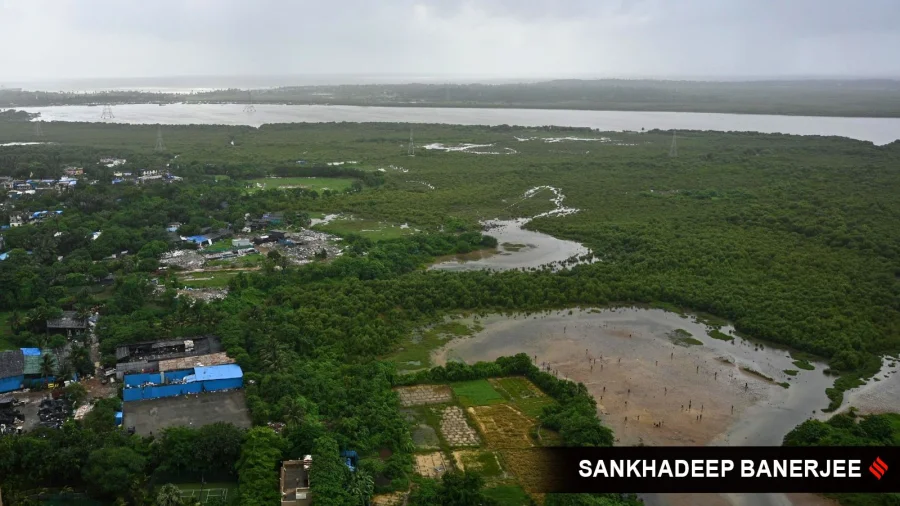
Eight hundred and forty-seven mangroves. That is the number approved for felling to make way for a bullet train-linked project — and in a departure from normal environmental practice, the trees meant to replace them will be planted at a remote location, far from the wetlands they once protected.
For Mumbai, a city that has repeatedly watched its mangroves shrink under the weight of infrastructure, the approval is another test of how much coastal green cover can be traded for faster connectivity. For the Mumbai-Ahmedabad High Speed Rail corridor — India's first bullet train project — it is one more environmental decision on a long and contested route.
What the approval means for the high-speed rail corridor
The reported decision allows 847 mangrove trees to be cut to clear space for construction linked to the bullet train project. Linear infrastructure of this scale — viaducts, embankments, utility diversions — frequently intersects wetlands, and mangrove clearance has been a recurring flashpoint along the corridor.
For project authorities, the clearance is a procedural necessity to keep one of India's most ambitious infrastructure deadlines on track. What makes this particular approval notable is the caveat attached to it: compensatory plantation at a remote site has been allowed as an exception.
Why 'remote plantation' is being questioned
Planting mangroves miles away from the original site is not ecologically equivalent. Mangroves protect the shoreline where they grow, absorbing storm surges and stabilising soil against erosion. A distant plantation cannot recreate those protective functions for the wetland that was cleared.
Conservation scientists broadly agree that mangrove ecosystems are location-specific — the marine life they shelter, the flood defence they provide, and the carbon they lock into coastal sediment are anchored to the original habitat. An exception of this kind weakens the core logic of compensatory plantation.
Why mangroves matter on this route
The corridor passes through stretches of Maharashtra's coastal belt, where mangroves act as a natural barrier between the Arabian Sea and dense urban settlements. During monsoon months, these wetlands absorb floodwater that would otherwise push into low-lying neighbourhoods.
They also serve as nurseries for fish stocks that support local fishing communities, and they store carbon several times more efficiently than inland forests. Losing 847 trees may sound contained in number, but in wetland ecology, even small clearances can fragment habitats and disrupt tidal flow.
A pattern, not an isolated decision
Mumbai's mangroves have been under pressure for decades — from housing, roads, metro works and industrial expansion. Each clearance, however small, becomes part of a cumulative loss that the city absorbs silently until a flood season exposes the cost.



