
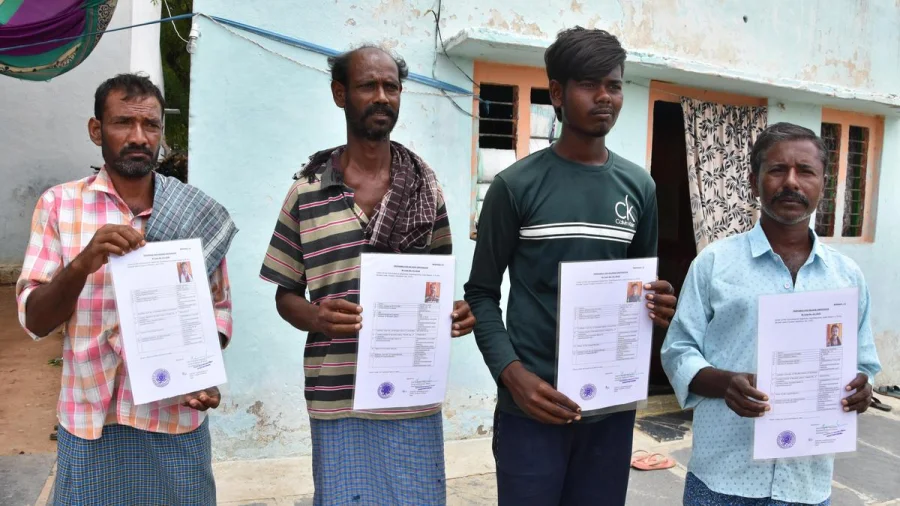
For more than a year, a group of men and women from the Vadde community in Andhra Pradesh’s Anantapur district lived a life they never chose — trapped by debt, bound to an illegal stone-cutting unit, unable to walk away. Their rescue by authorities has now brought to light a grim reality that persists in India’s informal labour economy: debt bondage disguised as work.
The Debt That Became a Sentence
The Vadde community, traditionally engaged in stone cutting and quarrying, found themselves in a cycle of exploitation after failing to repay loans taken from the owners of an illegal stone-cutting unit. Unable to clear their debts, they were forced to work at the unit for over a year, with little to no freedom. The debt, instead of being a financial obligation, became a tool of coercion.
Life Inside the Illegal Unit
Conditions at the unit were described as adverse, though specific details of the living and working environment remain scarce. Labourers were reportedly confined to the premises, working long hours without proper wages or breaks. The unit operated outside legal frameworks, bypassing labour laws and safety regulations that are meant to protect workers from such exploitation.
How the Rescue Unfolded
Authorities, acting on information or a complaint, conducted a raid or intervention at the stone-cutting unit. The rescue operation freed the bonded labourers from the site. Officials have not yet disclosed the exact number of individuals rescued or the names of those running the unit. The operation marks a critical step in addressing bonded labour in the region, though the full scope of the investigation remains ongoing.
Who Are the Vadde Community?
The Vadde community is a traditional artisan group in Andhra Pradesh and Telangana, historically involved in stone carving, construction, and quarry work. Their skills are in demand in the informal stone industry, but they often lack formal contracts, social security, or legal protections. This makes them particularly vulnerable to exploitation by unscrupulous employers who use debt as a means of control.
Official Response and Next Steps
Andhra Pradesh authorities have confirmed the rescue and are expected to provide rehabilitation support to the freed labourers, including counselling, financial assistance, and alternative livelihood options. Legal action against the unit owners is anticipated, though no arrests or charges have been officially announced yet. The district administration is likely to conduct further inspections of similar units in the area.
Debt Bondage: A Persistent Crisis
Bonded labour remains a deeply entrenched issue in India, despite being outlawed under the Bonded Labour System (Abolition) Act, 1976. The International Labour Organization estimates that millions of workers in India are trapped in debt bondage, particularly in sectors like agriculture, brick kilns, stone quarries, and garment manufacturing. The Vadde community’s case is a stark reminder that economic vulnerability, lack of education, and limited access to formal credit continue to fuel this exploitation.
Confirmed Facts vs What Remains Unclear
Confirmed: Members of the Vadde community were forced to work at an illegal stone-cutting unit in Anantapur for over a year due to unpaid debts. Authorities rescued them from adverse conditions.
Unclear: The exact number of labourers rescued, the identities of the unit owners, the specific terms of the debt, and whether any legal proceedings have been initiated. Details of the rescue operation and the current status of the labourers are also not fully available.
Risks and Balanced View
While the rescue is a positive development, concerns remain about the effectiveness of rehabilitation. Many bonded labourers, after rescue, fall back into similar cycles due to lack of sustainable income or alternative employment. Critics argue that without strict enforcement of labour laws and prosecution of employers, such rescues offer only temporary relief. The Vadde community’s traditional dependence on stone work also means they may be at risk of re-exploitation unless systemic changes are made.
Wider Pattern of Exploitation in Informal Labour
This case fits into a broader pattern of debt bondage in India’s informal economy, where workers from marginalised communities are often trapped by loans taken from employers. The stone quarrying industry in Andhra Pradesh has seen multiple such incidents in the past, with labourers working in hazardous conditions without basic rights. The rescue in Anantapur is a microcosm of a larger crisis that affects millions across the country.
Practical Guidance for Affected Communities
For workers in similar situations, experts recommend contacting local labour departments, district legal services authorities, or helplines like the National Helpline for Bonded Labour (15100). Community organisations and NGOs working on labour rights can also provide support. Workers should be aware that debt bondage is illegal, and they cannot be forced to work to repay loans.
Future Outlook
The rescued Vadde community members are likely to receive short-term rehabilitation, but long-term solutions remain uncertain. The Andhra Pradesh government may face pressure to strengthen labour inspections in the stone-cutting industry and ensure that rescued workers have access to skill development programmes. Without systemic reform, similar cases of debt bondage are likely to continue in the region.
Our Take
The rescue of the Vadde community from bonded labour is a necessary intervention, but it should not be seen as an isolated success. It highlights the deep-rooted failure of labour protections in India’s informal sector, where debt is weaponised to trap vulnerable communities. The real test lies in whether the authorities will prosecute the perpetrators, provide meaningful rehabilitation, and address the structural factors — poverty, lack of education, and limited access to credit — that make such exploitation possible. Until then, every rescue is a reminder of how much remains undone.
Frequently Asked Questions
What is bonded labour?
Bonded labour is a form of forced labour where a person works to repay a debt, but the terms of repayment are exploitative, often leading to indefinite servitude. It is illegal in India under the Bonded Labour System (Abolition) Act, 1976.
How were the Vadde community members rescued?
Authorities conducted a rescue operation at an illegal stone-cutting unit in Anantapur district, freeing the labourers who had been forced to work there for over a year due to unpaid debts.
What happens to rescued bonded labourers?
Rescued labourers are typically provided with rehabilitation support, including financial assistance, counselling, and alternative livelihood options. The government also initiates legal action against the employers.
Why are the Vadde community particularly vulnerable?
The Vadde community traditionally works in stone cutting and quarrying, often in informal settings without legal contracts or protections. Their economic vulnerability and lack of access to formal credit make them easy targets for debt bondage.

