
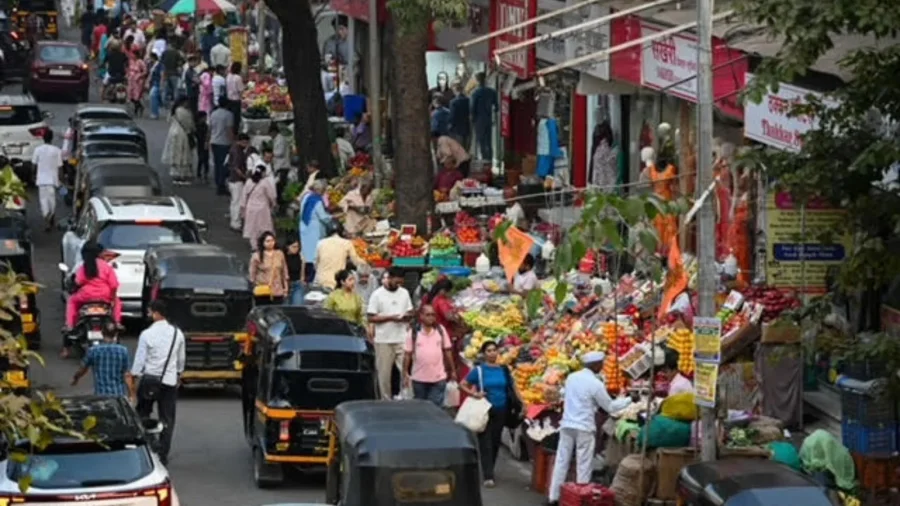
Thousands of Mumbai’s roadside vendors may have been operating under fraudulent or inactive licences — and the Brihanmumbai Municipal Corporation (BMC) has now caught the scale of the problem. A civic drive that used QR-code verification has uncovered 3,167 ‘ghost’ hawker licences, raising serious questions about how the city regulates its estimated 2.5 lakh street vendors.
QR-code drive exposes licence irregularities
The BMC’s verification exercise, launched in recent months, involved scanning QR codes printed on hawker licence certificates to cross-check them against the official database. During the process, officials found that 3,167 entries either did not match any active hawker, were duplicate records, or belonged to persons who had ceased vending years ago. Civic sources said the drive covered major markets and footpath zones across all 24 municipal wards.
Why this matters for Mumbai’s hawkers and citizens
Ghost licences allow unregistered vendors to occupy public space without accountability, often pushing out legitimate, licence-paying hawkers. They also mean the BMC loses revenue from licence fees and fines, while commuters and pedestrians face unauthorised obstructions. The discovery also fuels concerns about corruption — how these licences originally entered the system remains unclear.
How the verification drive works
Under the BMC’s new digital hawker management system, each licensed vendor is issued a unique QR code. When scanned, the code reveals details such as the vendor’s name, vending zone, licence validity, and photo. The recent drive involved both physical visits and database audits. Any QR code that failed to return valid data or flagged multiple entries under the same ID was classified as a ghost licence.
Human impact: legitimate hawkers fear backlash
While the crackdown targets fraudulent licences, some genuine hawkers worry that innocent vendors could get caught in the dragnet. “Many of us have been vending for decades with proper papers. We support weeding out fakes, but the BMC must give us a chance to prove our licences are real,” said a hawker union representative, speaking on condition of anonymity. The BMC has assured that a grievance redress mechanism will be set up for disputed cases.
What the BMC says about the findings
Senior BMC officials confirmed the number of ghost licences but declined to name specific wards or individuals responsible. In a statement, the civic body said: “The QR-code drive has revealed serious anomalies. All such licences will be cancelled, and legal action is being considered against those who submitted false documents.” The BMC has also ordered an internal inquiry into how these licences were originally issued.
Analysis: systemic flaws or isolated fraud?
This is not the first time BMC has faced allegations of hawker licence manipulations. Experts point to weak database integration, manual entry errors, and possible collusion between middlemen and civic staff as root causes. The ghost licence figure of 3,167 may only be the tip of the iceberg — the total number of licences issued stands at around 1.2 lakh, meaning nearly 2.6% of all licences checked were questionable.
Confirmed facts vs what remains unclear
What is confirmed: 3,167 licences flagged; QR-code drive methodology; BMC’s plan to cancel them. What remains unclear: whether these were deliberately fraudulent or simply outdated records; how long they were active; whether any BMC employee facilitated their issuance. The BMC has not yet released a ward-wise breakdown or named any accused.
Risks and balanced view
The drive could lead to a temporary shortage of licensed vendors in certain areas, pushing some hawkers to operate illegally. Hawker unions have warned that many poor families depend on these licences and a mass cancellation could cause livelihood losses. However, consumer rights groups argue that regularising the system benefits everyone — honest vendors get more footfalls and citizens get cleaner streets.
Wider trend: cities turning to QR codes for transparency
Mumbai joins a growing list of Indian cities — including Delhi, Bengaluru, and Chennai — that have introduced QR-based verification for street vendors, auto-rickshaws, and even ration shops. The technology reduces manual fraud and enables real-time audits. If successful, BMC’s model could be adopted by other municipal corporations.
Practical guidance for verified hawkers
Hawkers who hold a valid licence should ensure their QR code is visible and scannable. If facing verification issues, they should approach their local ward office or the BMC’s hawker cell with supporting documents. The BMC has announced a helpline (but number not yet released) for queries. Citizens who suspect illegal vending can use the BMC’s mobile app to report violations.
Future outlook
The BMC is expected to complete the QR-code verification of all licences within the next three months. A new database integrated with Aadhaar is being planned to prevent ghost entries in the future. Legal action against those responsible for generating fake licences may follow. Meanwhile, the Maharashtra government is reviewing the Street Vendors Act’s implementation in urban areas.
Our Take
This is a rare example of a civic body using digital tools to hold its own house in order. The number — 3,167 — is modest compared to the total hawker population, but the symbolic weight is significant: it shows that old paper-based systems are vulnerable to abuse. The real test lies in how the BMC handles the human fallout — cancelling licences is easy; ensuring that legitimate vendors don’t suffer is harder. If executed fairly, this drive could become a template for urban governance reform in India.
Frequently Asked Questions
What is a ‘ghost’ hawker licence?
A ghost hawker licence is an official licence record in the BMC database that does not correspond to any real, active vendor. It may be a duplicate, belong to a deceased or moved vendor, or have been issued fraudulently.
How did the BMC find these ghost licences?
The BMC used a QR-code scanning drive — each licensed hawker has a unique QR code on their certificate. Officials scanned these codes in the field and cross-checked them against the central database. Licences with no valid match or multiple matches were flagged as ghost licences.
What happens to the cancelled licences?
The BMC will cancel all 3,167 ghost licences permanently. The agency is also investigating how they were issued and may pursue legal action against those responsible for falsification.
Can a genuine hawker whose licence was wrongly flagged appeal?
Yes. The BMC has said it will set up a grievance redress mechanism. Affected vendors can approach their ward office with original documents to prove licence validity. The BMC has not yet specified a timeline for the appeals process.



