
Summary
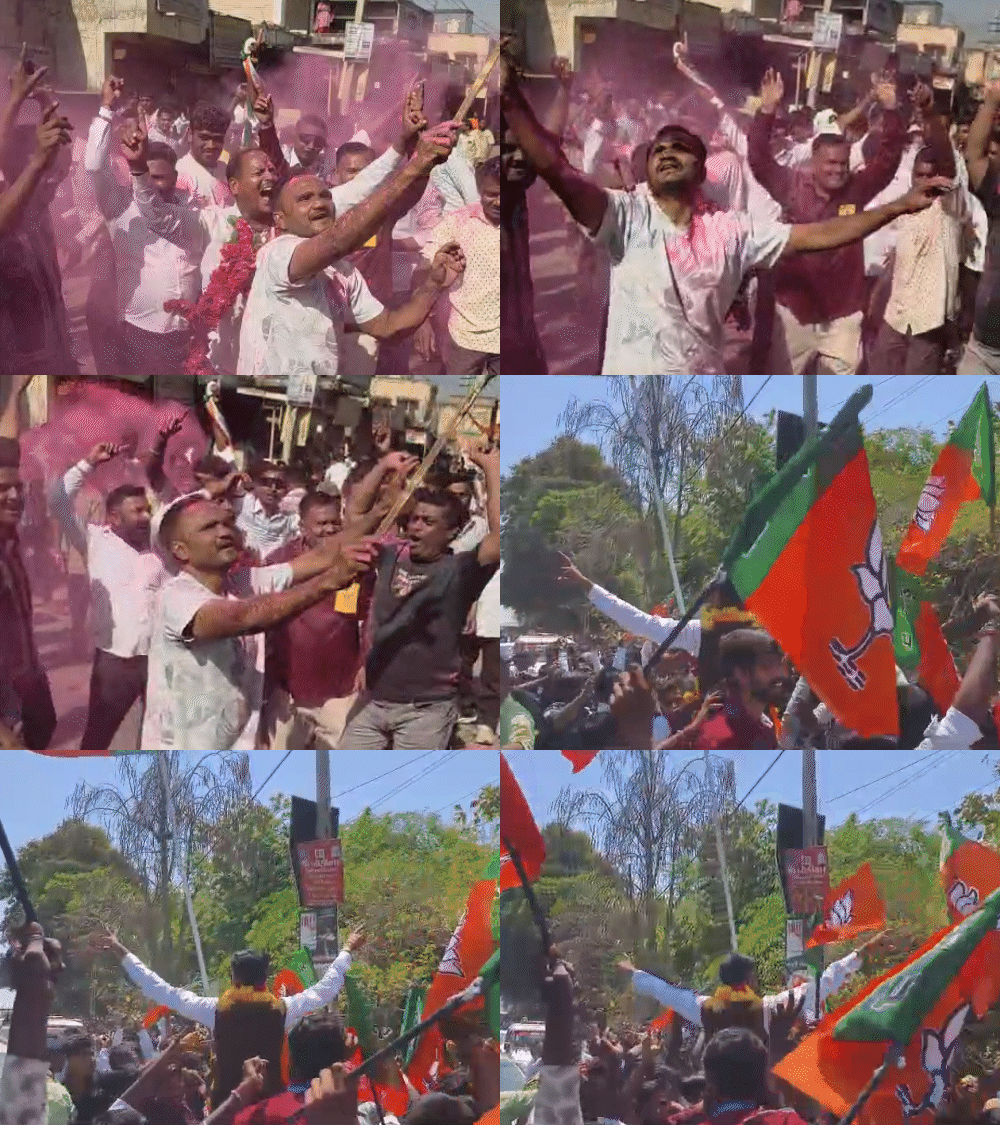
The Bharatiya Janata Party (BJP) has achieved a historic win in the Gandhinagar District Panchayat elections. For the first time since India became independent, the party won the Bahiyal seat, an area that has seen significant community tension in the past. These local elections are being called a "semi-final" because they happen just before the 2027 state assembly elections. The results show the BJP making progress in areas where they previously struggled, including the home territories of strong opposition leaders.
Main Impact
The main impact of this election is the shift in voter support across Central Gujarat. The BJP has managed to break into the strongholds of the Congress party and tribal leaders. By winning the Bahiyal seat, the BJP has proven it can win in areas with complex social histories. This victory gives the party a lot of momentum as they prepare for the bigger state elections in 2027. It also puts pressure on opposition leaders like Amit Chavda and Chaitar Vasava, whose traditional support bases are now being challenged.
Key Details
What Happened
The counting of votes for local government bodies in Gujarat began recently, covering a wide range of areas. This includes 4 large city corporations, 11 district councils, 28 smaller town councils, and 85 village-level groups. The most talked-about result came from the Bahiyal seat in Gandhinagar. This seat was long considered a difficult place for the BJP to win due to historical reasons and past community conflicts. However, the party managed to secure a victory there for the very first time in decades.
Important Numbers and Facts
The election covers a massive part of Central Gujarat. The areas involved include major cities and districts such as Ahmedabad, Vadodara, Gandhinagar, and Anand. Other districts like Kheda, Mahisagar, Dahod, Panchmahal, Chhota Udepur, Bharuch, and Narmada are also part of this election cycle. The BJP's entry into the Narmada region is particularly important because it is the base of Chaitar Vasava, a prominent leader for tribal communities. Winning in these diverse areas shows that the party is reaching different groups of voters, from city dwellers to people living in rural and tribal regions.
Background and Context
In Gujarat, local elections are more than just about fixing roads or managing water. They are a test of how popular a political party is at the ground level. These elections are often seen as a sign of what will happen in the next state-wide election. Central Gujarat is a very important region because it has a mix of industrial cities and farming villages. For many years, the Congress party held a lot of power in these rural areas. Leaders like Amit Chavda have worked hard to keep their support there. On the other hand, tribal leaders have gained more influence recently, making the political map more complicated. The BJP has been trying to change its strategy to win over these specific groups of people.
Public or Industry Reaction
Political experts are closely watching the results in Amit Chavda’s home area. Since he is a top leader for the Congress party, his performance here is seen as a measure of the party's strength. BJP supporters are celebrating the Bahiyal win as a "historic change." They believe it shows that people are moving past old conflicts and focusing on the current government's work. Meanwhile, observers of tribal politics are surprised by the BJP's ability to gain ground in Chaitar Vasava’s territory. This suggests that the traditional ways of voting are changing, and younger voters might be looking for different things than their parents did.
What This Means Going Forward
Looking ahead, these results will shape how parties plan for 2027. The BJP will likely use this success to show that they are a party for everyone, including those in sensitive or tribal areas. For the Congress party, these results are a warning. They may need to change how they talk to voters if they want to win back their old territories. The win in Bahiyal also suggests that the BJP's local workers are becoming more effective at the village level. In the coming months, we can expect to see more focus on development projects in these newly won areas as the party tries to keep its new supporters happy.
Final Take
The local election results in Gujarat show a clear trend of the BJP expanding its reach into new and difficult territories. By winning seats like Bahiyal for the first time since independence, the party is proving its growing influence. These wins are not just about local seats; they are a strong message for the 2027 state elections. The political map of Central Gujarat is changing, and the old strongholds of the opposition are no longer safe. This sets the stage for a very competitive political future in the state.
Frequently Asked Questions
Why is the Bahiyal seat victory considered historic?
The Bahiyal seat in Gandhinagar is historic because the BJP has never won it since India's independence in 1947. It was long considered a stronghold for other parties and had a history of community tensions that made it a difficult area for the BJP to enter.
Who are the key opposition leaders mentioned in the results?
The two main leaders mentioned are Amit Chavda and Chaitar Vasava. Amit Chavda is a senior leader for the Congress party in Central Gujarat. Chaitar Vasava is a powerful leader who represents tribal communities, particularly in the Narmada district.
What areas are included in these local elections?
The elections cover a large part of Central Gujarat, including 11 districts like Ahmedabad, Vadodara, and Gandhinagar. They involve various levels of government, from big city corporations to small village councils (Taluka Panchayats).



