
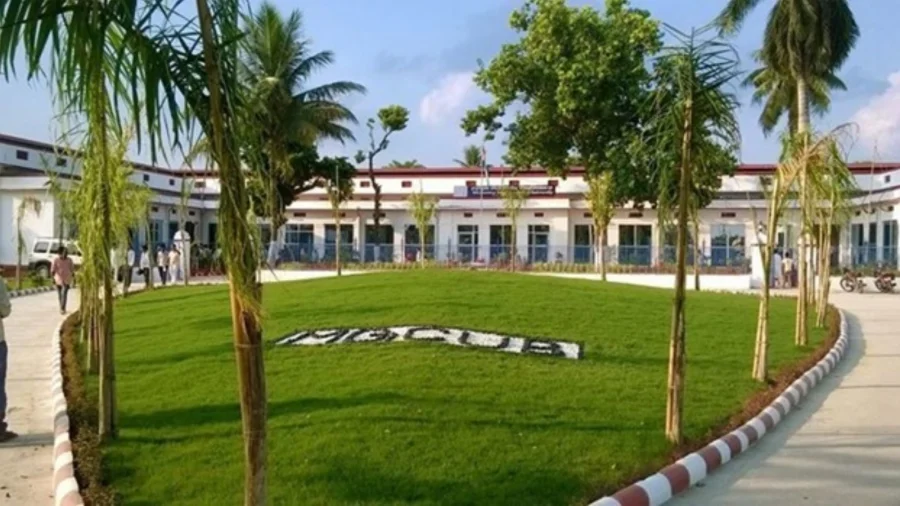
The campus was meant to be an upgrade. It has become a bill instead. A Comptroller and Auditor General (CAG) audit has flagged lapses in the execution of a university campus project in Bihar, where the cost has risen by Rs 488 crore — a sum large enough, in a state education budget, to decide whether a flagship project gets finished or several smaller ones get started.
The university's response has been firm but carefully worded: the findings are not final. That one sentence decides the shape of this story. It can end as an accounting dispute. Or it can become a question about who pays for the delay.
A Rs 488 crore gap inside one campus project
The audit's central observation, as reported, is straightforward: the campus's cost climbed by Rs 488 crore beyond what was originally envisaged, and the CAG has pointed to lapses in how the project was planned or executed.
Audit objections of this kind are rarely about a single inflated bill. They usually trace a chain — tendering decisions, scope revisions, extended deadlines, and the carrying cost of money borrowed while work stayed incomplete. Which of those links the CAG has actually questioned cannot be confirmed from the available information.
Why a campus overrun in Bihar is not a local story
University infrastructure is a state subject, and Bihar's higher education sector has long been stretched for classrooms, laboratories and hostels. When one project absorbs Rs 488 crore more than sanctioned, the arithmetic changes for everything else in that queue.
For a student, that is not an abstraction. It means another admission cycle in a borrowed building. For a taxpayer, it means a fixed pot of money buying less than it was promised to buy.
What the CAG does — and why "not final" is a stage, not a slogan
The CAG is India's supreme audit institution, constituted under Article 148 of the Constitution. It examines whether public money was spent lawfully, efficiently and for the purpose it was sanctioned. Its reports are laid before the legislature, and the Public Accounts Committee then examines them.
Crucially, audit findings are provisional while the audit is running. Departments and institutions are given the opportunity to respond to draft observations, and replies can modify, narrow or occasionally drop an objection entirely. So when a university says the findings are not final, it is describing the process accurately.
That does not make the figure disappear. It means the figure is contested, not closed.
Students, staff and taxpayers: who actually absorbs the shock
Cost overruns are paid for twice. The first payment is financial. The second is in time — semesters completed in unfinished buildings, equipment that arrives after the batch that needed it has graduated, and faculty recruited later than planned.
Vice-chancellors facing such observations also carry an administrative burden: documents, explanations, and follow-ups that consume attention meant for academics. The cost is never only on the balance sheet.
The university's position, read closely
The varsity has publicly pushed back on the framing, stating the findings are not final. That reads as a procedural defence — that the audit's reply mechanism is still live and the observations cannot be treated as conclusions.
What is not clear from the available information is whether the university also disputes the Rs 488 crore figure itself, or only the characterisation of it as lapse. Those are two very different arguments, and the distinction will matter once the report moves forward.
Confirmed facts versus what remains unclear
Confirmed: a CAG audit has flagged lapses in a Bihar university campus project; the cost has risen by Rs 488 crore; the university says the findings are not final.
Unclear: the exact nature of the lapses cited, the original sanctioned cost, the project's timeline, whether any individual has been held responsible, and whether the university accepts or contests the escalation figure. Until the full report or a formal reply is on record, any claim beyond these points is speculation.
Risks and the other side of the ledger
Cost overruns are not automatically proof of wrongdoing. Land acquisition disputes, design changes ordered mid-execution, sharp input-cost inflation and pandemic-era supply shocks have all pushed public project bills up legitimately in recent years.
Auditors themselves separate wasteful expenditure, procedural lapses and outright irregularity — three findings with three very different consequences. The first invites criticism, the second invites reform, the third invites action.
The risk runs both ways. If lapses are established, the accountability question moves to officials and contractors. If the institution's replies satisfy the audit, it can still be left carrying reputational damage from a fight it technically won.
The pattern this fits into
Indian audit reports repeatedly flag the same three pressure points in public construction: revised project costs approved administratively without fresh financial sanction, deadlines extended without penalty clauses being invoked, and revised estimates that are never rigorously compared against the original appraisal.
Each one, on its own, looks procedural. Stacked together over a decade, they are how a project quietly becomes twice as expensive as the one the legislature approved.
What students, parents and citizens should take from this
Treat the Rs 488 crore figure as flagged, not proven — and treat the university's "not final" as a legitimate stage, not a dismissal. Both things are true at once.
If you are a student or parent tracking campus infrastructure, watch the institution's public disclosures and the state's audit follow-up rather than social media summaries. If you are a citizen tracking public money, the document to look for is the finalised audit report and the Public Accounts Committee's examination — that is where flagged observations become findings or fall away.
What happens next in the audit chain
The university's formal reply is the next real checkpoint. Audit observations can be substantiated, moderated or withdrawn in light of replies. After finalisation, the report is laid before the state legislature, and the examination that follows determines what, if anything, is recovered or corrected.
Until then, the honest position is this: a serious financial flag has been raised about a public campus project, and the institution has chosen to contest the framing rather than accept it.
Our Take
This story's importance is not the number itself — large numbers make headlines and then fade. It is the mechanism the number exposes: a project that grew by Rs 488 crore without, on the public record so far, a matching public explanation of why.
That is the gap worth watching. An audit objection that gets a substantive reply strengthens an institution. An audit objection that gets a procedural reply leaves the original question exactly where it was — and in Bihar, where every rupee of education spending is contested, that question will not stay quiet for long.
Frequently Asked Questions
What is the Bihar campus cost escalation case about?
The Comptroller and Auditor General has flagged lapses in a university campus project in Bihar, where the project's cost has risen by Rs 488 crore. The university has said the audit findings are not final.
What does "findings are not final" mean in a CAG report?
It means the audit is still at the stage where the institution can file replies and clarifications. Observations can be modified or dropped after replies. Until the report is finalised and tabled, the findings are not binding conclusions.
Does a CAG finding mean corruption has been proven?
No. The CAG audits spending and reports on lapses, irregularities or inefficiency. It is not a court. Findings of irregularity can lead to further investigation or recovery, but the audit itself does not establish criminal liability.
Who is affected by the Rs 488 crore escalation?
Primarily students and staff awaiting campus facilities, and the state exchequer, since the additional cost is drawn from the same limited pool of public education funds as every other project.



