
Summary
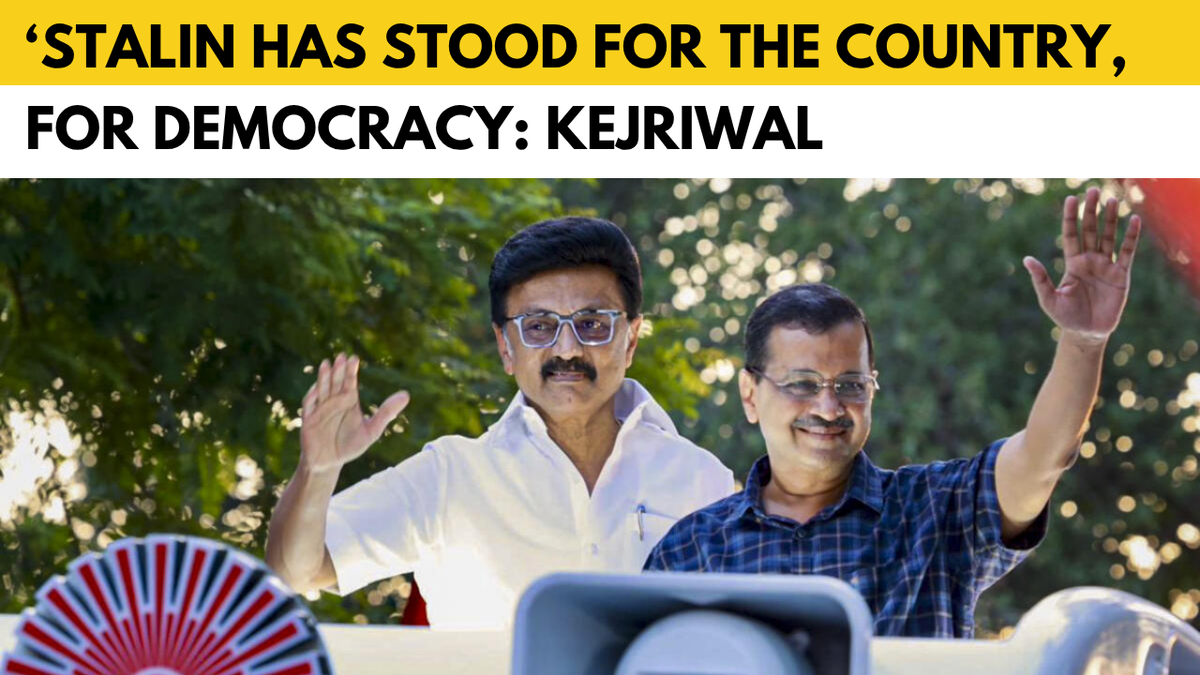
Arvind Kejriwal, the leader of the Aam Aadmi Party, recently shared high praise for Tamil Nadu Chief Minister M.K. Stalin and the DMK party. Kejriwal pointed out that Stalin has become a key figure in protecting the country's democratic values and the rights of individual states. He credited the DMK government for creating strong welfare programs that help poor and middle-class families. This public support highlights a growing bond between regional leaders who want to challenge the current central government.
Main Impact
The main impact of this statement is the strengthening of a political front made up of regional parties. By backing M.K. Stalin, Kejriwal is signaling that regional leaders are ready to work together more closely. This cooperation focuses on "federalism," which is the idea that state governments should have their own power and not be controlled entirely by the central government. This move could change how voters see the opposition, moving the focus toward local success stories in education and healthcare rather than just national debates.
Key Details
What Happened
During a recent address, Arvind Kejriwal spoke about the governance model in Tamil Nadu under M.K. Stalin. He mentioned that the DMK has done a great job in providing relief to common people through various social schemes. Kejriwal specifically noted that Stalin is not just working for his state but is also standing up for the entire country by defending democratic rules. He warned that the alliance between the BJP and the AIADMK could hurt the progress Tamil Nadu has made over the last few years.
Important Numbers and Facts
The discussion centered on several key areas of governance. Tamil Nadu has consistently ranked high in health and education metrics across India. Kejriwal highlighted that the welfare policies in the state have reached millions of households, providing essential services at low or no cost. He also criticized the Bharatiya Janata Party (BJP), suggesting that their policies often clash with the needs of regional populations. The political context is vital here, as both the AAP and DMK have often complained about the central government interfering with state-level decisions and funding.
Background and Context
To understand why this matters, we have to look at how India is governed. India is a union of states, and the constitution gives certain powers to the states and others to the central government. In recent years, many state leaders have felt that the central government is trying to take away their power. This is what leaders mean when they talk about "protecting federalism."
M.K. Stalin and Arvind Kejriwal share a similar political style. Both focus heavily on "welfare politics." This means they spend a lot of government money on things like free electricity, better public schools, and free healthcare clinics. Because they share these goals, they often support each other on the national stage. Kejriwal’s praise for Stalin is a way to show that these "pro-poor" policies are working in different parts of the country, from the north in Delhi to the south in Tamil Nadu.
Public or Industry Reaction
The reaction to Kejriwal’s comments has been divided along political lines. Supporters of the DMK and AAP see this as a positive step toward a more united opposition. They believe that if regional leaders stand together, they can better protect the interests of their people. On the other hand, members of the BJP and AIADMK have dismissed these comments. They argue that the alliance between Kejriwal and Stalin is simply a political tactic to gain more power and does not reflect the actual needs of the voters. Some political experts suggest that this public show of support is intended to build confidence among voters who are looking for an alternative to the current national leadership.
What This Means Going Forward
Looking ahead, we can expect to see more frequent meetings and joint statements between these two leaders. This partnership might lead to a more formal agreement during future elections. The biggest risk for this group is staying united despite their different regional interests. However, if they continue to focus on shared goals like education and state rights, they could create a strong challenge to the central government. For the people of Tamil Nadu, this means their state’s policies will continue to be a major topic of discussion across the rest of India. It also means that the fight over how much power the central government should have will likely get more intense.
Final Take
The praise from Arvind Kejriwal for M.K. Stalin shows that regional politics is becoming more about shared ideas and less about local boundaries. By focusing on welfare and democracy, these leaders are trying to build a new path for the country. Whether this partnership will lead to real change depends on how well they can turn these words into a unified plan that voters across India can trust. For now, it is clear that the bond between the leaders of Delhi and Tamil Nadu is stronger than ever.
Frequently Asked Questions
Who is M.K. Stalin?
M.K. Stalin is the Chief Minister of Tamil Nadu and the leader of the DMK party. He is known for his focus on social justice and state rights.
Why did Arvind Kejriwal praise the DMK?
Kejriwal praised the DMK for its welfare programs that help the poor and for M.K. Stalin’s efforts to protect democracy and the rights of state governments.
What is federalism in simple terms?
Federalism is a system of government where power is divided between a central national government and local state governments, allowing states to make their own laws on certain issues.



