
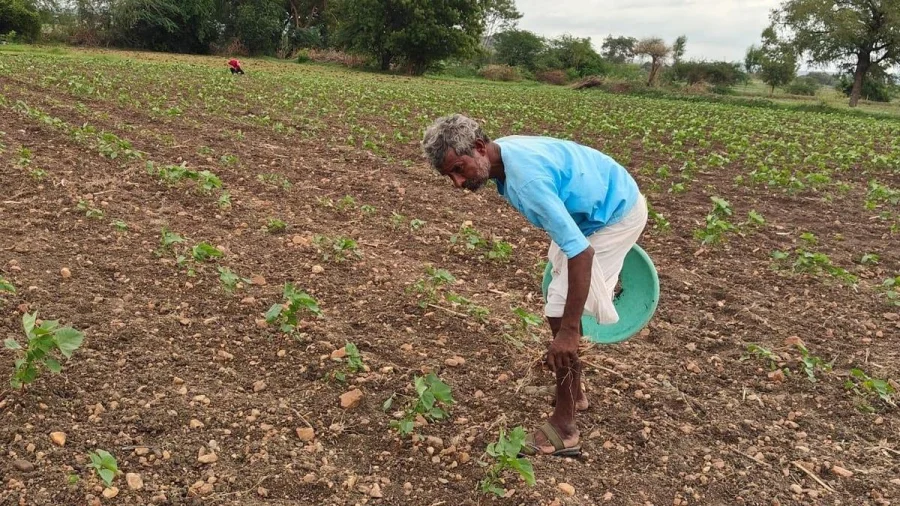
For millions of farmers in Andhra Pradesh’s Krishna delta, this kharif season is shaping up to be one of the most uncertain in years. The state government has issued a stark advisory: do not plant paddy. The reason is simple but alarming — the reservoirs that feed the region are running dry.
Why Andhra Pradesh is asking farmers to skip paddy this kharif
Engineer-in-Chief K. Narasimha Murthy has warned that water storage in the Srisailam and Nagarjuna Sagar reservoirs has dropped to critically low levels. These two reservoirs are the lifeline of the Krishna delta, which spans parts of Krishna, Guntur, and Prakasam districts. Without sufficient water, paddy — a water-intensive crop — cannot be sustained through the season.
Pattiseema pumping capacity cut by half — what it means for irrigation
The Pattiseema project, which pumps water from the Godavari into the Krishna basin, is a key fallback for the delta. But this year, officials say it may operate for only 60 to 70 days, compared to the normal 100 to 120 days. That means even the backup plan is running on limited fuel. Farmers who rely on this water for their paddy fields will face severe shortfalls.
How the water crisis unfolded — a timeline of dwindling reserves
The Krishna delta has faced water stress before, but this year’s situation is particularly acute. Below-average rainfall in the catchment areas of the Western Ghats, combined with increased demand upstream in Karnataka and Telangana, has left Srisailam and Nagarjuna Sagar with far less water than usual. By early June, storage levels were already below the threshold needed for a full kharif paddy crop.
Who is affected — the human cost of the paddy ban
The advisory hits small and marginal farmers hardest. Paddy is the primary cash crop for millions in the delta, and switching to dry crops like pulses, maize, or cotton requires different seeds, techniques, and market access. Many farmers have already invested in paddy seedlings and fertilizers. The state has not announced any compensation package, leaving families to absorb the loss.
Official advisory — what the irrigation department is telling farmers
Engineer-in-Chief K. Narasimha Murthy has urged farmers to shift to dry crops immediately. "Given the current storage levels, it is not advisable to go ahead with paddy. We recommend pulses, maize, cotton, and other low-water crops," he said. The department has also advised farmers to delay sowing until the full picture of water availability becomes clearer in July.
What this means for the Krishna delta’s farming economy
Paddy is not just a crop — it is the economic backbone of the delta. The shift to dry crops will affect everything from labor demand to mill operations to market prices. Rice mills in the region may face reduced throughput, and farm laborers could see fewer days of work. The state’s food grain production may also take a hit, though officials hope dry crops can partially offset the loss.
Confirmed facts vs what remains unclear about the water situation
What is confirmed: Srisailam and Nagarjuna Sagar storage is critically low; Pattiseema pumping will be reduced; the advisory is official. What remains unclear: whether the state will provide financial support for farmers switching crops; how much water, if any, will be released from upstream reservoirs; and whether late monsoon rains could still change the outlook.
Risks and concerns — the challenges of switching to dry crops
Switching from paddy to dry crops is not straightforward. Pulses and maize require different soil preparation, pest management, and market linkages. Many farmers lack access to quality seeds for dry crops. There is also the risk that if rains arrive late, even dry crops may fail. Critics argue the state should have issued the advisory earlier to allow farmers to plan better.
Wider trend — India’s growing water stress in agriculture
This is not an isolated case. Across India, groundwater depletion and erratic monsoons are forcing states to rethink cropping patterns. Punjab and Haryana have faced similar calls to shift from paddy to less water-intensive crops. Andhra Pradesh’s Krishna delta crisis is a stark reminder that India’s water resources are stretched thin, and agriculture — which consumes over 80% of the country’s water — must adapt.
Practical guidance for Krishna delta farmers
If you are a farmer in the Krishna delta, here is what you can do: consult your local agriculture extension officer for advice on dry crop varieties suitable for your soil; consider pulses like red gram or green gram, which require less water and have good market demand; delay any major investment in paddy until the July water assessment is clear; and explore government schemes for crop diversification, if available.
Future outlook — what could happen next
If the monsoon picks up in July, some water may still be released for paddy, but officials caution that the window is narrow. The state may also consider rationing water for drinking purposes over irrigation. In the longer term, the crisis could accelerate policy moves toward crop diversification and better water management in the Krishna basin. For now, farmers face a season of tough choices.
Our Take
This advisory is not a suggestion — it is a warning. The Krishna delta’s water crisis is a systemic failure of planning, not just a bad monsoon year. While the state’s advice to shift to dry crops is practical, it places the entire burden on farmers who have little buffer. Without compensation, seed support, or market assurance, many will be forced to take risks. The bigger question is whether India’s agricultural policy can move fast enough to match the speed at which its water is running out.
Frequently Asked Questions
Why is Andhra Pradesh asking farmers not to grow paddy this kharif?
Because water storage in the Srisailam and Nagarjuna Sagar reservoirs has fallen to critically low levels, making it impossible to sustain paddy, which requires large amounts of water throughout the season.
What crops are farmers being advised to grow instead?
Farmers are advised to switch to dry crops such as pulses (red gram, green gram), maize, cotton, and other low-water crops that can survive with less irrigation.
How long will Pattiseema pumping last this season?
Pattiseema pumping may operate for only 60 to 70 days this season, compared to the normal 100 to 120 days, due to reduced water availability in the Godavari basin.
Will the government provide compensation to farmers who switch crops?
As of now, no compensation package has been announced. Farmers are advised to consult local agriculture officers for support under existing crop diversification schemes.

