
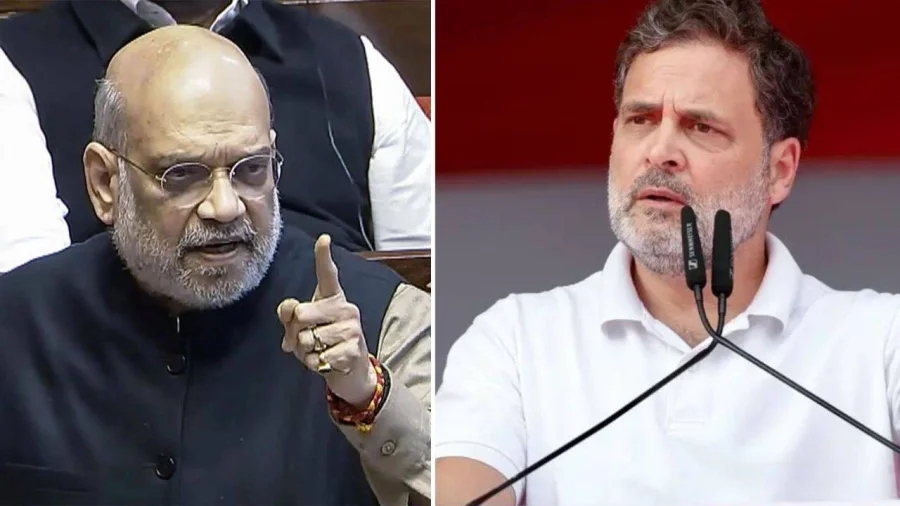
Parliament is bracing for a confrontation over student protests, with the Home Minister offering to answer everything and the opposition refusing to even take the seat. Amit Shah has said he is ready to answer any question. Rahul Gandhi has responded with a blunt rejection: the opposition is not interested in a lecture.
A two-day offer: What Shah proposed on the floor
Shah's proposal was an attempt to break the parliamentary logjam over student protests. By offering to sit in the House from today until tomorrow, he signalled a willingness to engage on a subject that has sharply divided the ruling side and the opposition.
The offer, on its face, was expansive — an extended discussion with the Home Minister present to respond to concerns raised by members across party lines.
Why Rahul Gandhi's rejection changes the equation
Rahul Gandhi's response was dismissive in tone but pointed in substance. The opposition, he said, wants answers and accountability over alleged police actions — not a lecture from the Home Minister.
The rejection reframes the debate entirely. It moves the argument from whether the government will talk, to whether the government will be held responsible for the actions of the police.
The student protests and the politics around them
The original report does not specify which student protests are at the centre of the dispute, or what police actions the opposition is referring to. What is clear is that the issue has become a flashpoint in Parliament.
Student protests carry an emotional weight in Indian politics — they evoke questions of free speech, state power, and accountability. That makes them a potent issue for both sides to leverage.
Who stands to lose if the standoff continues
Students and their families are the real stakeholders in this exchange. A debate that produces concrete answers could reassure them. A debate that produces only speeches may deepen distrust.
For ordinary citizens watching the confrontation, the risk is that parliamentary procedure once again outruns substance.
What the opposition says it wants: accountability, not a lecture
The opposition's demand, as stated by Rahul Gandhi, is accountability for alleged police actions. That implies more than a parliamentary reply — it points toward inquiries, consequences, or action against those responsible.
By rejecting Shah's offer, Gandhi has signalled that a discussion alone is insufficient. The test, for the opposition, is whether the Home Minister's answers lead to responsibility.
Reading the language: How each side framed the fight
Gandhi's word choice is deliberate. A "lecture" suggests being spoken down to; "answers" suggests a demand for facts and responsibility. In one sentence, he framed the government's offer as a monologue and his demand as a search for truth.
Shah's framing, meanwhile, positions the government as transparent and open — ready to face any question. Both leaders are playing to the public galleries as much as to the House.
What is confirmed versus what is still unclear
Confirmed: Shah offered an extended parliamentary discussion on student protests and said he is ready to answer any question. Rahul Gandhi rejected the offer, saying the opposition wants answers and accountability, not a lecture.
Unclear: The specific protests in question, the nature of the alleged police actions, and the official positions of both leaders beyond the headline report. No independent statements, parliamentary transcripts, or official records have been verified at the time of writing.
Risks on both sides of the parliamentary standoff
For the government, the risk is that rejecting the opposition's accountability demand makes the debate look like a formality. For the opposition, declining a rare offer of extended engagement could look like avoiding a direct face-off.
There is also reputational risk for Parliament itself. Every confrontation that ends in stalemate reinforces public cynicism about the institution's ability to address serious issues.
A familiar pattern: When Parliament talks past itself
This is not an isolated clash. Parliament has repeatedly seen the ruling side and the opposition talk past each other on contentious issues, with procedures and walkouts often overshadowing substance.
The student protests give this particular deadlock an emotional charge that other issues may lack. But the shape of the confrontation is familiar: an offer, a rejection, and a standoff.
What to watch in the coming hours
For anyone following the story, the key questions are straightforward. Will the extended discussion happen despite the rejection? Will the Home Minister's answers address the alleged police actions directly? And will the opposition accept anything short of accountability?
Until those questions are answered, the standoff remains exactly that — a standoff.
Where the exchange could go next
If the debate proceeds, the focus will shift to the specifics of Shah's replies and whether they satisfy the opposition's demand for responsibility. If it does not, the issue moves outside Parliament — into protests, public statements, and political pressure campaigns.
Either way, the next move in this exchange will shape the narrative around both the government's handling of student unrest and the opposition's strategy of confrontation.
Our Take
The substance of this quarrel is less about whether a debate happens and more about what a debate would actually deliver. Shah's offer is politically smart positioning; Rahul Gandhi's rejection is equally calculated. But for students and the public, the real test is whether the discussion produces facts, accountability, and resolution — not just political points. A conversation that ends without addressing the alleged police actions will satisfy no one.
Frequently Asked Questions
Why did Rahul Gandhi reject Amit Shah's offer?
Rahul Gandhi said the opposition is not interested in a lecture. He wants accountability for alleged police actions related to student protests, not just a parliamentary discussion.
What did Amit Shah propose in Parliament?
According to the report, the Home Minister offered an extended parliamentary discussion on student protests, proposing to sit in the House from today until tomorrow, and said he is ready to answer any question.
What are the student protests about?
The specific protests and the alleged police actions have not been detailed in the available report. The issue is being raised by the opposition, which is demanding accountability in Parliament.
Will the parliamentary discussion on student protests take place?
As of the latest report, the opposition has rejected the Home Minister's offer. Whether the extended discussion happens depends on further parliamentary proceedings and possible agreement between the two sides.



