Summary
Israel and the United States have significantly increased their military operations against Iran. Israeli Defense Minister Israel Katz confirmed that a recent strike killed Ali Larijani, the Secretary of Iran’s National Security Council. Another high-ranking official, Gholamreza Soleimani, who led the Basij paramilitary force, also died in the attack. These events mark a major escalation in a conflict that has been growing for over two weeks.
Main Impact
The death of Ali Larijani is the most significant loss for the Iranian government since the start of this military campaign. Larijani was a central figure in Iran's political and security decisions. His removal from the leadership circle creates a massive void in how Iran manages its national defense. This strike shows that Israel and the U.S. are now targeting the highest levels of the Iranian government, which could lead to a much larger and more direct war across the Middle East.
Key Details
What Happened
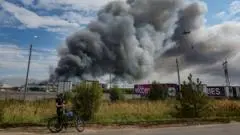
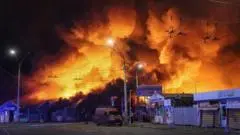
During a night of heavy bombing, Israeli forces targeted locations linked to Iran’s security leadership. Defense Minister Israel Katz stated that the operation successfully hit its primary targets. The attack was part of a broader wave of strikes that also reached into parts of Lebanon. These actions were taken after the Israeli military detected missiles being launched from Iran toward Israeli territory. The situation quickly turned into a series of back-and-forth attacks involving drones and rockets.
Important Numbers and Facts
The current military campaign began approximately 15 days ago under the direction of U.S. President Donald Trump and Israeli Prime Minister Benjamin Netanyahu. Ali Larijani is described as the most influential figure killed so far, second only to the Supreme Leader in terms of decision-making power. In response to the strikes, the U.S. Embassy in Baghdad faced one of its most intense attacks ever, involving a large number of drones and rockets. Additionally, the United Arab Emirates had to stop all flights and close its airspace temporarily due to the danger of flying during the Iranian counter-attacks.
Background and Context
To understand why this matters, it is important to know who these leaders were. Ali Larijani was not just a military man; he was a long-time politician who helped guide Iran’s foreign policy and security plans for many years. Gholamreza Soleimani led the Basij, a large paramilitary group used by the Iranian government to maintain control and handle internal protests. By killing these two men, Israel and the U.S. have struck at both the brain and the muscle of the Iranian security system.
This conflict is different from previous skirmishes because it involves direct, high-level assassinations on Iranian soil. For years, the "shadow war" between these nations mostly happened through smaller groups or in other countries like Syria. Now, the fighting is direct and involves the most powerful weapons from both sides.
Public or Industry Reaction
The international community is watching with great concern. The closure of the United Arab Emirates' airspace caused immediate chaos for global travel and trade. Many airlines had to cancel flights or find long paths around the conflict zone. In Iraq, the attack on the U.S. Embassy has raised fears that the country will once again become a primary battlefield for outside powers. Oil prices and global markets are also showing signs of stress as the threat to the Persian Gulf increases. Many world leaders are calling for a stop to the violence, fearing that the entire region could be pulled into a long and bloody war.
What This Means Going Forward
The death of such high-ranking officials makes it very difficult for Iran to stay quiet. Experts believe that Iran will feel forced to respond with even more force to show it is still strong. This creates a dangerous cycle where each side feels they must hit harder than the last. The U.S. and Israel seem committed to removing the current Iranian leadership's ability to fight, while Iran is trying to show it can still strike back at U.S. interests in places like Iraq and the Gulf. The risk of a total regional war is now higher than it has been in decades.
Final Take
The killing of Ali Larijani and Gholamreza Soleimani changes the nature of the current conflict. It is no longer a series of small border fights but a direct attempt to dismantle the leadership of the Iranian state. As both sides prepare for the next move, the safety of the entire Middle East remains uncertain. The coming days will show if there is any room left for talks or if the region is headed for an all-out war.
Frequently Asked Questions
Who was Ali Larijani?
Ali Larijani was the Secretary of the National Security Council in Iran. He was one of the most powerful people in the country and played a major role in making security and foreign policy decisions.
Why did the UAE close its airspace?
The United Arab Emirates closed its airspace because of a wave of Iranian missile and drone attacks in the region. This was done to protect civilian airplanes from being accidentally hit during the fighting.
What is the Basij force?
The Basij is a large paramilitary group in Iran that works under the Revolutionary Guard. It is used for internal security, helping the government control the population and respond to threats.