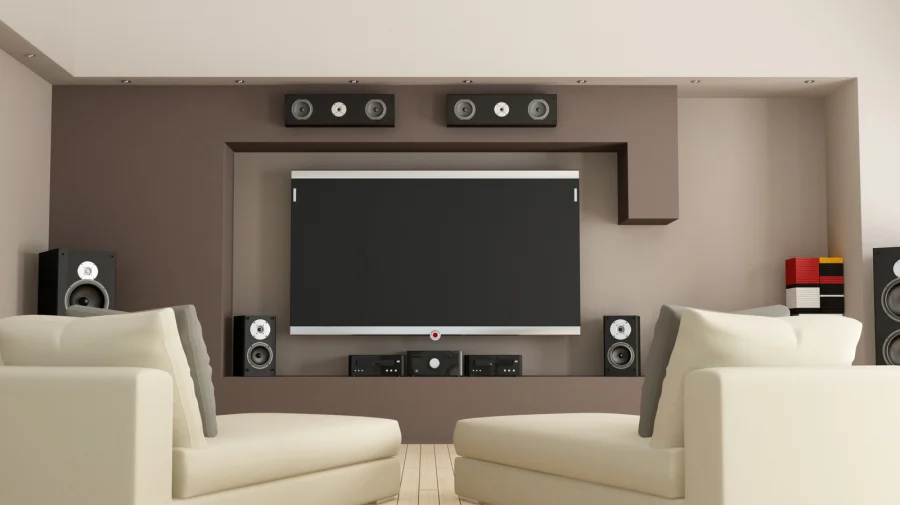
You walk into an electronics store, and the salesperson points at a box labeled "7.1.4 Dolby Atmos." The number sounds impressive. But before you hand over your credit card, here’s the truth: bigger channel numbers don’t automatically mean better sound. In fact, for most Indian homes, a simpler setup can deliver a more satisfying experience.
What Do Those Channel Numbers Actually Mean?
Surround sound systems are described by numbers like 2.0, 5.1, 7.1, or 9.1.2. The first number is the count of main speakers. The second number (after the dot) is the number of subwoofers. A third number, if present, indicates height or upward-firing speakers for Dolby Atmos. So a 5.1 system has five speakers and one subwoofer. A 7.1.2 system has seven speakers, one subwoofer, and two height channels.
Why More Channels Can Backfire in Small Rooms
In a typical Indian apartment or living room—often 150 to 250 square feet—placing seven or nine speakers properly is nearly impossible. Speakers need space and specific angles to create the intended soundstage. Cramming them into a small room leads to muddled audio, overlapping sound fields, and a disappointing experience. A well-placed 5.1 system often sounds cleaner and more immersive than a poorly set up 7.1 system.
Content Compatibility: Most Movies Are Still 5.1
Streaming services like Netflix, Amazon Prime Video, and Disney+ Hotstar primarily offer 5.1 surround sound mixes. Even many Blu-ray discs are mixed in 5.1. A 7.1 or 9.1 system will downmix or matrix the audio, which can introduce artifacts or reduce clarity. Unless you regularly watch native 7.1 or Atmos content, extra channels remain unused or underperform.
What Actually Matters for Great Sound
Audio experts emphasize three factors over channel count: speaker quality, placement, and room acoustics. A pair of high-quality front speakers with a good center channel and subwoofer—a 3.1 or 5.1 setup—can outperform a budget 7.1 system. Proper placement, such as ear-level tweeters and correct subwoofer positioning, makes a bigger difference than adding more speakers.
Room Size and Listening Distance: The Practical Guide
For rooms under 200 square feet, a 5.1 system is ideal. For rooms between 200 and 400 square feet, 7.1 becomes viable. For larger dedicated home theaters, 9.1 or Atmos setups add value. Measure your room before buying. Also consider seating distance—if you sit too close to rear speakers, the surround effect is lost.
Dolby Atmos: When Height Channels Actually Help
Dolby Atmos adds a vertical dimension with height or upward-firing speakers. This works best with high ceilings (above 8 feet) and reflective surfaces. In rooms with low ceilings or heavy furniture, the effect is minimal. A 5.1.2 setup (five speakers, one subwoofer, two height channels) is often a better entry point than a full 7.1.4 system.
Budget Allocation: Spend on Quality, Not Quantity
A common mistake is spreading a fixed budget across many cheap speakers. Instead, invest in a good receiver and a few high-quality speakers. A 5.1 system with a capable subwoofer and quality front speakers will deliver richer bass, clearer dialogue, and better dynamics than a 7.1 system with budget components.
Wiring and Setup Complexity
More channels mean more cables, more wall mounts, and more calibration time. Wireless rear speakers exist but add latency and cost. For renters or those who dislike visible wires, a 5.1 or even a 3.1 soundbar system is far more practical. Simplicity often leads to consistent use—and consistent use beats unused channels.
Confirmed Facts vs What Remains Unclear
It is confirmed that channel numbers indicate speaker and subwoofer count, and that room size and content compatibility affect performance. What remains unclear is the exact point at which additional channels provide diminishing returns—this varies by room acoustics, listener sensitivity, and receiver quality. No universal rule applies to all homes.
Risks and Balanced View
Critics argue that high-channel systems offer future-proofing as more Atmos content becomes available. Supporters of simpler setups counter that most consumers never upgrade their content library. The risk of overspending on unused channels is real. A balanced approach: start with 5.1, and only expand if your room and content demand it.
Wider Trend: The Rise of Soundbars and Virtual Surround
Many consumers now choose soundbars with virtual surround processing instead of multi-speaker setups. Brands like Sony, Samsung, and LG offer soundbars that simulate 7.1 or Atmos using fewer physical speakers. While not as immersive as dedicated systems, they offer convenience and decent performance for smaller rooms.
Practical Guidance for Buyers
Before buying, measure your room, list your primary content sources, and set a realistic budget. Prioritize a good receiver and front speakers. Consider a 5.1 system as your baseline. Only move to 7.1 or Atmos if you have a dedicated room, high ceilings, and access to native content. Demo systems in person if possible.
Future Outlook
As streaming services expand Atmos and 7.1 content, demand for higher channel counts may grow. However, room constraints in urban Indian homes will keep 5.1 and soundbar solutions dominant. Wireless and object-based audio formats may eventually reduce the need for physical speaker placement, but that remains years away.
Our Take
The surround sound industry profits from selling complexity. But for most people, a well-chosen 5.1 system with quality components delivers 90% of the experience at half the cost. Don’t let a big number on a box dictate your decision. Listen to your room, your content, and your budget. That’s the real secret to great home theater sound.
Frequently Asked Questions
What does 5.1 surround sound mean?
5.1 means five main speakers (front left, center, front right, rear left, rear right) and one subwoofer for low-frequency effects. It is the most common surround sound format for movies and TV.
Is 7.1 better than 5.1 for home theater?
7.1 adds two extra rear speakers for more precise sound placement, but it requires a larger room and native 7.1 content. In small rooms, 5.1 often sounds better due to easier placement.
Do I need Dolby Atmos for good surround sound?
No. Dolby Atmos adds height channels for overhead effects, but a well-set-up 5.1 system still provides excellent immersion. Atmos is best for dedicated home theaters with high ceilings.
How many speakers do I need for a small living room?
For a room under 200 square feet, a 5.1 system is ideal. A 3.1 system (front left, center, front right, subwoofer) can also work well if space is very limited.