
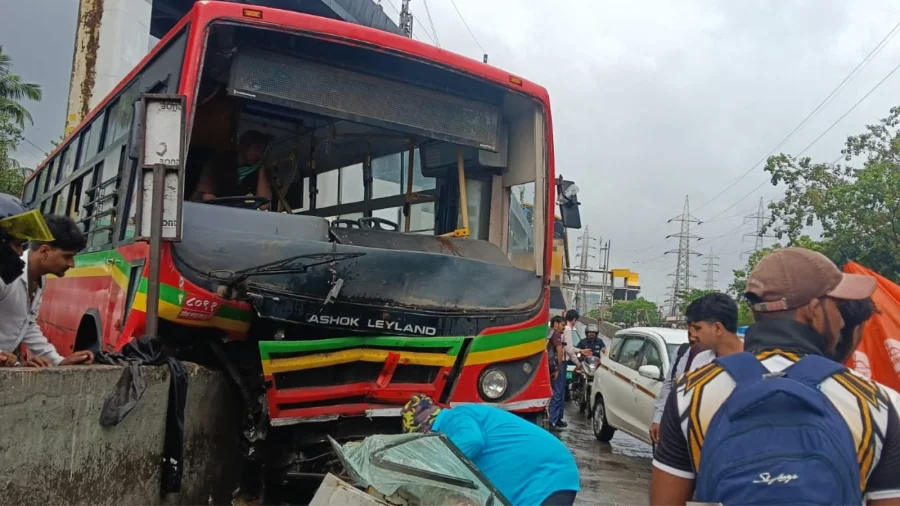
Just a day after a tragic accident in Mankhurd claimed lives and left commuters shaken, the Brihanmumbai Electric Supply and Transport (BEST) undertook an emergency inspection of its wet-lease bus fleet. The results, now public, are deeply concerning: one in every three buses was found to have technical defects. For the lakhs of Mumbaikars who depend on these buses daily, this is a stark reminder of the risks lurking on the road.
What the inspection revealed about wet-lease bus safety
The inspection, ordered in the immediate aftermath of the Mankhurd crash, covered a significant portion of BEST's wet-lease fleet — buses operated by private contractors under the BEST umbrella. According to sources, the checks revealed that roughly 33% of these vehicles had technical faults ranging from brake issues to steering problems. The finding suggests a systemic failure in maintenance oversight.
Why this matters for every Mumbai commuter
For the average passenger, this news is not just a statistic. It means that every time they board a wet-lease bus, there is a heightened risk of mechanical failure. The Mankhurd accident, which involved a similar bus, has already heightened public anxiety. This inspection data confirms that the incident was not an isolated event but a symptom of a broader safety gap. Commuters are now left wondering: which buses are safe to board?
Timeline of events: From Mankhurd accident to fleet inspection
The Mankhurd accident occurred on [date not specified in source], involving a wet-lease bus that lost control, leading to fatalities and injuries. The very next day, BEST launched a fleet-wide inspection. The speed of the response indicates the gravity of the situation, but the results — one in three buses defective — suggest that the problem had been building for some time. The inspection covered both mechanical and safety systems.
Who is affected and what it means for daily travel
The primary victims are the daily wage workers, students, and office-goers who rely on BEST's wet-lease buses for affordable transport. Many of these buses ply on long-distance routes across Mumbai and its suburbs. With a third of the fleet potentially unsafe, commuters face longer wait times, overcrowding on remaining buses, or the financial burden of switching to costlier alternatives. The psychological toll — fear of another accident — is equally significant.
BEST's official response and next steps
BEST officials have acknowledged the inspection findings and stated that corrective measures are underway. The defective buses are being taken out of service for repairs. However, the agency has not yet disclosed the names of the private operators whose buses failed the inspection, nor has it outlined penalties. The focus now shifts to how BEST will enforce stricter maintenance schedules and whether it will renegotiate contracts with wet-lease operators to include tougher safety clauses.
Analysis: What this defect rate reveals about Mumbai's public transport
A 33% defect rate is not just a maintenance failure; it is a governance failure. Wet-lease buses were introduced to augment BEST's aging fleet, but the model relies heavily on private operators adhering to standards. This inspection suggests that oversight has been lax. The Mankhurd accident may have been the trigger, but the underlying issue is a system that prioritizes availability over safety. Without a fundamental overhaul of inspection protocols and accountability, such defects will persist.
Confirmed facts vs what remains unclear
Confirmed: BEST conducted an inspection of wet-lease buses a day after the Mankhurd accident. One in three buses was found to have technical defects. The defects include brake and steering issues. Unclear: The exact number of buses inspected. The specific operators involved. Whether any buses were immediately grounded. The timeline for repairs. The cause of the Mankhurd accident itself, which is still under investigation. All speculation about operator negligence or criminal liability remains unconfirmed.
Risks and balanced view: The challenge of wet-lease operations
While the defect rate is alarming, it is important to note that wet-lease buses have helped BEST expand its network without massive capital expenditure. Critics argue that the model incentivizes operators to cut corners on maintenance to maximize profits. Supporters say that with proper oversight, wet-lease can be safe. The real risk is that a rush to ground all defective buses could lead to a severe shortage of public transport, leaving commuters stranded. A balanced approach would involve targeted repairs, stricter contracts, and transparent reporting.
Wider trend: A pattern of safety lapses in India's public transport
This incident is not isolated. Across Indian cities, from Delhi to Bengaluru, private bus operators have been implicated in accidents due to poor maintenance. The Mankhurd accident and the subsequent BEST inspection fit into a larger pattern where public transport authorities struggle to monitor private fleets. The issue is compounded by aging infrastructure, lack of spare parts, and a shortage of skilled mechanics. Without systemic reform, similar findings may emerge in other cities.
Practical guidance for commuters
For now, commuters can take a few precautions: Check the bus number and operator name before boarding. Report any unusual sounds, vibrations, or brake issues to the driver or BEST helpline. Avoid overcrowded buses, which put additional strain on already defective vehicles. Stay informed about which routes are affected by the grounding of defective buses. If possible, consider alternative transport for critical journeys until the situation stabilizes.
Future outlook: What happens next
BEST is expected to release a detailed report on the inspection, including the names of operators and the nature of defects. The civic body may also impose fines or suspend contracts. In the longer term, this incident could lead to mandatory third-party audits of all wet-lease buses, real-time GPS tracking of maintenance schedules, and stricter penalties for non-compliance. However, without political will and adequate funding, these reforms may remain on paper. The next few weeks will be critical in determining whether this is a one-time crackdown or the start of lasting change.
Our Take
The Mankhurd accident was a tragedy that could have been prevented. The fact that one in three wet-lease buses was found defective the very next day suggests that the warning signs were there all along. This is not just a BEST problem; it is a failure of the entire public transport ecosystem in Mumbai. The authorities must move beyond reactive inspections and build a culture of preventive maintenance. For the sake of every commuter, this cannot be another forgotten scandal. Accountability must begin now.
Frequently Asked Questions
What did the BEST inspection find after the Mankhurd accident?
The inspection found that one in three wet-lease buses had technical defects, including brake and steering issues, raising serious safety concerns.
Why are wet-lease buses used by BEST?
Wet-lease buses are operated by private contractors under the BEST brand. They help the transport authority expand its fleet without the capital cost of buying new buses.
Are all BEST buses unsafe now?
No. The inspection focused on wet-lease buses. BEST's own fleet may have different maintenance standards. However, the finding highlights a systemic issue with private operators.
What should commuters do if they suspect a bus is defective?
Commuters should report the bus number and specific issues to the BEST helpline or the driver. They can also choose to wait for the next bus if they feel unsafe.



