
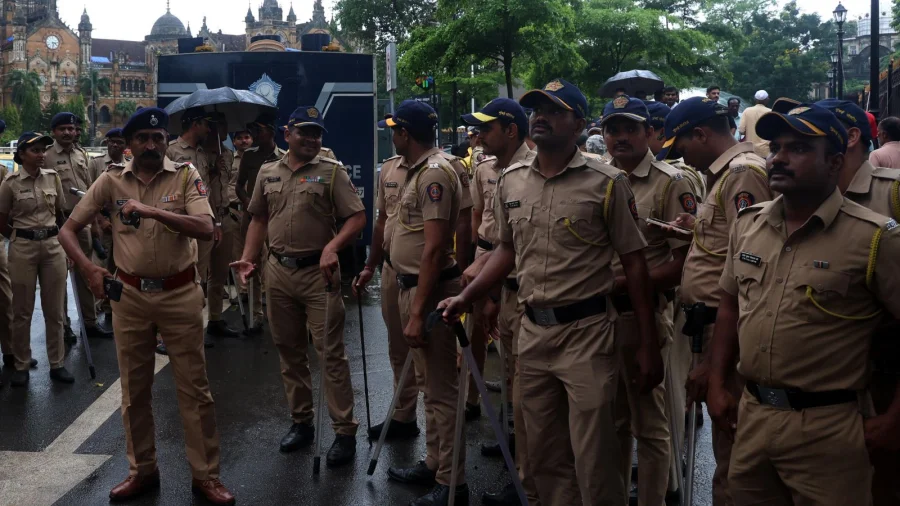
More than 140 lawyers from the Bombay High Court have collectively challenged the Mumbai Police's recent prohibitory orders, asserting in a formal letter that the right to peaceful protest is a fundamental constitutional guarantee. The move signals a significant pushback from the legal fraternity against what they see as an overreach of executive power.
What the lawyers are arguing
The letter, signed by over 140 advocates, directly questions the legal basis of the prohibitory orders issued by Mumbai Police. The lawyers contend that these orders, often imposed under Section 144 of the Code of Criminal Procedure (CrPC), which restricts the assembly of four or more people, are being used in a manner that could be disproportionate and violative of fundamental rights.
Why this matters for every citizen
At the heart of the challenge is a core democratic principle: the right to assemble peacefully and express dissent. The lawyers' intervention is not just a legal technicality; it is a reminder that any restriction on protest must be reasonable, proportionate, and subject to judicial scrutiny. For ordinary citizens, this debate directly affects their ability to voice concerns on public issues without fear of arbitrary police action.
The legal framework under scrutiny
The prohibitory orders in question are typically issued under Section 144 CrPC, which allows a magistrate to issue orders in urgent cases of nuisance or apprehended danger. While the provision is intended for exceptional circumstances, critics argue it is increasingly used to preemptively ban protests, often without clear justification. The lawyers' letter appears to challenge this very application, arguing that it undermines the constitutional balance between public order and individual liberty.
Who is affected by this debate
This is not just a matter for lawyers and activists. Students, workers, civil society groups, and ordinary citizens who wish to hold peaceful demonstrations on issues ranging from environmental policy to social justice are directly impacted. If prohibitory orders become a routine tool, the space for peaceful dissent shrinks, affecting democratic participation at every level.
What the police have said so far
As of the latest reports, Mumbai Police has not issued a formal response to the lawyers' letter. The silence leaves a critical gap in the public understanding of the rationale behind the orders. It remains to be seen whether the police will defend the orders on grounds of public safety or revise their approach in light of legal scrutiny.
Why the legal community is speaking out
The involvement of over 140 High Court lawyers is significant. It reflects a growing unease within the legal profession about the state of civil liberties in the city. Lawyers, who are officers of the court and guardians of the Constitution, are uniquely positioned to challenge executive actions that they believe infringe on fundamental rights. Their collective action adds moral and legal weight to the argument.
Confirmed facts vs what remains unclear
What is confirmed: Over 140 Bombay High Court lawyers have signed a letter questioning the prohibitory orders. The letter asserts that peaceful protest is a constitutional right. What remains unclear: The exact date and specific prohibitory orders being challenged, the full text of the letter, and whether the police will respond or modify the orders. All speculation about the police's motives or the orders' necessity should be treated as unverified.
Risks and balanced view
While the lawyers' argument is constitutionally sound, there are legitimate concerns about public order. Police often argue that prohibitory orders are necessary to prevent violence, communal tension, or disruption of public life. The challenge lies in ensuring that such orders are not used arbitrarily. A balanced approach would require clear guidelines, judicial oversight, and a genuine assessment of threat before any ban is imposed.
Wider trend: The shrinking space for protest
This incident is part of a broader national and global pattern where governments increasingly use legal tools to restrict public assembly. In India, the use of Section 144 has risen sharply in recent years, often drawing criticism from human rights bodies. The lawyers' letter is a local manifestation of a larger debate about the health of democratic freedoms.
What citizens and activists should do
For those concerned about protest rights, the immediate step is to stay informed about local prohibitory orders and their legal basis. Citizens can also support legal challenges by amplifying the issue through public discourse. Activists planning protests should consult legal experts to ensure compliance while challenging unreasonable restrictions through proper channels.
What could happen next
The letter could lead to a formal petition in the Bombay High Court, seeking a judicial review of the prohibitory orders. Alternatively, the police may issue a clarification or modify the orders in response to the legal pressure. The outcome will set a precedent for how similar orders are treated in the future, not just in Mumbai but potentially across Maharashtra.
Our Take
This is a textbook example of the judiciary's role in checking executive power. The lawyers' letter is not an act of defiance but a constitutional duty. It reminds us that the right to protest is not a gift from the state but a fundamental right that the state is bound to protect. The real test will be whether the police respond with transparency and whether the courts provide timely scrutiny. For now, the ball is in the police's court.
Frequently Asked Questions
What is Section 144 of the CrPC?
Section 144 of the Code of Criminal Procedure empowers a magistrate to issue orders in urgent cases of nuisance or apprehended danger to prevent obstruction, annoyance, or injury to persons or property. It is often used to prohibit the assembly of four or more people.
Is peaceful protest a fundamental right in India?
Yes. Article 19(1)(a) guarantees the right to freedom of speech and expression, and Article 19(1)(b) guarantees the right to assemble peaceably and without arms. These rights are subject to reasonable restrictions in the interest of public order, sovereignty, and security.
Can the police ban all protests under Section 144?
No. The Supreme Court has held that Section 144 cannot be used to stifle peaceful protests. Any order must be proportionate, based on a genuine threat assessment, and subject to judicial review. Blanket bans are constitutionally suspect.
What should I do if I want to hold a peaceful protest in Mumbai?
First, check if any prohibitory orders are in force in your area. Consult a lawyer to understand the legal framework. Inform the local police station about your intent, as prior notice is often required. Ensure the protest remains peaceful and within legal limits.



