Summary
The United States and Iran have exchanged military strikes for a second consecutive night, escalating tensions in the Middle East. This follows President Donald Trump's declaration that the ceasefire between the two nations is "over." The renewed attacks have caused a sharp drop in traffic through the Strait of Hormuz, a critical waterway for global oil shipments.
Main Impact
The immediate effect of the renewed strikes is a significant disruption to global oil trade. Traffic through the Strait of Hormuz has fallen "dramatically" since the attacks began, according to shipping data. This waterway is a narrow passage between the Persian Gulf and the Gulf of Oman, through which about 20% of the world's oil passes. Any prolonged disruption could lead to higher oil prices and supply shortages for many countries.
Key Details
What Happened
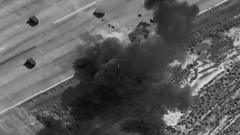
On Monday night, the US military launched airstrikes against Iranian targets in response to what it called "provocative actions" by Tehran. Iran retaliated with missile and drone attacks on US military bases in Iraq and the Gulf region. The exchanges continued into Tuesday night, marking the second straight day of direct military confrontation between the two nations.
Important Numbers and Facts
According to the US Central Command, the strikes targeted Iranian missile batteries, drone launch sites, and naval vessels. Iran's state media reported that its forces hit multiple US positions, though it did not provide specific numbers. The Strait of Hormuz, which handles roughly 17 million barrels of oil per day, has seen a 40% drop in tanker traffic since the attacks began, according to maritime tracking firm Vortexa.
Background and Context
The conflict between the US and Iran has been building for weeks. In late June, President Trump ordered the assassination of a top Iranian general, which led to a brief but intense round of strikes. A ceasefire was brokered by European and Gulf diplomats in early July, but it collapsed over the weekend. Trump declared the ceasefire "over" on Sunday after accusing Iran of violating its terms by moving missiles into position near the Strait of Hormuz.
The Strait of Hormuz is a narrow channel at the mouth of the Persian Gulf. It is the only sea passage from the Gulf to the open ocean. Iran has threatened to close it in the past, but this is the first time in decades that military action has directly affected traffic through the waterway.
Public or Industry Reaction
Global oil markets reacted quickly. Brent crude oil prices jumped by 8% on Tuesday, reaching $95 per barrel, the highest level in over a year. Shipping companies have begun rerouting tankers away from the Gulf, adding days to delivery times. The International Energy Agency warned that the disruption could lead to "severe supply constraints" if the fighting continues.
In the US, lawmakers from both parties called for restraint. Senate Majority Leader Chuck Schumer said the administration must "avoid a full-scale war." Iran's foreign ministry accused the US of "aggression" and said it had the right to defend itself.
What This Means Going Forward
The situation remains highly unstable. Both sides have shown they are willing to strike each other directly, which increases the risk of a wider conflict. The drop in Strait of Hormuz traffic could push oil prices even higher, affecting consumers worldwide. Diplomatic efforts by European and Gulf nations have so far failed to restore the ceasefire. If the attacks continue, the US may need to send more naval forces to protect shipping lanes, which could further escalate tensions.
Final Take
The renewed US-Iran strikes mark a dangerous turn in an already tense region. The sharp drop in oil traffic through the Strait of Hormuz shows how quickly military action can affect the global economy. Without a new ceasefire, the risk of a broader conflict and higher energy costs will keep growing.
Frequently Asked Questions
Why is the Strait of Hormuz important?
The Strait of Hormuz is a narrow waterway between the Persian Gulf and the Gulf of Oman. About 20% of the world's oil passes through it, making it a critical route for global energy supplies.
What caused the ceasefire to collapse?
President Trump declared the ceasefire "over" after accusing Iran of moving missiles near the Strait of Hormuz, which he said violated the terms of the truce. Iran denied the accusation.
How could this affect oil prices?
Oil prices have already risen 8% since the attacks began. If the fighting continues and traffic through the Strait of Hormuz stays low, prices could go higher, leading to higher costs for gasoline and other products.