Summary
OpenAI and its CEO, Sam Altman, are facing a difficult period marked by a massive lawsuit and reports of missed financial targets. A high-profile trial involving Elon Musk has begun, while internal documents suggest the company is struggling to meet its own growth goals. Despite these setbacks, some tech experts believe the public is overreacting to temporary hurdles. They argue that OpenAI remains a leader in the artificial intelligence industry with strong long-term potential.
Main Impact
The recent news has caused a significant drop in the stock prices of companies linked to OpenAI. When reports surfaced that OpenAI missed its revenue and user growth targets, investors became nervous. This led to a decline in the Nasdaq index and hit partners like Oracle and SoftBank particularly hard. The situation shows how much the global tech market now depends on the stability and success of a single AI company.
Key Details
What Happened
The week started with the beginning of a $130 billion trial brought by Elon Musk against Sam Altman and OpenAI. Musk claims the company moved away from its original mission to help humanity and instead focused on making money. At the same time, a report from the Wall Street Journal highlighted internal worries at OpenAI. The company’s Chief Financial Officer, Sarah Friar, reportedly expressed concern that the firm is not yet ready to become a public company. There are also signs that the growth of ChatGPT is slowing down as more competitors enter the market.
Important Numbers and Facts
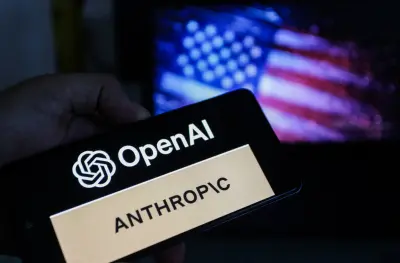
OpenAI has committed to spending roughly $600 billion on "compute," which refers to the massive amount of computer power and electricity needed to run AI models. To cover these costs, the company needs its revenue to double every year. However, recent data shows they may be falling short of these aggressive goals. In response to the news, Oracle’s stock fell by 5%, and SoftBank, a major investor in OpenAI, saw its shares drop by nearly 10% in the Japanese market. Meanwhile, OpenAI’s main rival, Anthropic, recently saw its private market value climb above $1 trillion.
Background and Context
To understand why this matters, it is helpful to look at the history of the internet. Some experts fear OpenAI might be having an "AltaVista moment." In the 1990s, AltaVista was the most popular search engine in the world. It was fast and powerful, but it was eventually replaced by Google because it could not keep up with changes in technology. Critics worry that OpenAI might suffer the same fate if rivals like Google or Anthropic create better tools.
The term "compute" is also central to this story. Running advanced AI requires thousands of specialized chips and huge amounts of energy. This is why OpenAI is spending hundreds of billions of dollars. If the company does not grow fast enough to pay for these resources, it could face serious financial trouble.
Public or Industry Reaction
While many investors are worried, tech analyst Gene Munster says the negative reaction is an example of "over-analyzing." Munster believes that missing a few internal targets does not mean the company is failing. He points out that OpenAI is still growing very fast and that the AI industry is still in its very early stages. Munster also suggests that the media might be focusing too much on "stretch targets"—goals that are intentionally set very high—rather than the actual health of the business.
Other industry insiders have noted that while Anthropic’s "Claude" model is becoming popular with some developers, OpenAI still holds a strong lead in specialized areas. For example, many professional software developers still prefer OpenAI’s tools for writing code.
What This Means Going Forward
OpenAI is expected to focus heavily on its next major release, likely called GPT-5 or GPT-5.5. This new version will need to prove that OpenAI can still stay ahead of its competitors. The company is also pushing its coding tool, Codex, to win back developers who have started using other services. The outcome of the Elon Musk trial will also be a major factor, as it could change how the company is managed or how it shares its technology with the public.
Final Take
OpenAI is currently dealing with the pressure of being the world's most famous AI company. While the legal and financial news looks bad right now, the company is still at the center of a massive technological shift. The real test will be whether OpenAI can turn its expensive computing power into steady profits while fighting off rivals that are moving just as fast. The current market dip may just be a small bump in a much longer journey for artificial intelligence.
Frequently Asked Questions
Why is Elon Musk suing OpenAI?
Elon Musk claims that OpenAI broke its original promise to be a non-profit company that shares its technology openly. He argues the company is now too focused on making a profit for its partner, Microsoft.
What does "compute" mean in the AI industry?
Compute refers to the processing power provided by high-end computer chips. AI models need a massive amount of this power to learn from data and answer user questions, which costs billions of dollars.
Is ChatGPT losing its lead in the market?
While ChatGPT is still very popular, its growth has slowed. Competitors like Google’s Gemini and Anthropic’s Claude are gaining more users, especially among people who use AI for professional work and coding.