The receipts are in — and this week, four of America's biggest retailers are opening their books for the world to see. Home Depot, Target, Lowe's and Walmart will all report quarterly earnings within 72 hours of each other, and the numbers will land with a simple but urgent question attached: how are real households holding up when prices keep climbing?
This is not just a Wall Street ritual. The answers will hint at what you might pay at the grocery store, whether home-improvement demand is cracking, and how much fuel costs are squeezing family budgets.
Four retail giants, one high-stakes week
The schedule is tight. Home Depot kicks things off on Tuesday, followed by Target and Lowe's on Wednesday. Walmart closes the retail earnings cycle on Thursday. Together, these four companies touch nearly every corner of American consumption — from groceries and clothes to lumber, paint and appliances.
According to the original report, the results will help investors build a more detailed picture of how businesses and consumers are handling stubbornly high inflation. That matters because each retailer tells a different part of the same story.
Why inflation above 3% still has shoppers on edge
The rate of inflation remains solidly above 3% — well off the worst peaks of recent years but still uncomfortably high for ordinary budgets. The practical effect is that wages stretch less, savings drain faster, and every trip to the store becomes a calculation.
For retailers, the pressure is double-sided. They must manage their own rising costs while competing for shoppers who are increasingly willing to trade down, buy less, or wait for discounts.
From Home Depot to Lowe's: the housing clue hiding in retail numbers
Home Depot and Lowe's results could provide more insight into the housing market, according to the report. That link is simple: when people buy homes, renovate them, or even just maintain them, they spend money at these chains.
Weak sales in building materials, appliances and tools can signal that homeowners are postponing projects — often because mortgage costs, repair bills or general uncertainty are making them cautious. Strong numbers would suggest the housing engine still has fuel.
How Iran tensions, oil and gas prices complicate the picture
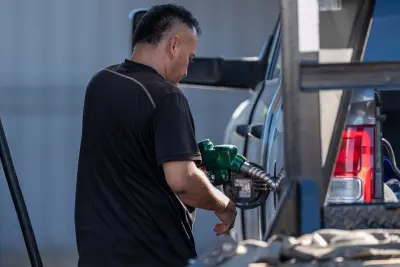
The backdrop is getting rougher. The ongoing U.S. conflict with Iran prompted a surge in oil prices, which in turn jolted gasoline prices. That ripple effect touches everything from commuting costs to the price of shipping goods to stores.
Higher prices on gasoline, groceries and any shipped products could prompt people to shift or cut spending entirely. For low-income households, a jump at the fuel pump often means an immediate cut somewhere else — usually in discretionary retail.
What this means for everyday shoppers
Behind the earnings headlines are real decisions: a family skipping a kitchen remodel, a commuter driving less, a parent swapping a brand-name cereal for the store label. The retail reports will quantify those choices in dollars and cents.
For consumers, the takeaway is practical. If Walmart signals caution about future demand, expect more aggressive discounts in the coming months. If Home Depot sees resilience, it suggests homeowners still have confidence in their finances.
What the Fed's latest meeting adds to the mix
Investors will also get more details from the Federal Reserve's most recent meeting this week. The central bank's view on inflation and interest rates shapes mortgage costs, credit card rates and the overall mood of the economy.
Taken together, the retail earnings and the Fed commentary will give markets a rare combined snapshot: how the consumer is behaving right now, and how policymakers plan to respond to persistent price pressures.
The numbers beneath the headline numbers
Reported earnings are just the surface. Investors typically dig into same-store sales, online growth, inventory levels and forward guidance — the quiet signals that reveal whether a retailer is gaining or losing traction.
The more revealing metric this cycle may be any mention of consumer behaviour changes: trade-downs, smaller baskets, or a slowdown in big-ticket purchases. Those details tell analysts whether inflation anxiety is spreading beyond the most price-sensitive shoppers.
Confirmed facts vs. what remains unclear
What is verified: the earnings schedule, the inflation rate staying above 3%, the oil price surge linked to the US-Iran conflict, and the Fed meeting details expected this week.
What remains unclear: how deep the consumer pullback actually is, whether housing-related spending is truly cooling, and whether retailers will cut their full-year forecasts. Those answers arrive only as the reports land.
Why these retail giants still dominate the market's attention
Walmart is a consumption bellwether because of its sheer scale — it feeds and supplies a vast share of American households, especially in middle and lower income brackets. Home Depot and Lowe's hold a duopoly-like grip on home improvement, making them the clearest public lens into housing sentiment.
Target sits in the discretionary sweet spot, where shoppers cut first when budgets tighten. When the market wants to know how the American consumer feels, these four names are the closest thing to a national mood ring.
The risks: what could go wrong in these reports
There are real downside scenarios. Retailers could report profits that beat expectations but warn about the second half of the year — a common market trap. Or they could confirm that the oil price shock is already compressing margins faster than expected.
There is also the risk that housing-linked weakness at Home Depot and Lowe's signals a broader slowdown in the property market, which would ripple into construction jobs, appliance sales and lending activity. Supporters of the consumer story argue spending remains resilient; skeptics point to depleted savings and rising debt.
A wider pattern: the two-speed consumer economy
This earnings week may reveal what economists call a two-speed consumer. Wealthier households, boosted by home equity and steady asset values, continue spending on upgrades and experiences. Lower-income shoppers, hit hardest by food and fuel costs, are trading down and cutting back.
Retailers that serve both groups — like Walmart — effectively become a live data feed on how wide that gap is getting. The trend has been building for months, and this week's numbers will show whether it is accelerating.
How investors and shoppers can read this week's numbers
For investors, the discipline is simple: watch guidance more than reported profits. A retailer can beat last quarter and still signal trouble ahead.
For everyday shoppers, the practical move is to watch for pricing behaviour. If retailers acknowledge weaker demand, expect discounting to return. If they report strength despite inflation, prices are likely to stay firm — so compare and plan purchases accordingly.
What happens next
The immediate focus is the earnings themselves, due Tuesday through Thursday. After that, markets will digest the Fed's meeting details and begin adjusting expectations for rate policy.
The longer-term question is whether this quarter marks a turning point — the moment retailers finally conceded that inflation fatigue has hit the mainstream consumer. That answer will shape everything from holiday-season forecasts to hiring plans in the months ahead.
Our Take
This is a defining week for reading the American consumer. Retail earnings are rarely just about a company's health; they are a proxy for household confidence, housing vitality and the real-world bite of inflation. The combination of a still-warm housing sector, an oil price shock, and a Fed that remains cautious makes these four reports unusually significant.
The honest expectation is mixed signals. The reports will not deliver one clean verdict — they will likely show pockets of resilience next to clear strain. That complexity, not any single number, is the real story.
Frequently Asked Questions
Why do Walmart's earnings matter for the housing market?
Walmart's results matter indirectly. Because Walmart serves a broad swath of American households, its sales reveal how much spending power consumers have left after covering essentials like food and fuel. That leftover spending power influences whether people buy homes, renovate them, or hold back — which is why investors read Walmart's numbers as a consumer confidence signal that ripples into housing demand.
When does each retailer report this week?
Home Depot reports on Tuesday, followed by Target and Lowe's on Wednesday, and Walmart on Thursday. All four results arrive within days of each other, giving investors a concentrated look at retail health across groceries, discretionary goods and home improvement.
How does inflation above 3% affect retail earnings?
Inflation above 3% means prices for essentials keep rising, which forces shoppers to make trade-offs. Retailers feel this through smaller baskets, more private-label purchases, and slower sales of big-ticket items. In earnings reports, that shows up in revenue growth driven by higher prices rather than higher volumes — a sign consumers are buying less, not more.
How are oil prices and the US-Iran conflict connected to these retail results?
The US-Iran conflict pushed oil prices up, which raised gasoline costs. Higher fuel prices affect retail twice: consumers have less money left after filling their tanks, and stores pay more to ship products. The original report notes this could prompt people to shift or cut spending on everything from groceries to shipped goods — directly affecting the earnings figures reported this week.