Summary
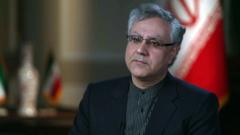
Iran’s Ambassador to the United Kingdom, Seyed Ali Mousavi, has stated that his country remains prepared to defend itself against any form of outside aggression. In a recent discussion, the diplomat explained that Iran’s future military and political moves will be a direct response to the actions taken by Israel and the United States. This statement highlights the fragile state of security in the Middle East and suggests that the risk of further conflict remains high depending on how Western powers behave.
Main Impact
The main impact of the ambassador’s comments is a clear signal that the cycle of tension in the region is not yet over. By placing the responsibility for future events on the United States and Israel, Iran is setting a condition for peace. This "wait and see" approach means that any small military action or political move could trigger a much larger response. For the rest of the world, this creates a sense of uncertainty, especially regarding global oil prices and the safety of international shipping routes that pass through the region.
Key Details
What Happened
Seyed Ali Mousavi spoke with journalist Laura Kuenssberg to clarify Iran’s official position on recent regional events. During the conversation, he emphasized that Iran does not seek a full-scale war but will not hesitate to protect its borders and interests. He argued that Iran’s previous military actions were a direct result of being provoked. The ambassador made it clear that Tehran views its military strength as a way to stop others from attacking them, rather than a way to start new fights.
Important Numbers and Facts
The relationship between Iran and the West has been strained for many years, but several key factors are currently at play. First, the ambassador pointed to the role of the UK as a place where diplomatic messages are often exchanged. Second, he referenced the ongoing military support the United States provides to Israel, which Iran views as a threat to its own safety. While no specific dates for future actions were given, the ambassador noted that Iran’s military is on high alert. International observers note that billions of dollars in trade and a large portion of the world's energy supply depend on the stability of the waters near Iran.
Background and Context
To understand why these comments matter, it is important to look at the history of the region. For decades, Iran, Israel, and the United States have been in a state of deep disagreement. This tension often involves "proxy wars," where different groups supported by these nations fight each other. Recently, the situation has become more direct, with missiles and drones being used across borders. Iran feels it is being surrounded by enemies, while Israel and the US believe Iran is trying to spread its influence through force. This lack of trust makes it very hard for any side to back down without feeling like they look weak.
Public or Industry Reaction
The reaction to the ambassador’s words has been mixed. Some political experts believe that Iran is trying to use diplomacy to prevent a larger war that would hurt its economy. Others see the comments as a threat, suggesting that Iran is looking for an excuse to increase its military activity. In the business world, shipping companies and energy traders are watching the situation closely. Any increase in fighting could make it more expensive to move goods across the ocean, which would lead to higher prices for people everywhere. Western leaders have continued to call for calm, urging all sides to stop the cycle of violence before it grows out of control.
What This Means Going Forward
Looking ahead, the next few months will be critical for regional peace. If the United States and Israel choose to increase their military presence or launch new strikes, Iran has promised to hit back. This creates a dangerous situation where a single mistake or a misunderstood move could lead to a large war. Diplomacy remains the only way to prevent this, but both sides seem to have very different ideas of what a fair deal looks like. The world will be watching to see if new talks can begin or if the region will continue to move toward more fighting. The role of the UK and other European nations will be vital in trying to keep communication lines open between the two sides.
Final Take
The statements from Ambassador Mousavi show that Iran is not willing to change its path unless it sees a change from its rivals. While the talk of defense sounds like a way to avoid war, it also serves as a warning that the region remains on the edge of a much bigger conflict. True stability will only come when all sides feel safe enough to stop making threats and start finding common ground. Until then, the world remains in a state of high tension, waiting to see who will make the next move.
Frequently Asked Questions
Why did the Iranian ambassador speak to the UK media?
The ambassador used the interview to send a direct message to Western leaders. By speaking to a major news outlet, he ensured that Iran's position on self-defense and its conditions for peace were heard by a global audience.
What does Iran mean by "aggression"?
In this context, Iran considers aggression to be any military strike on its land, attacks on its officials, or heavy economic sanctions that it feels are unfair. They also view the military presence of the US near their borders as a form of pressure.
How does this affect the average person?
When tensions rise in the Middle East, it often leads to higher oil and gas prices. It can also cause problems for international trade, which might make everyday items more expensive due to higher shipping costs and safety risks at sea.