
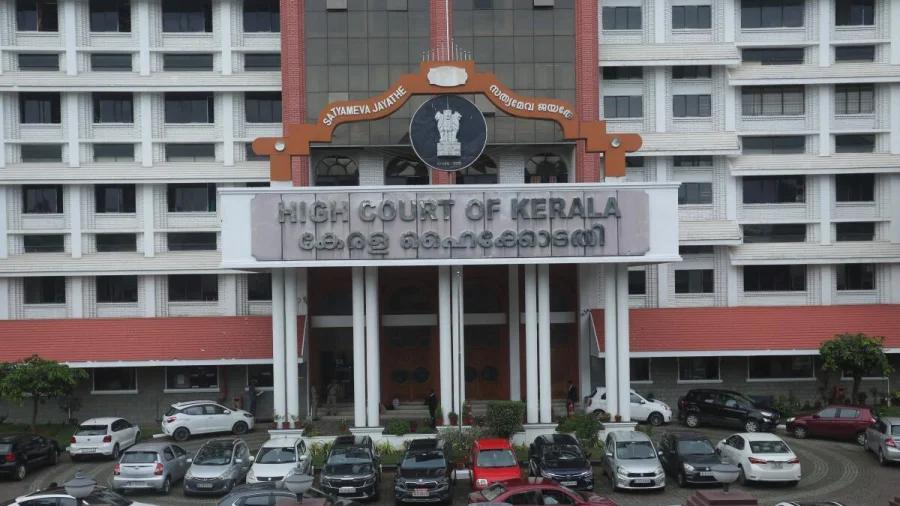
Every election season, Kerala's junctions disappear under flex boards. The rules say each one is a ₹5,000 mistake. The Kerala High Court now wants to know why the State has been letting those mistakes go free — and why the revenue from those fines has never arrived.
A fine that was meant to punish has become a revenue leak
The Kerala High Court has reprimanded the State over its failure to collect fines on unauthorised flex boards and banners. According to the original report, the court observed that the State was "losing valuable revenue" because its earlier order — imposing a fine of ₹5,000 on each board and installation — was not being enforced.
Why unpaid ₹5,000 fines matter beyond a messy roadside
The court's observation reframes a civic eyesore as a financial failure. Every flex board that goes up without permission and stays up without a fine is a penalty that never reaches the exchequer. For the public, it also means the visual clutter continues despite clear judicial direction.
The flex board rulebook: how the ₹5,000 fine was meant to work
The ₹5,000 per-board penalty was part of the High Court's regulatory push to control hoardings, banners and flex boards across Kerala. Such orders typically direct local bodies — corporations, municipalities and panchayats — to remove unauthorised displays and impose fines on those responsible. The current reprimand indicates that this follow-through has not happened.
What flex boards cost the people who live around them
Flex boards do more than block views. They narrow footpaths, obscure traffic signals and, during storms, can turn into airborne hazards. Residents across Kerala have repeatedly complained that boards reappear within hours of removal, making the court's insistence on fines a matter of daily public safety, not just paperwork.
'Losing valuable revenue': the High Court's observation
The bench's observation, as reported, was blunt: non-compliance with its order meant the State was losing valuable revenue. The remark signals growing judicial impatience with enforcement that exists only on paper.
When a court order exists only on paper
The gap is not in the rulebook but in the machinery. An uncollected fine is a rule in name only. By pointing at the revenue loss, the court has given the State a measurable reason to act — one that moves the debate from aesthetics to public money.
Confirmed vs unclear: what is verified and what is still open
Confirmed: the High Court pulled up the State over uncollected flex board fines; the fine is ₹5,000 per board and installation; and the court observed that the State is "losing valuable revenue." What remains unclear: how many fines have gone uncollected, the total revenue at stake, and the State's formal response to the court's observation.
The State's defence: why collecting these fines is not simple
Enforcement is genuinely



