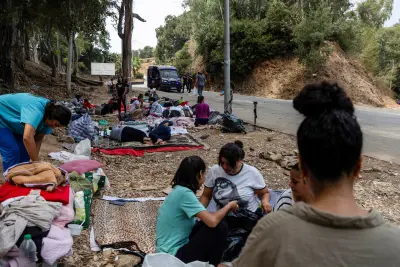
For months, the fate of unaccompanied migrant minors in Ceuta was the issue that tore PP regional coalitions apart. But the fault line has now moved. This time, the rupture is not between the PP and Vox — it is between the PP and Madrid itself.
By Politics Desk | Migration and Politics Beat
A joint demand: expel "minors and adults"
Alberto Núñez Feijóo and Juan Jesús Vivas, the president of Ceuta, appeared together in the autonomous city and made their position unmistakable. Both demanded the expulsion of everyone who entered during what they called the "invasion" of July 30 and 31 — "minors and adults," according to the original account.
Why the rejection of mainland transfers matters
The demand runs directly against the government's approach of relocating some minors to the Spanish mainland. By rejecting that option outright, the PP leadership is signalling it no longer accepts the existing framework for managing unaccompanied minors — a framework that has held across successive governments.
The Vox factor has disappeared — and that changes everything
Previously, Vox was the party that broke regional governments with the PP over this same issue. This time, Vox is not in the picture. The confrontation is direct: PP versus the central government, with no intermediary. That shift suggests the PP's own position has hardened to the point where it no longer needs pressure from its former coalition partner.
Feijóo's hardening, Vivas's turn
The original report notes that Feijóo's migration stance has toughened considerably. Equally notable is the shift in Vivas, described until now as a moderate figure. His alignment with the harder line marks a change in the internal political balance of the PP — and removes the moderating voice Ceuta had long represented.
What this means for the minors in Ceuta
Behind the political language are real people — minors currently in Ceuta whose immediate future now depends on a dispute between institutions. If the expulsion demand gains ground, it would challenge both Spanish law and the government's relocation policy. If it fails, the political cost falls on the party that made the demand.
How the confrontation developed
The report frames this as a new phase in a long-running conflict. The July 30-31 entries — which the PP describes as an "invasion" — appear to be the trigger. The available account does not specify the number of people involved, the circumstances of the entry, or the details of the government's transfer plan. Those figures remain unverified here.
What is confirmed and what remains unclear
Confirmed: Feijóo and Vivas jointly demanded expulsion of all who entered on those dates, and rejected the transfer of minors to the mainland. Unclear: the exact number of minors affected, the government's formal response, and how such an expulsion would be implemented legally. The original report itself describes the consequences as "unpredictable."
Risks: a legal and political minefield
Any mass expulsion of minors would face serious legal obstacles under Spanish and EU law, which afford special protection to unaccompanied children. Critics would likely argue the PP's language stigmatises vulnerable people for political gain. Supporters would counter that the state must control its borders and that Ceuta's resources are overwhelmed. Both arguments are live in the national debate.
A wider pattern: migration as the PP's new front line
This confrontation fits a broader shift: migration has become the sharpest political fault line in Spanish politics. The PP's calculation appears to be that a firmer position wins votes. The risk is that it also makes governing — and reaching any agreement on minors — significantly harder.
What readers should watch for
Key signals to follow: how the central government responds formally, whether Ceuta's regional government acts on the demand, and whether any legal challenge emerges. For anyone following Spanish politics, this dispute is likely to define the migration debate in the coming weeks.
Future outlook
With both sides holding firm, the most plausible scenario is continued deadlock. The report's own framing — consequences with unpredictable effects — suggests that even the parties involved do not know where this leads. What is certain is that the minors at the centre of the dispute remain in limbo.
Our Take
This is not just another episode in the migration debate. The absence of Vox removes the usual excuse — the PP can no longer claim it is being dragged into a hard line by a coalition partner. Feijóo and Vivas have made this position their own. Whether that strengthens the PP electorally or damages its credibility on governance is the real question — and one this confrontation has left wide open.
Frequently Asked Questions
Why are Feijóo and Vivas demanding the expulsion of migrant minors from Ceuta?
They want everyone who entered Ceuta on July 30-31 — described as an "invasion" — to be expelled, including minors. They also reject the government's plan to transfer some minors to the Spanish mainland.
How is this different from earlier disputes over migrant minors?
Previously, Vox was the party pushing the hard line and breaking regional governments with the PP over this issue. This time, the confrontation is direct between the PP and the central government, without Vox's involvement.
What is the government's position on the minors?
The original report indicates the government's approach involves sending some minors to the mainland — a policy the PP leaders flatly rejected. No formal government response was included in the available information.
What could happen next in the Ceuta minors dispute?
The report describes the consequences as unpredictable. The key factors are the government's official response, legal limits on expulsion, and whether the PP's unified front holds.