
Summary
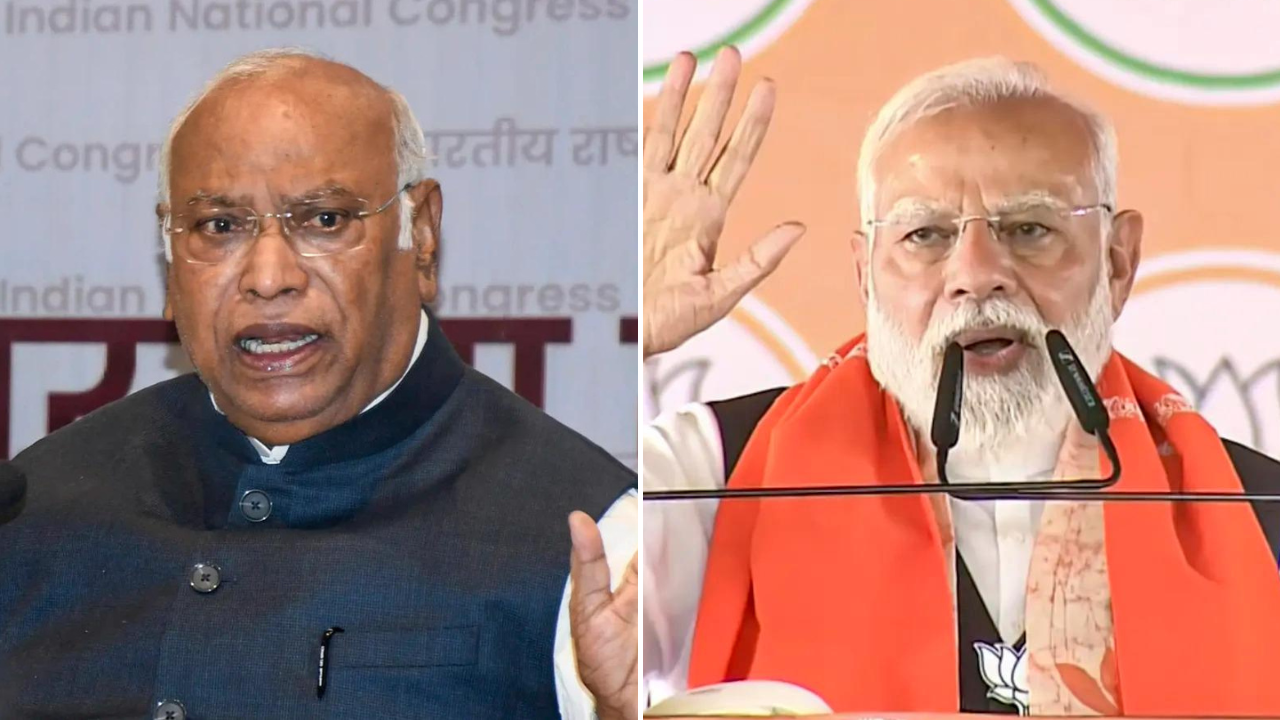
Mallikarjun Kharge, the President of the Congress party, has officially written to Prime Minister Narendra Modi regarding the sensitive issue of delimitation. In his letter, Kharge expressed that the opposition cannot engage in any productive or meaningful discussions without seeing the specific details of the government's plan. He argued that the lack of transparency makes it impossible for political parties to understand how the redrawing of electoral boundaries will affect different states. This move highlights a growing tension between the central government and opposition parties as the deadline for seat changes approaches.
Main Impact
The primary impact of this letter is the potential delay or complication of the delimitation process, which is the act of redrawing the boundaries of parliamentary and assembly seats. If the government and the opposition cannot agree on a framework, it could lead to a political standoff. This is particularly important because delimitation is expected to change the number of seats each state has in Parliament. Many states, especially in the southern part of India, fear that they will lose political power because their population growth has been slower than that of northern states. Kharge’s letter brings these fears to the forefront of the national conversation.
Key Details
What Happened
Mallikarjun Kharge sent a formal letter to the Prime Minister's Office to address the upcoming changes to India's electoral map. He pointed out that while the government has mentioned the need for delimitation, it has not provided a clear roadmap or the data it intends to use. Kharge insisted that for any meeting to be useful, the government must first share its internal reports and the criteria it plans to use for redrawing boundaries. Without this information, he believes any dialogue would be a waste of time and would not serve the interests of the public.
Important Numbers and Facts
The delimitation process is closely tied to the national census, which provides the population data needed to decide seat counts. The last time the number of seats in the Lok Sabha was fixed was in the 1970s, and a freeze was put in place until 2026. As that deadline is now here, the government is looking to update the numbers based on the most recent population figures. Current estimates suggest that the total number of seats in the Lok Sabha could increase significantly from the current 543. However, the exact formula for this increase remains a point of heavy debate among political leaders.
Background and Context
Delimitation is a standard democratic process meant to ensure that every person's vote has roughly the same value. As populations grow and move, the boundaries of voting districts must change to keep representation fair. In India, this has been a controversial topic for decades. In 1976, the government froze the number of seats to encourage states to control their population growth. The idea was that states should not be "punished" with fewer seats just because they were successful in family planning. Now that the freeze is ending, states that have managed their population well are worried that states with much higher growth will gain an unfair number of seats, giving them more control over national laws and budgets.
Public or Industry Reaction
The reaction to Kharge’s letter has been strong across the political spectrum. Members of the opposition have supported his stance, stating that the government often tries to push through major changes without enough consultation. Leaders from southern states have been the most vocal, echoing Kharge’s call for more details. They argue that any plan must include a way to protect the political voice of states that have contributed significantly to the country's economic and social progress. On the other hand, some government supporters suggest that the opposition is simply trying to block a necessary constitutional process for political gain.
What This Means Going Forward
Looking ahead, the government will likely have to respond to Kharge’s request if it wants to avoid a total breakdown in communication. The next steps will involve deciding which census data to use and how to balance the needs of different regions. If the government provides the requested details, it could lead to a series of all-party meetings to find a middle ground. If they do not, we may see legal challenges or protests from states that feel they are being treated unfairly. The outcome of this debate will shape the face of Indian democracy for the next several decades.
Final Take
The demand for transparency in the delimitation process is not just about politics; it is about the fundamental fairness of the voting system. For a country as large and diverse as India, redrawing electoral lines is a massive task that requires trust between all parties. By asking for specific details, the opposition is pushing for a process that is open and clear to everyone. Only through honest communication can the government ensure that every part of the country feels represented and respected in the halls of power.
Frequently Asked Questions
What is delimitation in simple terms?
Delimitation is the process of redrawing the boundaries of areas where people vote for their representatives. This is done to make sure that each representative stands for a similar number of people, keeping the voting system fair as the population grows.
Why is the opposition asking for more details?
The opposition, led by Mallikarjun Kharge, wants to see the data and the rules the government plans to use. They are worried that without this information, the process might be unfair to certain states or could be used to give one party an advantage over others.
Why are southern states worried about this process?
Southern states have been very successful at slowing down their population growth. Since seats in Parliament are usually based on population, these states fear they will lose seats to northern states that have much larger and faster-growing populations, leading to a loss of political influence.



