Summary
Begoña Gómez, the wife of Spanish Prime Minister Pedro Sánchez, is facing formal charges following a long and controversial legal investigation. Judge Juan Carlos Peinado has decided to move forward with a case involving four specific crimes, including influence peddling and embezzlement. This decision comes after two years of gathering evidence regarding her professional work at a major university in Madrid. The move marks a significant moment in Spanish politics, as it directly involves the family of the head of government.
Main Impact
The decision to process Begoña Gómez has an immediate and heavy impact on the Spanish political scene. It shifts the investigation from a preliminary stage to a formal legal proceeding where she must defend herself against serious accusations. This development puts the Prime Minister in a difficult position, as his political opponents often use these legal issues to question his leadership. The case also raises questions about the boundaries between private business activities and the public roles of family members of high-ranking officials.
Key Details
What Happened
Judge Juan Carlos Peinado has been leading an investigation into the professional activities of Begoña Gómez for the past two years. The judge recently issued a ruling stating there is enough evidence to charge her with four crimes. These crimes are embezzlement, influence peddling, corruption in business, and the illegal use of a brand. The judge believes that Gómez used her status as the wife of the Prime Minister to gain advantages for her career and her projects at the Complutense University of Madrid.
While the judge is moving forward with these four charges, he decided to drop a fifth accusation. Previously, Gómez was being investigated for "professional intrusion," which means practicing a job without the proper license or degree. The judge decided there was not enough evidence to continue with that specific charge. Now, all legal parties involved have five days to submit their responses or appeals to this new ruling.
Important Numbers and Facts
The investigation has lasted for 24 months, making it one of the most talked-about legal cases in recent Spanish history. The four crimes listed in the court documents carry different legal weights. Influence peddling involves using personal connections to change the decisions of government officials. Embezzlement usually refers to the misuse of money or resources. The charge of "misappropriation of a brand" relates to software or intellectual property created for a university course that Gómez allegedly registered under her own name.
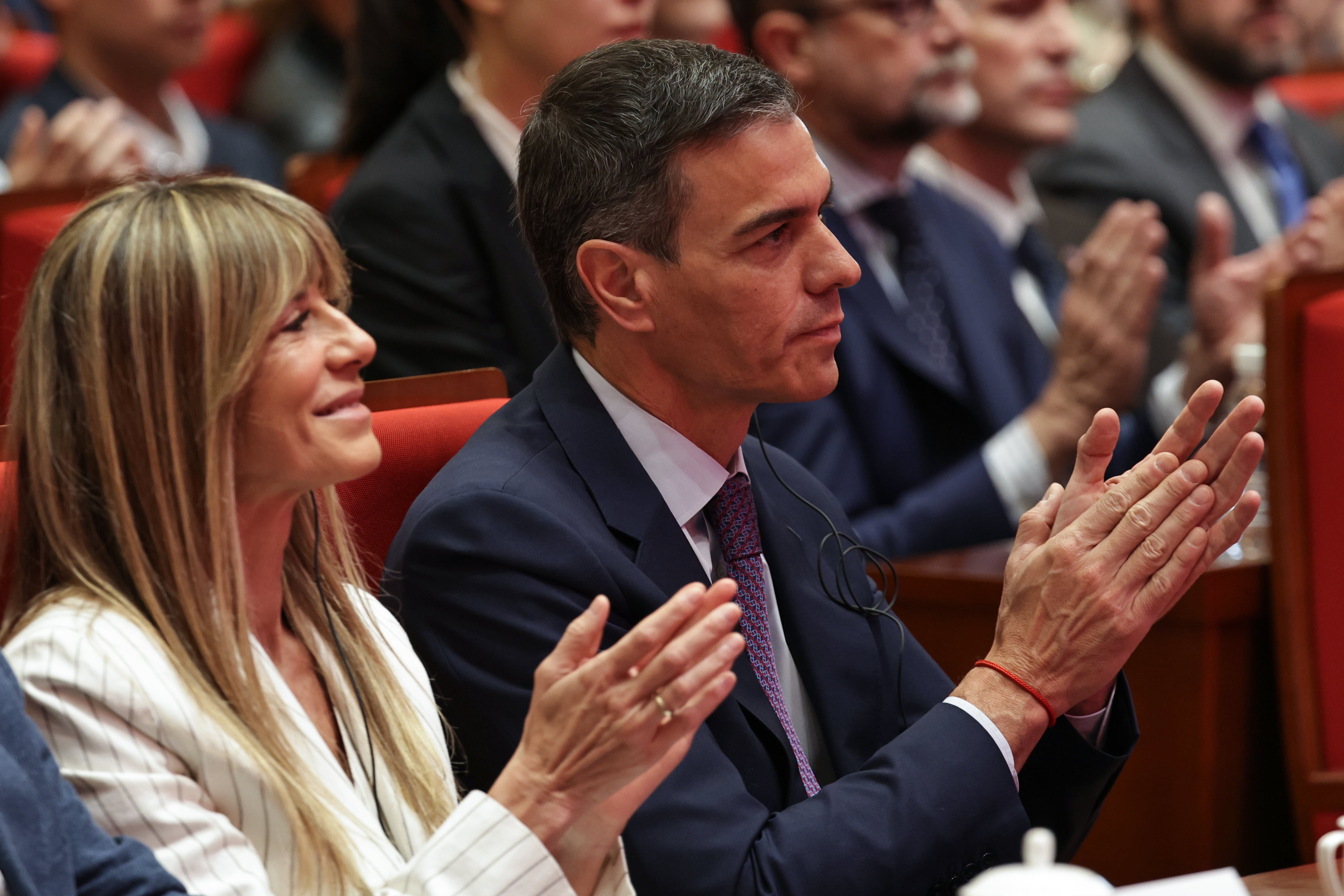
At the time this news broke, Begoña Gómez was not in Spain. She was on an official state visit to China with her husband, Pedro Sánchez. This timing has added to the public discussion, as the news reached the couple while they were representing Spain on the international stage.
Background and Context
This case centers on a special master's degree program at the Complutense University of Madrid (UCM). Gómez served as a co-director for this program, which focused on social transformation and competitive business strategies. The investigation started when groups filed complaints alleging that she received the position and secured funding for the program because of her marriage to the Prime Minister. In Spain, the law is very strict about how public officials and their families interact with private businesses to prevent unfair advantages.
The judge has looked into how contracts were awarded and how private companies interacted with the university program. One of the most specific parts of the case involves a software tool developed for the university. Prosecutors claim that Gómez tried to take ownership of this tool for her own private company, which led to the charge of misappropriating a brand.
Public or Industry Reaction
The reaction to this news has been split along political lines. Supporters of the government argue that the investigation is politically motivated and lacks solid evidence. They often point out that the judge has been very aggressive in his methods. On the other hand, opposition parties claim that the ruling proves there are serious ethical problems within the Prime Minister's inner circle. They have called for more transparency and, in some cases, for the Prime Minister to resign.
Legal experts have also weighed in, noting that the case is unusual because of the high profile of the person involved. The university has also faced scrutiny for how it manages its special programs and whether it allowed a person without a standard professor's background to lead a major course.
What This Means Going Forward
The next few weeks will be critical for the legal defense of Begoña Gómez. Her lawyers will likely file appeals to stop the case from going to a full trial. If the appeals fail, the case will move toward a public trial where witnesses will be called to testify. This process could take months or even years to reach a final verdict.
Politically, this keeps the Prime Minister under pressure. Every new update in the case becomes a headline that distracts from the government's policy goals. It also creates a risk for the ruling party in future elections, as the topic of corruption is very sensitive for Spanish voters. The court's final decision will determine not only the future of Begoña Gómez but could also influence the stability of the current Spanish government.
Final Take
This legal battle is more than just a private matter; it is a test for the Spanish justice system and its ability to investigate those in power. While the charges are serious, the legal process is still ongoing, and a person is considered innocent until proven guilty. The coming months will reveal whether these accusations hold up under deeper legal scrutiny or if the case will be dismissed before reaching a trial.
Frequently Asked Questions
What are the four crimes Begoña Gómez is accused of?
She is accused of embezzlement, influence peddling, business corruption, and misappropriating a brand. These relate to her work at a university and her alleged use of her husband's political position.
Why was one charge dropped?
The judge dropped the charge of "professional intrusion" because there was not enough evidence to show she was illegally acting in a professional role that required specific licenses she did not have.
What happens next in the legal process?
All parties have five days to file appeals or arguments. After that, the judge will decide if the case should proceed to a full trial or if any parts of the investigation need to be changed.