
Summary
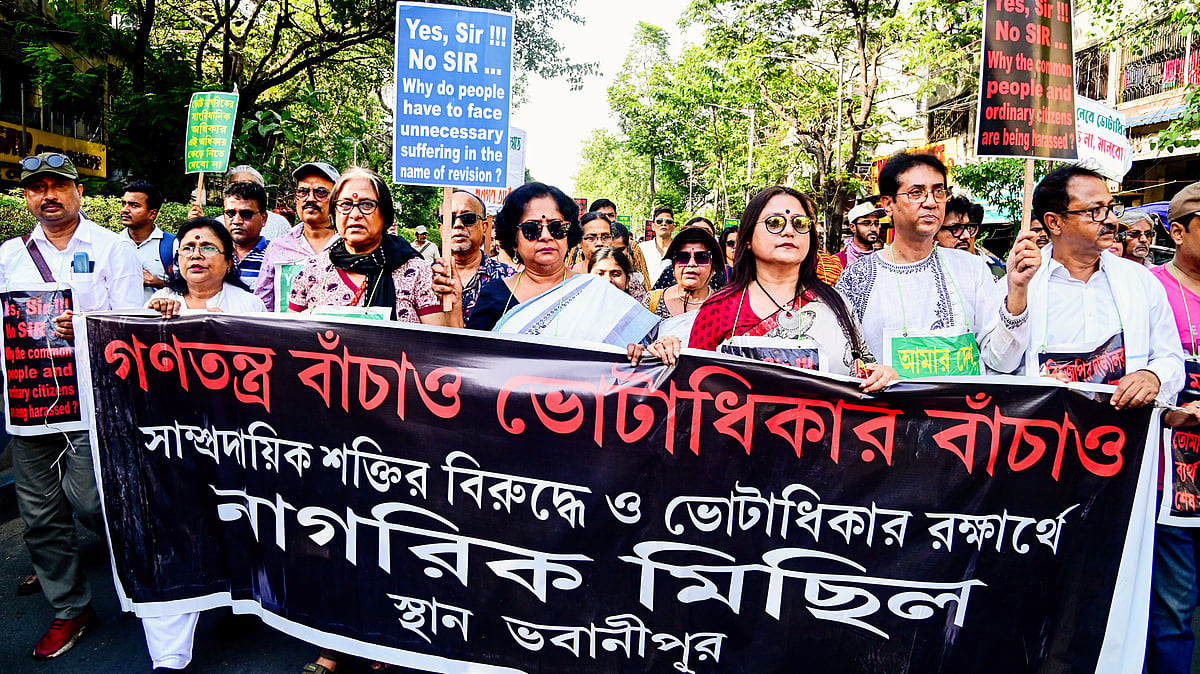
The Election Commission of India (ECI) is facing serious questions regarding its voter list revision process in West Bengal. A recent study by the SABAR Institute and Alt News suggests that the algorithm used to identify "logical discrepancies" in voter data may have a design bias. This process, known as the Special Intensive Revision (SIR), has reportedly led to the disproportionate flagging of Muslim voters across the state. Experts argue that the lack of transparency regarding which agency built this algorithm and how it works is a major concern for democracy.
Main Impact
The primary impact of this development is the potential exclusion of a large number of legitimate voters from the electoral process. By using an automated system to flag errors, the ECI has created a situation where thousands of people must now prove their citizenship and identity again. This has placed a massive financial and emotional burden on ordinary citizens. Furthermore, the study indicates that the errors are not random but seem to follow a pattern that targets specific communities, which could influence future election results in West Bengal.
Key Details
What Happened
The ECI introduced the Special Intensive Revision (SIR) to clean up electoral rolls in West Bengal. As part of this, they used an algorithm to find "logical discrepancies"—errors in names, addresses, or other data. However, Sabir Ahamed, the founder of the SABAR Institute, claims that this system is flawed. He points out that the list of flagged voters is not available to the public in West Bengal, unlike in other states like Uttar Pradesh. This lack of data makes it hard for people to know if they have been flagged until it is too late.
Important Numbers and Facts
The financial cost of this process is staggering. Initial estimates suggest that ordinary people have already spent around Rs 4,000 crore to deal with the paperwork and legal requirements of the SIR. If these cases move to legal tribunals, the cost will rise even higher. In terms of demographics, the data shows a clear imbalance. In the Bhabanipur area, Muslims make up about 20% of the population, but they represent nearly 50% of the people flagged for discrepancies. In border districts like Malda and Murshidabad, the mapping of Muslim voters was very high, yet the "logical discrepancy" filter still flagged them at a higher rate than other groups.
Background and Context
In the past, the Election Commission focused on transparency. They used social audits and public hearings to fix voter lists. Even people without homes were helped to register by using nearby landmarks as addresses. Today, the process has shifted toward technology and automation. The ECI previously used a similar system in Bihar, claiming a study had found errors in the lists there. However, the identity of the agency that conducted that study and the rules they used for their algorithm were never shared with the public. This shift from human-led checks to secret algorithms has made the voting process harder to trust for many people.
Public or Industry Reaction
The reaction from legal experts and researchers has been one of deep concern. Justice Joymalya Bagchi recently raised questions in court, noting that the ECI seemed to have moved away from the methods it used in Bihar. Researchers argue that the algorithm might have been "primed" with specific instructions to flag certain types of names. For example, common Muslim names or prefixes like "Sheikh" can be spelled in many different ways when translated from Bangla to English. The system often views these simple spelling differences as "logical discrepancies" rather than normal variations in language.
What This Means Going Forward
Moving forward, there is a strong demand for the ECI to reveal which private agency developed the SIR algorithm. If the work was outsourced, there is a risk that the software was designed with built-in biases. There is also a need for better translation tools. Currently, names written in Bangla are often translated using automated software that makes mistakes. For instance, a name like Abdul Jabbar can be wrongly translated into something nonsensical, which then triggers a flag in the system. Unless these technical issues are fixed and the process becomes transparent, many citizens may lose their right to vote due to simple computer errors.
Final Take
A fair election depends on a fair and accurate voter list. When technology is used to manage these lists, it must be open to public scrutiny to ensure it does not unfairly target any group. The current situation in West Bengal suggests that a flawed algorithm is causing widespread confusion and high costs for citizens. To protect the integrity of the vote, the authorities must explain how these lists are being made and ensure that no one is excluded because of a spelling mistake or a software glitch.
Frequently Asked Questions
What is a logical discrepancy in a voter list?
A logical discrepancy is an error or inconsistency found in a voter's data, such as a misspelled name, a wrong age, or an address that does not match other records. The Election Commission uses algorithms to find these errors automatically.
Why is the SIR process in West Bengal being criticized?
Critics say the process is not transparent and that the algorithm used to flag voters seems to target Muslim communities more than others. They also point out that simple translation and spelling errors are being used to question people's right to vote.
How much is the voter revision process costing citizens?
Experts estimate that citizens in West Bengal have already spent about Rs 4,000 crore on legal fees, travel, and paperwork to fix issues caused by the Special Intensive Revision process.

