
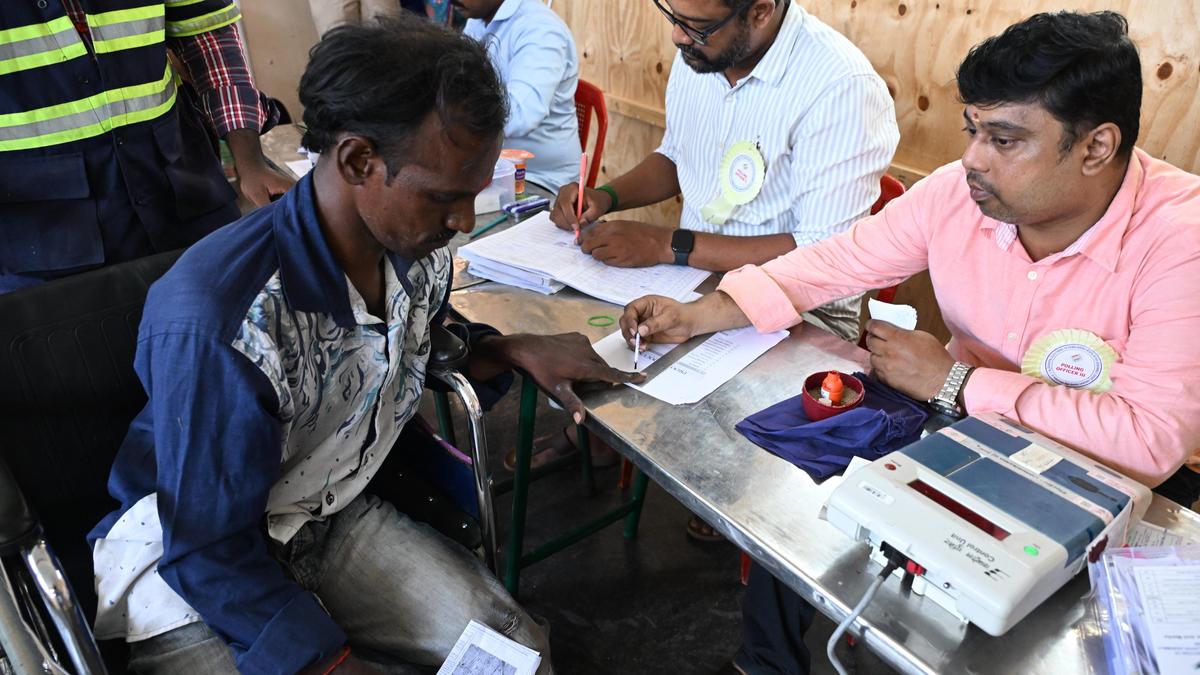
Summary
The 2026 Tamil Nadu elections have brought a major problem to light regarding how people with disabilities cast their votes. Many polling stations across the state were not easy to enter or move around in. While the government promised that every citizen would have a smooth voting experience, the reality on the ground was different. This lack of access has made it very hard for thousands of people to exercise their basic right to vote.
Main Impact
The biggest impact of these accessibility issues is that many voters felt left out of the democratic process. When a person cannot physically reach a voting booth, they lose their voice in how the state is run. For many people with physical challenges, the trip to the polling station became a source of stress rather than a moment of pride. This situation shows that there is still a big gap between making laws for accessibility and actually following them during a real event.
Key Details
What Happened
During the voting day, many people using wheelchairs or walking aids arrived at their assigned polling centers only to find they could not get inside. Most of these centers were located in government schools. While the buildings themselves might have had small ramps, the paths leading to them were the main problem. Many school grounds in Tamil Nadu are covered in deep sand, loose gravel, or broken stones. These surfaces make it almost impossible for a wheelchair to move without getting stuck.
In several cases, voters had to wait for long periods in the heat while family members or volunteers tried to pull their wheelchairs through the sand. Some voters even had to be carried by hand into the building. This took away their independence and made the process feel undignified for many citizens who simply wanted to vote like everyone else.
Important Numbers and Facts
Tamil Nadu has thousands of polling stations spread across cities and rural villages. According to official data, there are hundreds of thousands of registered voters with disabilities in the state. While the Election Commission provided some wheelchairs at certain locations, there were not enough to meet the demand. Furthermore, a wheelchair is not helpful if the ground it must roll on is too soft or uneven. Reports from various districts showed that more than half of the school-based polling sites had ground conditions that were considered "poor" for mobility aids.
Background and Context
For many years, the Election Commission of India has promoted the idea of "Accessible Elections." The goal is to make sure that no voter is left behind because of a physical or mental challenge. Laws in India also state that public buildings must be accessible to everyone. However, these rules are often ignored or only partially followed. In the past, the focus was mostly on putting a ramp at the front door of a building. Officials often forgot that a person must first cross a yard or a playground to reach that door. In the 2026 elections, this lack of planning became a major hurdle for many people.
Public or Industry Reaction
Disability rights groups and activists have expressed strong disappointment. They point out that they have been asking for better ground surfaces for years. Many activists said that simply providing a wheelchair at the gate is not a solution if the path to the booth is a sandpit. On social media, many voters shared photos of the difficult conditions. They asked why the government did not use temporary wooden walkways or firm mats to cover the sandy areas. Some people even suggested that polling stations should be moved to buildings with better infrastructure, such as community halls or modern offices, instead of old school buildings with dirt yards.
What This Means Going Forward
This situation shows that the government needs to change how it plans for elections. It is not enough to look at the building alone; the entire path from the street to the voting machine must be checked. In the future, officials may need to spend more money on temporary flooring for polling stations located in schools. There is also a need for better training for the staff working at these sites. They need to understand how to help people with disabilities in a way that is respectful. If these changes are not made, many people may choose to stay home in future elections, which would be a loss for democracy.
Final Take
Voting is a right that belongs to everyone, regardless of how they move. The 2026 Tamil Nadu elections have shown that having a ramp is only a small part of the solution. True accessibility means making sure the entire journey to the ballot box is easy and safe. Until the government addresses the problem of sandy and uneven grounds at polling sites, the promise of an "accessible election" will remain unfulfilled for many citizens.
Frequently Asked Questions
Why were the polling stations hard to access?
Many polling stations were in schools where the ground was covered in sand or gravel. This made it very difficult for wheelchairs and people with walking aids to move from the entrance to the voting room.
Did the government provide any help for disabled voters?
The government did provide some wheelchairs and ramps at many locations. However, these were often not enough because the ground outside the buildings was too soft or rough for the wheelchairs to work properly.
What can be done to fix this in the next election?
Officials could use firm mats or temporary wooden paths to cover sandy areas. They could also choose buildings that already have paved walkways and better facilities for people with physical challenges.



