Vidyanand Bapat walked into a civic meeting on 25 August carrying data on noise and traffic. He walked out of it humiliated — expelled from the hall after asking Pune to turn the volume down for Ganeshotsav 2026. The festival begins on 14 September, which leaves the city barely three weeks to decide what its streets should sound like.
A Mic, a Set of Numbers and a Room That Did Not Want to Hear Them
Bapat is 37 and lives in Narayan Peth, in the dense heart of old Pune. He describes himself as an atheist and a rationalist — a description that matters here, because it shapes how his argument is being received as much as what he actually said.
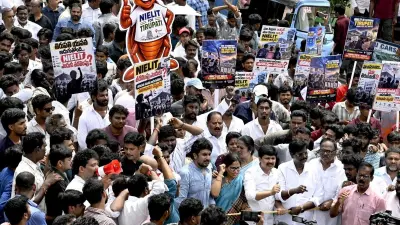
The meeting was convened by municipal authorities. When Bapat's turn came, he made a case against DJs, high-decibel sound systems and dhol-tasha processions during the festival. He cited data on noise pollution and traffic disruption, and asked for a ban.
The response was not a rebuttal. According to the account of the meeting, mandal representatives made their displeasure plain, and Bapat was removed from the gathering.
What He Actually Asked For — and What It Would Mean on the Ground
It is worth being precise about the demand, because "ban the DJs" and "ban the festival" are very different things, and the two get blurred in heated rooms.
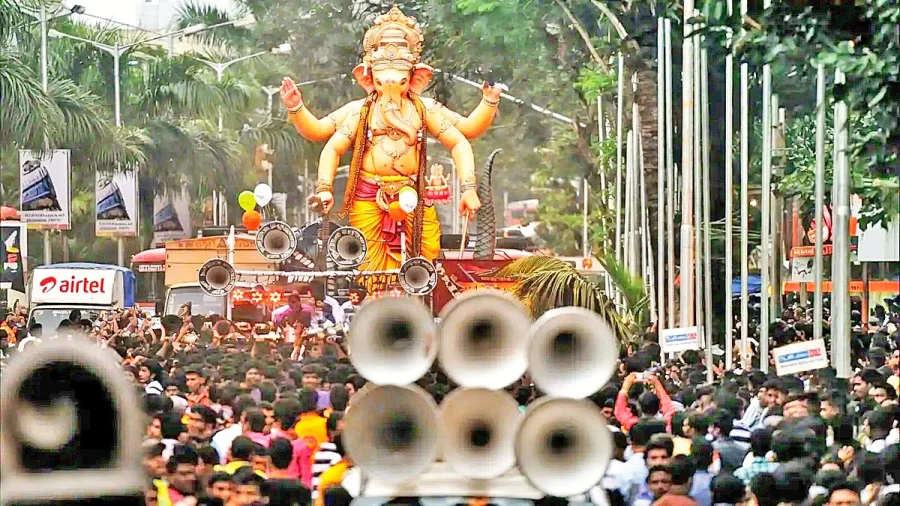
Bapat's objection was to amplified sound — DJ consoles, high-decibel speaker stacks — and to dhol-tasha processions, the percussion troupes that accompany mandal routes through the city. His stated aim was not to stop Ganeshotsav but to restore what he called sanity in public spaces.
In practice, curbs of that kind would touch procession routes, sarvajanik pandal timings, immersion-day traffic planning and the informal sound economy that springs up around the ten days of the festival.
Why a Fight About Loudspeakers Is Really a Fight About Public Space
Pune's Ganeshotsav is not a private gathering. It happens on roads, at intersections and outside homes, which means every decision about volume is also a decision about who gets to use a street and on whose terms.
For residents in dense neighbourhoods like Narayan Peth, a speaker stack at a junction is not an abstraction. It is the difference between sleep and no sleep, between a study schedule and a lost week, between a clear ambulance route and a blocked one.
For mandals, the same sound is participation — the thing that makes a neighbourhood's festival visible, funded and alive.
25 August to 14 September: A Short Timeline With Long Shadows
The chain of events is compact. On 25 August, a municipal meeting on festival arrangements turns into a confrontation. A resident makes a noise-and-traffic argument, is removed from the hall, and the episode becomes public.
On 14 September, Ganeshotsav 2026 begins. Between those two dates sits the entire question: whether the civic body will issue any festival-specific sound guidance, or whether the city simply repeats last year's arrangement.
That second possibility is not a small one. Silence from authorities is itself a decision, and it is the one most Indian cities default to.
Who Pays the Price When the Decibels Rise
The people most affected by festival amplification are rarely the ones in the room when it is discussed. They are the elderly, the ill, infants, night-shift workers, students in exam season and commuters rerouted around a procession for the third evening in a row.
None of them are organised. Mandals are. That asymmetry — organised enthusiasm against unorganised fatigue — explains far more about this dispute than any argument about decibel limits.
What the Mandals and the Civic Body Have Said — and What They Haven't
The account of the 25 August meeting records mandal representatives as firmly opposed to Bapat's demand. Beyond that, no formal statement from a mandal or a municipal official clarifying a position, a policy or a complaint mechanism has been verified.
This matters for how the story is read. Right now, there is a documented confrontation and an unconfirmed policy outcome. Those are not the same thing, and treating them as the same is how urban stories get distorted.
The Deeper Argument: Decibels or Democracy?
Strip the heat away and two legitimate claims are colliding. One is that measurable harm — sleep loss, hearing risk, traffic chaos — should be legally capped regardless of occasion. The other is that a city's most important public festival cannot be governed purely by the objections of those who do not participate in it.
Both claims have weight. The difficulty is that Indian civic practice rarely resolves such collisions on principle; it resolves them on whichever side is louder, in every sense.
Confirmed Facts vs What Remains Unclear
Confirmed: the date of the meeting, the identity and age of the resident involved, the substance of his demand, and the start date of Ganeshotsav 2026.
Unclear: whether any ban, decibel cap, time restriction or route change is under active consideration; whether the municipal body has taken a formal position; whether Bapat intends to pursue the matter further.
Speculation, not fact: any claim that a ban is coming, or that it has been ruled out. Neither is supported by the record.
Where the Rationalist Case Runs Into Real-World Limits
The demand has an enforcement problem. A blanket ban is easy to announce and nearly impossible to police across a city's lanes for ten days, particularly when the sound is attached to religious sentiment.
There is also a political risk in the framing. When a self-described atheist becomes the face of a noise complaint, the issue can be recast as belief versus non-belief rather than residents versus decibels — and that reframing usually kills the practical remedy.
Rights-based arguments that isolate one festival also invite an obvious question about consistency: the same decibel standards apply to political rallies, wedding processions and construction sites.
A Familiar Pattern in India's Festival Season
This is not a uniquely Pune story. Across Indian cities, the same friction returns each festival season: loudspeaker permissions, court interventions, last-minute guidelines and residents' groups filing complaints that are acknowledged and then quietly dropped.
What changes year to year is mostly the intensity of the confrontation — not the underlying absence of a routine, predictable mechanism for handling complaints before they escalate.
What Residents, Mandals and Officials Can Do Before 14 September
Residents with genuine grievances strengthen their case with specifics: dates, times, locations, photographs, and decibel readings where available, submitted through the civic grievance process rather than social media. Pattern beats outrage.
Mandals can act first. Voluntary time windows, sound limits and route coordination cost little and buy enormous goodwill — and they remove the argument that regulation is the only answer.
Authorities, meanwhile, could publish festival-specific sound guidance in advance. A rule announced before the festival is enforceable; one announced after the first complaint is a conflict.
What Happens Next for Ganeshotsav 2026
Three plausible paths exist. The city could proceed as usual. It could see voluntary restraint from larger mandals. Or it could issue formal curbs — a step that would need enforcement capacity to mean anything.
What is unlikely is a total ban on DJs and dhol-tasha in the days remaining before 14 September. Nothing in the available record suggests one is on the table.
Our Take
The phrase "sound logic" in this story cuts both ways. Bapat's argument rests on measurable nuisance, and measurement is a reasonable basis for civic rules. But Ganeshotsav is also measurable — in participation, in livelihoods, in the sheer number of people who consider it theirs.
The failure here is not that a resident objected. It is that a city could not hold a disagreement about its own streets without ejecting one of the people in the room. Pune does not need a ban before 14 September. It needs a system that can hear a complaint without treating it as an insult.
Frequently Asked Questions
Who is Vidyanand Bapat?
He is a 37-year-old resident of Narayan Peth in Pune who describes himself as an atheist and rationalist. He was expelled from a public meeting called by municipal authorities on 25 August after raising objections to festival noise.
What exactly did he demand?
A ban on DJs, high-decibel sound systems and dhol-tasha processions during Ganeshotsav, citing noise pollution and traffic disruption, supported by data he presented at the meeting.
When does Ganeshotsav 2026 begin?
The festival gets under way on 14 September 2026, which is why the 25 August meeting became a flashpoint — arrangements and permissions are finalised in that window.
Has any ban been announced?
No. No ban, decibel cap or official policy change has been confirmed. The demand was raised and rejected in the room; whether it produces any formal outcome remains unverified.