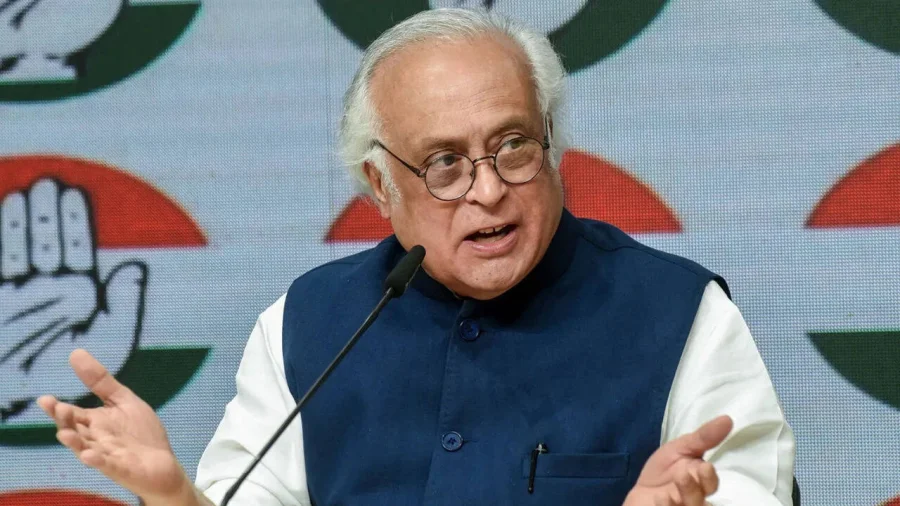
Parliament can finish its business and still not be formally closed. That gap — between a session winding down and the President signing off on prorogation — is now the centre of a bitter political exchange, with the Congress taunting the Centre over the delay and accusing it, in reported words, of "plotting a super-tainted majority."
Prorogation is usually housekeeping. When it lingers, it stops looking like housekeeping and starts looking like intent. That is the fight the Congress has picked, and it is aimed at the credibility of the government's numbers in the House — not at its paperwork.
What the Congress Said — and What the Centre Has Said Back
The Congress's attack, as reported, turns squarely on the delay in proroguing Parliament. The party's choice of language — "super-tainted majority" — frames the government's strength in the two Houses as compromised rather than earned, and the delay as the period in which that compromise is being engineered.
On record, the available material does not include a detailed statement from the Union government answering that specific charge, nor a formal explanation for why prorogation has not yet been notified. That silence is itself part of the story. In a dispute about delay, the absence of an explanation travels further than the delay itself.
Why the Timing of Prorogation Is Never Only Housekeeping
Prorogation ends a session of Parliament. It is not dissolution — only dissolution ends the life of the Lok Sabha and sets off a general election. But prorogation does something else that matters politically: it shuts the window on pending legislative business. Bills still pending when a House is prorogued lapse, unless they are protected under Article 107(3) of the Constitution.
So long as a House has not been prorogued, that window stays open. Anything the government wants to keep alive — a bill, a listed discussion, a piece of unfinished business — stays alive with it. That is the mechanical reason a calendar decision can look like a political one.
The Rule Book: Article 85 and the Six-Month Clock
Under Article 85, the President summons and prorogues each House on the advice of the Council of Ministers. The Constitution sets one hard outer limit: the gap between two sittings of a House cannot exceed six months. It sets no deadline for prorogation itself.
That legal reality cuts both ways. Nothing about a delayed prorogation is, on its face, unlawful — which is why it is difficult to challenge in court. But precisely because nothing forces the timing, the timing is a choice. And a choice can be questioned.
Who Actually Feels This — MPs, Pending Bills and the Public
For MPs, an unprorogued Parliament is an unsettled workplace. Committee schedules, travel plans and pending business stay in limbo until the formal closure comes. For the government, that limbo preserves options. For the opposition, it preserves the argument.
For the public, the stakes are indirect but real. Stalled legislative business and undecided bills are the practical cost of a procedural standoff. The political cost is subtler: a Parliament that appears to be kept warm on purpose invites suspicion about what it is being kept warm for.
Decoding the Phrase "Super-Tainted Majority"
The phrase is political shorthand, not a legal charge. It appears to describe the Congress's claim that the government's majority in Parliament rests on numbers the party regards as compromised rather than legitimately won.
The material available does not set out the specific basis for that claim in this instance. It does not name individuals, identify alleged transactions or cite evidence. Until it does, the phrase should be read as an accusation of intent — high in rhetorical voltage, unproven in substance.
Confirmed Facts vs What Remains Unclear
Confirmed: the Congress has publicly taunted the Centre over the delay in proroguing Parliament, and the phrase "plotting a super-tainted majority" is attributed to that attack as reported. Also confirmed as constitutional background: prorogation is a Presidential act on ministerial advice, and the Constitution fixes no timeline for it.
Unclear: how long the delay has actually run, what specific legislative or political business is being kept alive by it, whether any government action is being prepared in that window, and whether the Centre intends to offer an explanation at all. Any claim that the delay is aimed at a particular manoeuvre is, at this stage, speculation — and should be labelled as such.
The Risk of Over-Reading a Delay
Procedural delays are common and often mundane — crowded calendars, ceremonial obligations, a session formally closed well after its last sitting. Treating every gap as a conspiracy is how opposition politics burns its own credibility.
Equally, waving away every gap as routine is how governments dodge scrutiny. The defensible position is the narrower one: this timing warrants an explanation, and no explanation has been placed on record in the material available.
The Wider Pattern: Prorogation as a Political Instrument
India is not the first democracy where prorogation turned into a flashpoint. In Canada in 2008, a prime minister's request to prorogue Parliament to avoid a confidence vote triggered a constitutional crisis. In the United Kingdom in 2019, a five-week prorogation was struck down by the Supreme Court as unlawful.
Both cases involved far more than timing alone. But they explain why the word itself now carries weight in political argument — and why opposition parties reach for it when they want to suggest that procedure is being used as a weapon.
What Readers Should Watch Next
Three things are worth tracking. First, whether prorogation is notified in the coming days, and what the government says when it is. Second, what happens to any pending legislative business in the interim. Third, whether the Congress converts a taunt into a documented charge — names, numbers, evidence — or lets the phrase stand as rhetoric.
Where This Could Go
The likeliest outcome remains unremarkable: Parliament is prorogued, the session formally closes, and the dispute fades into the next news cycle. The less likely but more consequential path is that the delay becomes the opening argument in a larger fight over the government's majority in the House.
Which one it becomes depends less on the calendar than on what the Congress produces next, and how the government chooses to answer it.
Our Take
Prorogation is not a scandal, and a delay in prorogation is not, by itself, evidence of anything. But the Congress has made a specific allegation about intent — and intent is the one thing a calendar cannot disprove.
The government's strongest response would be a plain explanation of the timing. The Congress's strongest position would be evidence rather than a phrase. Until either arrives, readers should hold this accusation at arm's length: seriously, but not credulously.
Frequently Asked Questions
What is prorogation of Parliament?
Prorogation is the formal end of a parliamentary session, ordered by the President on the advice of the Council of Ministers under Article 85. It closes the session but does not dissolve the House — only dissolution ends the life of the Lok Sabha and triggers a general election.
Is the government required to prorogue Parliament by a deadline?
No. The Constitution fixes no timeline for prorogation. The only hard limit is that the gap between two sittings of a House cannot exceed six months. How quickly prorogation follows a session's last sitting is a matter of executive discretion, not constitutional obligation.
Can courts intervene if prorogation is delayed?
It is legally difficult, because a delay does not breach any stated constitutional limit. Courts have intervened in other countries where prorogation was used to frustrate Parliament — notably the UK in 2019 — but those involved documented misuse, not mere delay.
What does "super-tainted majority" mean?
It is the Congress's political description of a government majority it considers illegitimate or compromised. In the material available, the party has not set out a specific evidentiary basis for the charge in this instance, so it remains an accusation rather than a substantiated claim.