
Summary
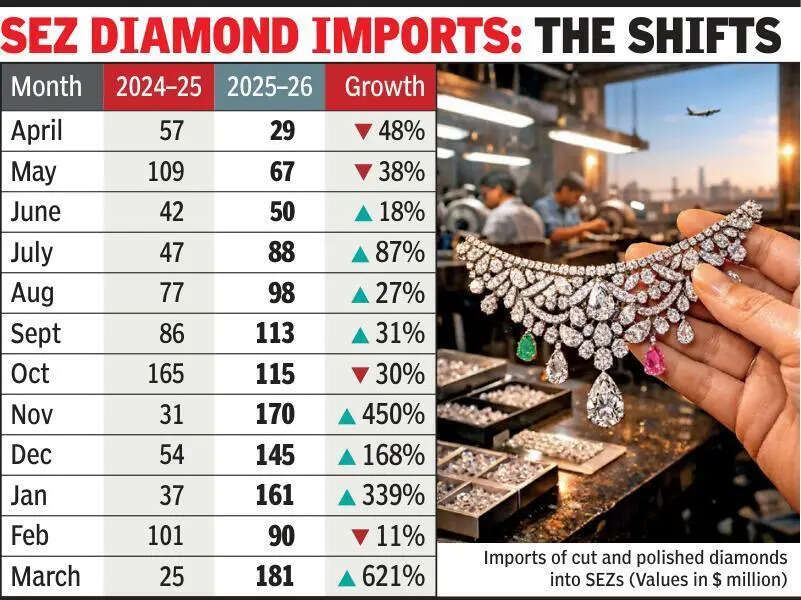
A sudden and sharp increase in the import of polished diamonds into India’s Special Economic Zones (SEZs) has caught the attention of industry experts and government officials. These zones are typically used for processing goods for export, but the rise in finished diamond imports suggests a shift in trade patterns. This trend is causing worry among local manufacturers in Surat, who fear it could hurt the domestic diamond cutting and polishing industry. The situation has led to calls for closer monitoring to ensure trade rules are being followed correctly.
Main Impact
The primary impact of this spike is felt by the local diamond workers and factory owners in Surat. India is known as the world’s hub for diamond polishing, where rough stones are turned into sparkling gems. When polished diamonds are imported directly into SEZs, it bypasses the need for local labor. This reduces the amount of work available for hundreds of thousands of skilled artisans who rely on these jobs to support their families.
Furthermore, this trend creates an unfair environment for businesses operating outside of these special zones. Companies in the Domestic Tariff Area (DTA) must pay a 5% basic customs duty when they import polished diamonds. If diamonds are brought into SEZs without the same costs and then find their way into the local market, it puts honest taxpayers at a disadvantage. This could lead to a drop in market prices that local manufacturers cannot match.
Key Details
What Happened
In recent months, trade data showed an unusual amount of polished diamonds entering India through SEZs. Usually, these zones receive rough diamonds, which are then cut and polished by workers before being sent to other countries. Seeing a high volume of already finished stones enter these areas is rare. Industry leaders suspect that some traders might be using these zones to avoid taxes or to move goods in and out of the country to create a false sense of high trade volume.
Important Numbers and Facts
The diamond industry is a major part of India's economy, contributing significantly to its total exports. While specific monthly figures change, the growth in polished imports into SEZs has reportedly jumped by a large percentage compared to previous years. Under current laws, importing polished diamonds into the main part of India requires a 5% tax. However, goods brought into SEZs are often exempt from these duties as long as they are meant to be exported again. The concern is that these stones might be staying within the country or being used to manipulate financial records.
Background and Context
To understand why this matters, it is important to know how the diamond trade works. India imports rough diamonds from mines in places like Africa, Canada, and Russia. These rough stones look like cloudy pebbles. In cities like Surat, workers use high-tech tools and years of experience to cut and polish them. Once they are finished, they are sold to jewelry makers around the world.
Special Economic Zones were created to help this process. They offer tax breaks and simpler rules to encourage companies to set up factories and export goods. However, when the system is used to bring in finished products instead of raw materials, it goes against the goal of creating local jobs. The diamond industry is currently facing a slow period due to global economic issues, making any threat to local jobs even more serious.
Public or Industry Reaction
Trade bodies and diamond associations have expressed deep concern over the data. Many industry leaders have written to the government asking for a detailed investigation into these imports. They want to know who is importing these stones and why they are coming through SEZs instead of the regular trade routes. Some representatives have suggested that this could be a sign of "round-tripping," where the same diamonds are sent back and forth between countries to make a company look more successful than it actually is.
Local workers' unions are also worried. They have asked for stricter checks at the borders and ports to ensure that polished diamonds are not being leaked into the local market illegally. They argue that if the government does not act, the "Made in India" brand for diamonds could suffer.
What This Means Going Forward
The government is expected to increase its watch over SEZ activities in the coming months. This might include more frequent audits of the inventory held within these zones. If the authorities find that the rules are being broken, they may introduce stricter entry requirements for polished stones. There is also a possibility that the tax rules for SEZs could be updated to prevent any loopholes from being used.
For the diamond industry, this serves as a wake-up call to protect local manufacturing. If the trend continues, more companies might move away from polishing and focus only on trading, which would change the face of the Indian diamond market forever. The focus will likely shift toward ensuring that every diamond entering the country is tracked properly from the moment it arrives until it is sold to a customer.
Final Take
The rise in polished diamond imports through special zones is more than just a change in numbers; it is a challenge to the traditional strength of India’s jewelry sector. Protecting the local workforce and maintaining a fair market is essential for the long-term health of the industry. Clearer rules and better enforcement will be the only way to ensure that these special zones continue to help the economy rather than hurting local businesses.
Frequently Asked Questions
Why is the import of polished diamonds into SEZs a problem?
It is a problem because SEZs are meant for processing and exporting. Importing finished diamonds avoids local labor and can be used to bypass the 5% import duty that applies to the rest of the country.
What is "round-tripping" in the diamond trade?
Round-tripping is when the same diamonds are imported and exported multiple times. This is often done to artificially increase trade figures or to move money across borders under the guise of business.
How does this affect the city of Surat?
Surat is the world's largest center for diamond polishing. If polished diamonds are imported instead of being finished locally, it leads to less work for the city's factories and can result in job losses for thousands of workers.



